Why We Value Privacy and Share Anyway
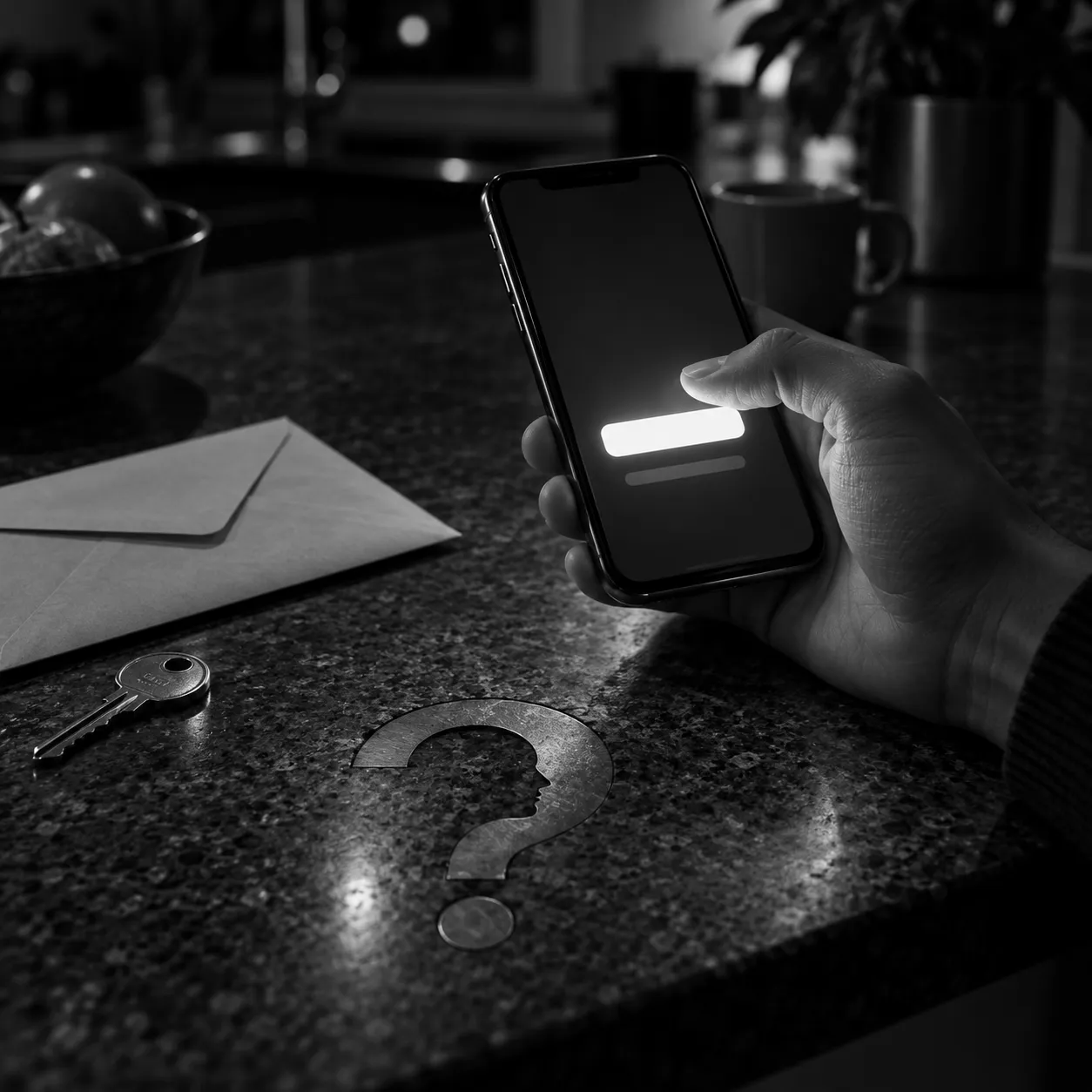
People say their personal data matters, then give data away for a pizza or a small payment. Research since 2007 finds the gap is smaller than the slogan, and that it depends heavily on how the choice is put to us.
Key takeaways
- In Sandra Matz's unpublished experiment reported in Mindmasters, 75 per cent of over 1,500 participants said they were concerned about privacy and 85 per cent sold their data anyway.
- In a 2017 study of 3,108 MIT undergraduates, a free pizza halved the share who protected their friends' email addresses, from 5 per cent to 2.5 per cent.
- A 2017 meta-analysis of 166 studies and 75,269 participants found privacy concern did not predict social network use, but did predict less sharing and more protective behaviour.
You open a recipe site on your phone and a banner covers the lower half of the screen. The site and its partners, it says, use cookies to personalise advertising and measure performance. There are two buttons. "Accept all" is large and coloured. "Manage preferences" is plain grey text, and behind it sits a long list of toggles for companies you have never heard of. Asked in a survey, you would say your privacy matters a great deal. You are hungry, the recipe is underneath, and you press the coloured button.
Sandra Matz watched a larger version of that moment in her own research. In Mindmasters (2025), chapter 8, "We Need More Than Control", she describes an experiment in which more than 1,500 people decided whether to sell their personal data for real money (pp. 159 to 160). Seventy-five per cent said they were concerned about privacy. Eighty-five per cent sold their data anyway. Five different ways of giving people insight into their data, tested against a control group, made no difference. The study has not been published and the book gives no citation for it, so its design cannot be inspected; she reports it as a result that changed her own earlier view on policy.
Her conclusion is that transparency and control are not enough, and that in the current data economy control works less as a right than as a responsibility placed on each person. The gap she describes has a name, and two decades of research disagree about what it means.
2007: the gap between intention and disclosure is named
The term came from Patricia Norberg and two colleagues, writing in the Journal of Consumer Affairs. Their starting point was a plain contradiction: consumers complained that their control over personal information was being eroded, yet they appeared to hand that information over freely. They called the relationship between what people intend to disclose and what they actually disclose the privacy paradox, and the label stuck.
The gap had been visible for years before it had a name. Alan Westin's surveys famously sorted people into the fundamentalists, the pragmatists and the unconcerned. Yet in one early study described in Acquisti's 2015 review, participants sorted by their level of concern then shopped with the help of an onscreen agent that asked increasingly sensitive questions. Few of them, in any group, showed much reluctance to answer.
In 2015 Alessandro Acquisti and colleagues at Carnegie Mellon University reviewed the research that followed, in Science. They grouped it under three themes: people are uncertain about the consequences of sharing and about their own preferences, their concern depends heavily on context, and that concern can be shaped by companies and governments. One study they describe compared survey answers with what people had posted on a social network. Among those most worried about strangers learning their sexual orientation, 48 per cent had revealed it publicly.
Another study in the review offered shoppers a choice between a 10-dollar gift card whose purchases could not be traced and a 12-dollar card linked to their name. Of those who started with the anonymous card, 52.1 per cent kept it. Of those who started with the trackable card, 9.7 per cent gave up 2 dollars to switch to the anonymous one. The review's reading is that "people value privacy more when they have it than when they do not." It is the same pull that explains why owning something makes it worth more to you.
2017: a free pizza for a friend's email address
Susan Athey, Christian Catalini and Catherine Tucker found a cleaner test at the Massachusetts Institute of Technology. In autumn 2014 every undergraduate was offered 100 dollars in bitcoin, and 3,108 signed up for a digital wallet. During sign-up, students were asked for the email addresses of friends. Half of them were also offered a free pizza to share with three friends whose addresses they listed. Students who wanted to protect their friends could type invalid addresses. Among students offered no pizza, 5 per cent did so. With the pizza, 2.5 per cent did, and students who had said they cared strongly about this kind of exposure behaved much like those who had not.
The working paper reports three findings:
1. Small incentives change disclosure: people who say they care about their data give it up readily when offered something small in return.
2. Small navigation costs matter: the order in which wallets were listed changed which one students picked, often against their stated preferences.
3. Reassurance changes behaviour: irrelevant but comforting information about protection made students less likely to avoid surveillance, regardless of their stated preferences.
Read alongside Matz's experiment, the pattern looks consistent. Concern about privacy is easy to state in a survey, and in the pizza study it gave way when an immediate reward was on offer and the cost, to friends, was out of sight, and Matz reports a similar pattern.
Concern about privacy is easy to state in a survey, and in both studies it gave way when a small, immediate reward was on offer and the cost to the person, or to their friends, was out of sight.
2017: two reviews and a meta-analysis divide the paradox
The same year produced the strongest counterweight. Lemi Baruh and colleagues, in the Journal of Communication, pooled 166 studies from 34 countries with 75,269 participants. In line with the paradox, privacy concern did not predict whether people used social network sites. On the other outcomes it did. Concerned users were less likely to use online services and less likely to share information, and they were more likely to take protective measures. The findings held across gender, cultural orientation and national legal systems. The analysis also found that privacy literacy, meaning knowledge of how data is collected and how to limit it, went with greater use of protective measures.
Two reviews from that year help explain the split. Spyros Kokolakis surveyed studies that supported the paradox and studies that challenged it, and traced much of the disagreement to differences in method, context and definition, calling for measures of actual behaviour in place of self-reports. Susanne Barth and Menno de Jong reviewed 32 papers covering 35 theories and concluded that disclosure is driven by one of two things: weighing benefits against risks, or judging the risk to be negligible.
2021: the argument that the paradox was never there
Daniel Solove, a law professor at George Washington University, went further. In the George Washington Law Review he argued that the paradox is "a myth created by faulty logic." Behaviour in these studies consists of decisions about risk in very specific contexts, he wrote, while the attitudes people report are general. Concluding from a single disclosure that someone places little value on their data is a leap. He also argued that managing one's own data across every service is a task that cannot scale, so law should regulate the architecture of the data economy instead of handing people more settings.
The 2015 Science review had already weighed a version of this idea, that broad attitudes and specific behaviours should not be expected to match, and found it incomplete for two reasons. The social network study above was one: the gap appeared even where the concern and the behaviour were about exactly the same information. The other was that choices about personal data are only partly a calculation of costs and benefits. They are also moved by misperceptions, social norms, emotions and rules of thumb, including a tendency to favour an immediate reward over a cost that arrives later.
Ask one question before you click accept
Our view combines the two sides. Solove's logic holds: a click on a banner is a risk decision in one setting, and it says little about how much a person values their data in general. But the meta-analysis shows that concern does change behaviour when acting on it is a distinct and visible choice. Our reading is that it fails where refusing means giving up the whole service, or where the design makes the protective option slower, and many people keep whatever setting they are given. In those cases the design is to blame at least as much as the person.
In those cases the design is to blame at least as much as the person.
The MIT pizza offered an immediate reward with the cost out of sight, and Matz's sale appears to have done the same. Matz's own response, in her next chapter, "Creating a Better Data Ecosystem", is to change how the system is built, with measures such as opt-in defaults, instead of asking each person to defend their own privacy. That is close to where Solove ends up from the opposite direction.
That suggests a simple check before you accept, offered as advice and not as a tested remedy. Ask yourself: if refusing took exactly one tap, as accepting does, would I still say yes? If the answer is no, then the design of the page made the choice for you, and the setting deserves a second look.
Common questions
What is the privacy paradox?
The privacy paradox is the gap between what people say about protecting their personal data and what they do. Patricia Norberg and colleagues named it in 2007. A 2017 meta-analysis of 166 studies found concern did not predict social network use but did predict less sharing and more protective behaviour.
Do people really give up data for very little?
Often, yes. In a 2017 study of 3,108 MIT undergraduates by Susan Athey and colleagues, the offer of a free pizza halved the share of students who protected their friends' email addresses, from 5 per cent to 2.5 per cent, whatever they had said about their preferences.
Sources
Matz, S. (2025). Mindmasters: The Data-Driven Science of Predicting and Changing Human Behavior. Harvard Business Review Press. Read in full by this publication, with a reliability audit. Ch. 8, "We Need More Than Control", pp. 159 to 160 (the data-valuation experiment: over 1,500 participants, 75 per cent concerned, 85 per cent sold, five insight conditions plus control, no differences). The experiment is unpublished and the book gives no citation for it. Ch. 9, "Creating a Better Data Ecosystem", p. 165 onward, for opt-in defaults.
Norberg, P. A., Horne, D. R., & Horne, D. A. (2007). “The privacy paradox: personal information disclosure intentions versus behaviors.” Journal of Consumer Affairs, 41(1), 100-126. doi:10.1111/j.1745-6606.2006.00070.x. Abstract read (OpenAlex record of the publisher abstract; Wiley landing page for bibliographic details).
Acquisti, A., Brandimarte, L., & Loewenstein, G. (2015). “Privacy and human behavior in the age of information.” Science, 347(6221), 509-514. doi:10.1126/science.aaa1465. Full text read (author PDF, Carnegie Mellon): three themes of uncertainty, context-dependence and malleability; Westin segments; social network study in which 48 per cent of the most concerned revealed sexual orientation; gift card field experiment, 52.1 per cent against 9.7 per cent; quotation 'people value privacy more when they have it than when they do not.'
Athey, S., Catalini, C., & Tucker, C. (2017). “The digital privacy paradox: small money, small costs, small talk.” NBER Working Paper 23488. doi:10.3386/w23488. Full text read (NBER PDF): MIT digital currency experiment, autumn 2014; 3,108 undergraduates; pizza incentive randomised to half; in the incentive subsample, all-invalid friend emails 5 per cent under 'Ask' against 2.5 per cent under 'Ask + Incentive'; little variation by stated privacy preference; three findings on incentives, navigation costs and irrelevant reassuring information.
Baruh, L., Seçinti, E., & Cemalcılar, Z. (2017). “Online privacy concerns and privacy management: a meta-analytical review.” Journal of Communication, 67(1), 26-53. doi:10.1111/jcom.12276. Abstract read (OpenAlex record of the publisher abstract): 166 studies, 34 countries, n = 75,269; concerns did not predict social network site use but predicted less use of online services, less information sharing and more protective measures; privacy literacy enhanced protective measures; generalised across gender, cultural orientation and legal systems.
Kokolakis, S. (2017). “Privacy attitudes and privacy behaviour: a review of current research on the privacy paradox phenomenon.” Computers & Security, 64, 122-134. doi:10.1016/j.cose.2015.07.002. Abstract read (reproduced on the CybSafe research page; bibliographic details from OpenAlex and Semantic Scholar): contradictory results attributed to differences in research methods, contexts and conceptualisations; recommends evidence of actual rather than self-reported behaviour.
Barth, S., & de Jong, M. D. T. (2017). “The privacy paradox: investigating discrepancies between expressed privacy concerns and actual online behavior. A systematic literature review.” Telematics and Informatics, 34(7), 1038-1058. doi:10.1016/j.tele.2017.04.013. Abstract read (Semantic Scholar record): 32 full papers, 35 theories; disclosure driven by risk-benefit evaluation or by risk assessment deemed none or negligible.
Solove, D. J. (2021). “The myth of the privacy paradox.” George Washington Law Review, 89(1), 1-51. Full text read in part (GWLR PDF: abstract, contents and Part IV opening): the paradox described as 'a myth created by faulty logic'; behaviour as context-specific risk decisions versus general attitudes; privacy self-management does not scale; regulate architecture.
Society for Consumer Psychology (2026). 'The Psychology of Privacy' boutique conference, Seattle, 22 to 23 October 2026, event page and call for papers read (myscp.org). Mentioned as context only.