A New Science of Life
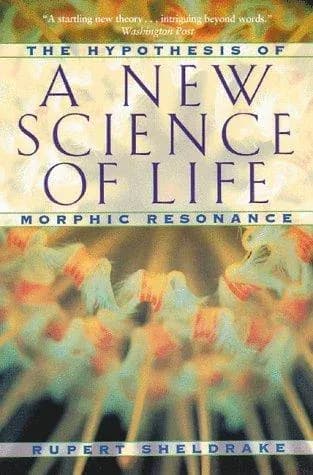
Rupert Sheldrake's A New Science of Life, subtitled The Hypothesis of Morphic Resonance, sets out to argue that nature has a memory. Sheldrake, an English author and parapsychology researcher trained as a biochemist at Cambridge, proposes that perceived phenomena, particularly biological ones, become more probable the more often they occur, so that biological growth and behaviour are guided into patterns laid down by previous similar events. On this account, natural systems inherit a collective memory from all previous things of their kind, and newly acquired behaviours can be passed down to later generations, a proposition the source likens to Lamarckian inheritance. Sheldrake generalises the idea well beyond biology, suggesting that it explains matters from evolution to the laws of nature themselves, which in his formulation are not fixed laws at all but mutable habits that have been evolving and changing since the Big Bang. He wrote the book after leaving a research post in India, having concluded that biochemistry alone would not solve the problem of why things have the basic shape they do. The hypothesis lacks mainstream acceptance and has been widely criticised as pseudoscience, with critics pointing to a lack of supporting evidence and to inconsistencies with genetics, embryology, neuroscience and biochemistry.
Written from the wikipedia article on Rupert Sheldrake.
What this vault takes from it
Reliability
Not audited here. 2 notes in this vault draw on it.
People
- Rupert Sheldrake