On Death and Dying
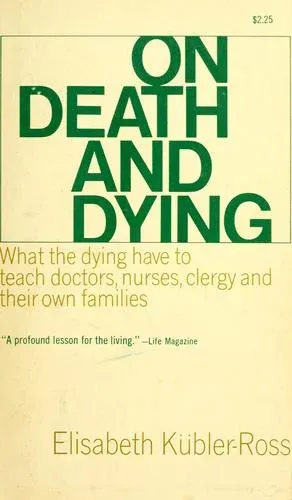
Elisabeth Kübler-Ross published this book in 1969, and it is where the five-stage model of dying first appeared. Motivated by how little medical training addressed death, she examined dying patients at the University of Chicago's medical school, and a series of seminars and patient interviews became the book. The stages she described, usually listed as denial, anger, bargaining, depression and acceptance, were drawn up to describe how terminally ill people come to terms with their own deaths, and were only later applied to the bereaved. She also described further responses including shock, partial denial, preparatory grief, hope and the withdrawal of emotional investment, alongside guilt, anxiety and numbness. She treated the stages as a device for clarity rather than as a fixed sequence, placed the word in inverted commas in her own diagram, and said in a later book that most of her patients showed two or three at once and not always in the same order. The source records that the model is empirically unsupported, that critics from Robert Kastenbaum onward have said no evidence shows people moving through the stages in order, and that the stated aim of the book was to change how dying patients are treated rather than to define dying in stages.
Written from the wikipedia article on the five stages of grief, which is where the entry for On Death and Dying leads.
What this vault takes from it
Reliability
Not audited here. 1 note in this vault draws on it.
People
- Elisabeth Kübler-Ross