Prime Movers of Globalization
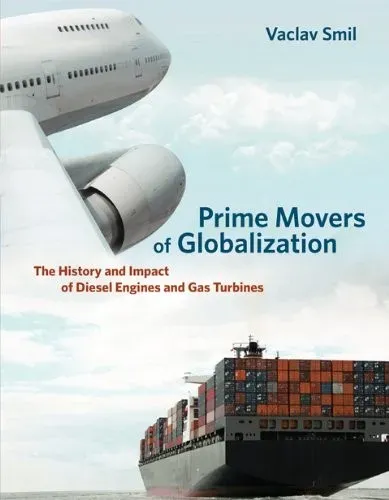
Smil's complaint is that the many recent books on globalisation, from claims that the world is flat to the rehabilitation of Genghis Khan as a pioneer of global commerce, ignore the technologies that actually made a globalised economy possible. What allows billions of tonnes of raw materials and manufactured goods to move between continents, and why can we fly almost anywhere on the planet within a day? His answer is two technical developments. The first is the high-compression, non-sparking internal combustion engine invented by Rudolf Diesel in the eighteen nineties. The second is the gas turbine designed by Frank Whittle and Hans-Joachim Pabst von Ohain in the nineteen thirties. The massive diesel engines that drive cargo ships and the gas turbines that propel jet aircraft are, Smil argues, more important to the global economy than any corporate structure or international trade agreement. He compares the efficiency and scale of both against earlier prime movers, including the sail and the steam engine. The long processes of development, commercialisation and diffusion that each went through serve as his examples of gradual technical advance which attracts little attention yet produces epochal shifts in global affairs.
Written from the catalogue listing at Blackwell's reproducing the MIT Press publisher's synopsis.
What this vault takes from it
Nothing yet. The title appears in the registry because it has been mentioned in passing, and no concept or person note currently draws on it.
Reliability
Not audited here. 0 notes in this vault draw on it.