The Brass Check
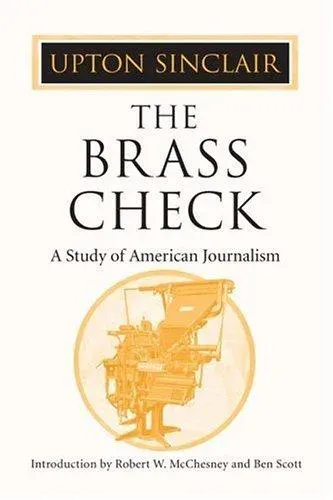
The Brass Check: A Study of American Journalism is Upton Sinclair's muckraking exposure of the American press, published by the author in nineteen nineteen. The title refers to the token a customer bought in a brothel and handed to the woman of his choice, and Sinclair uses it to say that the owners of the press buy the services of journalists in support of the owners' political and financial interests. His subject is chiefly the newspapers and the Associated Press wire service, with a few magazines. He argues that papers are either ultra-conservative supporters of established political and economic power or sensational tabloids practising yellow journalism, and that in both cases the purpose is to serve the interests of the proprietors, their bankers and their advertisers. Among the means he describes are publishers instructing editors on what may not be printed, invented stories, the sensationalising of trivial matters at the cost of reputations, and errors and slanders that are never retracted or are retracted months later where nobody will see them. The book falls into three parts, the first drawn from his own investigations and from papers that declined to print them, the second from cases he was not party to, and the third setting out remedies, among them a legal right to a correction given equal prominence, competition for a wire service he treats as a public utility, a union and an ethical code for reporters, and an endowed weekly chronicle of news carrying neither advertisements nor editorials. Sinclair called it the most important and most dangerous book he had written.
Written from the wikipedia article on the book.
What this vault takes from it
Reliability
Not audited here. 1 note in this vault draws on it.