The German Genius
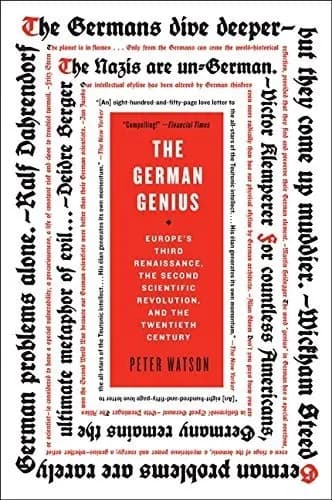
Peter Watson's cultural history runs from the end of the Baroque age and the death of Bach in seventeen fifty to the rise of Hitler in nineteen thirty-three, and argues that across those two centuries Germany was transformed from a poor relation among Western nations into a dominant intellectual and cultural force, more influential than France, Britain, Italy, Holland or the United States. In the early decades of the twentieth century, Watson writes, German artists, writers, philosophers, scientists and engineers were carrying their freshly unified country to new and undreamed of heights, and by the early nineteen thirties Germans had won more Nobel prizes than anyone else, more than the British and the Americans combined. The book goes back through time to explore the origins of this achievement, asking what conditions produced it and how it flourished. Watson frames the period as Europe's third renaissance and as a second scientific revolution, and his central claim is that the German contribution to modern thought is not a closed historical episode but something that shaped our lives and continues to shape the world we live in.
Written from the publisher description, Simon and Schuster.
What this vault takes from it
Reliability
Not audited here. 1 note in this vault draws on it.
People
- Peter Watson