The Moral Animal
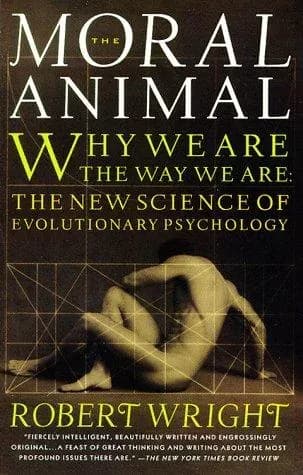
The Moral Animal presents the case for evolutionary psychology, the field that views human behaviour in the light of Darwinian theory, and applies it to the ordinary business of everyday life. Wright's argument is that the human mind was shaped by natural selection to serve reproductive success in ancestral conditions, and that the feelings which seem most personal, love and jealousy, ambition and guilt, affection between relatives and loyalty between friends, are the surface of strategies built by that process. He draws on the central ideas of the field, among them kin selection, reciprocal altruism and parental investment, to explain why men and women may differ in their sexual preferences, why families combine devotion with rivalry, and why status and office politics absorb so much human energy. A distinctive feature of the book is that Wright runs the argument alongside a life of Charles Darwin, using Darwin's courtship, marriage, career and scruples as a running case study of the theory applied to one particular person. He also presses the moral question the theory raises, asking what follows for ethics, self knowledge, our moral codes and public policy once conscience itself is understood as a product of selection, and he argues that seeing these mechanisms clearly is compatible with moral self examination rather than an excuse from it.
Written from the public record for the book.
What this vault takes from it
Reliability
Not audited here. 1 note in this vault draws on it.