The Myth of Mirror Neurons
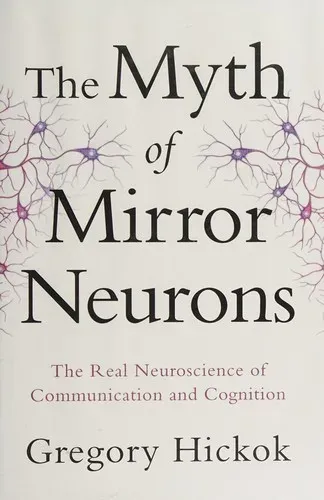
Gregory Hickok reconsiders the theory that mirror neurons, cells which fire both when an animal acts and when it observes the same action in another, provide the basis of human understanding of other minds, of language and of empathy. He argues that the mirror neuron account rests on a pair of connected assumptions, one about what the activity of these cells represents and one about how people come to understand the actions of others, and that when those assumptions are set against the evidence neither holds. Drawing on work in animal behaviour, modern neuroimaging, neurological disorders and speech research, he sets out alternative explanations of what the cells might be doing, and uses the question to open a series of larger ones about the brain: why humans imitate so readily, how far the two hemispheres differ, why there are two visual systems, whether speech must be produced in order to be understood, and what is happening in autism. Alongside the scientific argument Hickok offers the episode as an instructive case in how science proceeds, from discovery through theory to revision.
Written from the publisher description, W. W. Norton.
What this vault takes from it
Reliability
Not audited here. 2 notes in this vault draw on it.
People
- Gregory Hickok