When
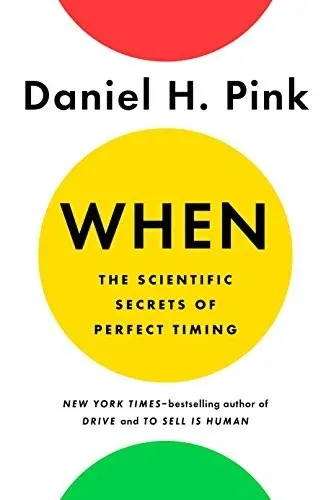
Daniel H. Pink argues that timing is not an art but a science. Most of us make our when decisions on intuition or instinct, and he treats that as a mistake, because decades of research in psychology, biology, economics and medicine reveal that timing follows predictable patterns, and understanding those patterns can improve performance and well-being. His first claim is that cognitive abilities do not remain constant through the day: most people move through three stages, a peak, a trough and a recovery, so doing the right work at the right time matters a great deal. His second is that breaks are a performance enhancer rather than a sign of weakness, particularly breaks involving movement, nature, socialising and full detachment from technology, which he says sharpen focus, reduce errors and lift well-being. His third is that episodic timing matters as much as daily timing, since beginnings affect the course of what follows, midpoints can either create a spark or produce a slump, and endings carry a large emotional charge. His fourth is that group timing makes us stronger, because synchronising with others, whether singing in a choir or rowing in a boat, boosts performance and deepens meaning.
Written from the official book page on Daniel Pink's website.
What this vault takes from it
Reliability
Not audited here. 1 note in this vault draws on it.
People
- Daniel H. Pink