Attention Theft
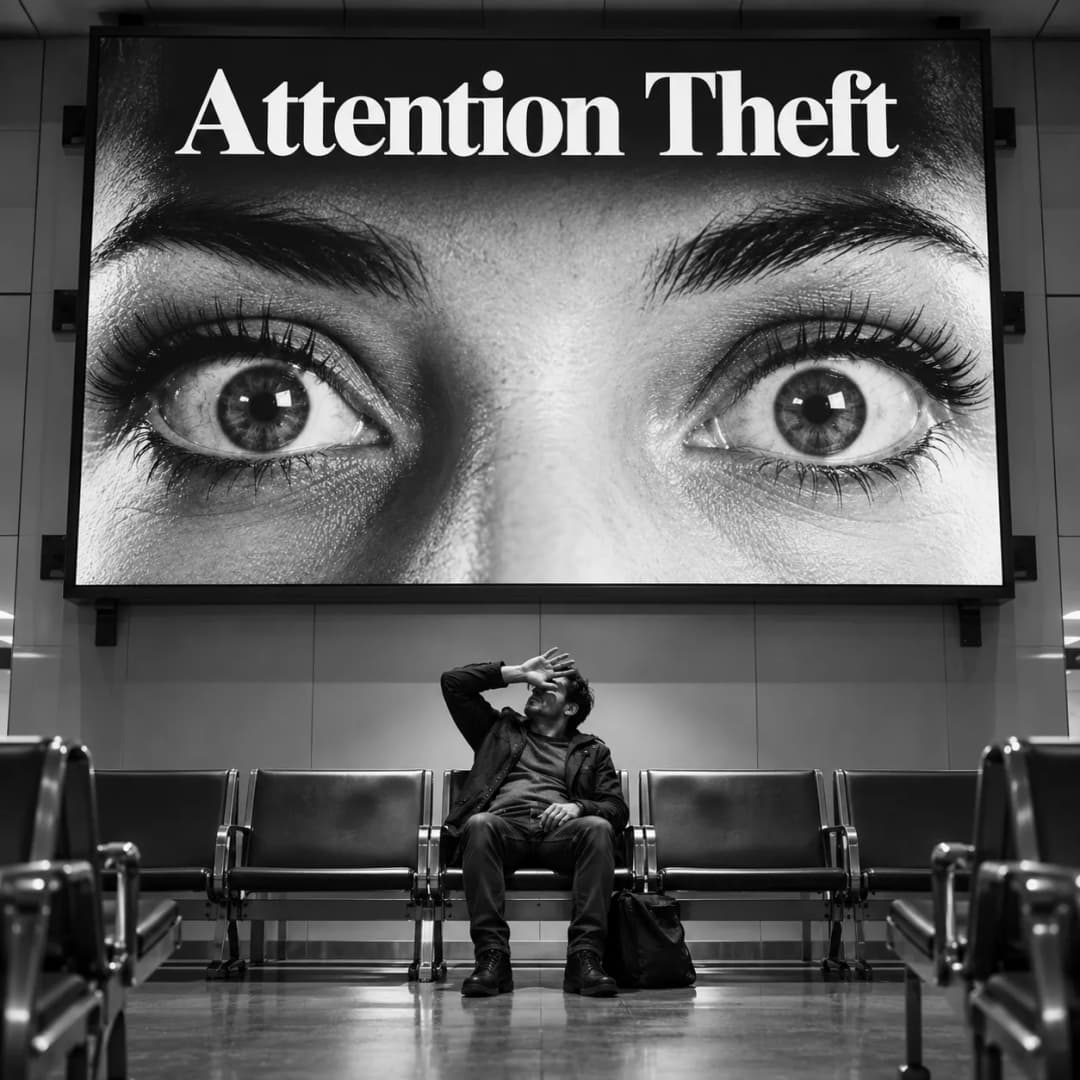
Attention theft is Tim Wu's name for claims on attention that are non-consensual and unavoidable: the screen bolted above the petrol pump, the advertisement running in a waiting room, any captive audience with no way to leave. The framing treats this as taking something of value without compensation rather than as an annoyance. It is a normative and legal argument about consent, not a research finding, and it is the category in which Wu thinks legal remedy is most plausible.
What it is
The category is defined by the absence of a bargain. Most attention harvesting rests on an implicit trade, in which something is given away free and attention is the price. Attention theft covers the cases where no trade was available, because the person could not leave, could not look away, or was legally required to be there.
Wu's clearest case is the one his book opens on, a school district selling advertising access to children who are compelled by law to attend and cannot opt out. He keeps returning to it because it is where consent is most obviously missing, and therefore where the property argument about attention is easiest to make.
The principle in its shortest form is a line Wu quotes from Glenn Reynolds: if you want my attention, pay me.
In effect
As an analytical tool the category does one job, which is to separate the negotiated from the imposed. A free service that funds itself with advertising has at least offered terms. A screen in a lift has not.
That distinction matters because it is the one that suggests a remedy. Arguments about whether a bargain was fair are hard to legislate. Arguments about whether there was any bargain at all are easier, which is why Wu aims his proposals at this category specifically.
What it does not say
It does not rest on research. This is an argument about consent and property in attention, not a testable effect, so replication does not apply to it.
It does not say that all attention capture is theft. The category is narrower than that by design, and applying it to voluntary use of a free service collapses the distinction that makes it useful.
It does not come with a verified quotation. The Reynolds line and its page reference were not traced to the book here. Check the source before quoting it.
Sources
- Wu, T. (2016). The Attention Merchants. Knopf. Sets out the idea and extends it in later essays on attention theft. The opening case is the Twin Rivers Unified School District in California selling advertising space in schools, which is a documented event and usable as illustration.
- Reynolds, G. "If you want my attention, pay me." Given at p. 352 in this vault's note on the book. Neither the line nor the page was verified here.