Automaticity
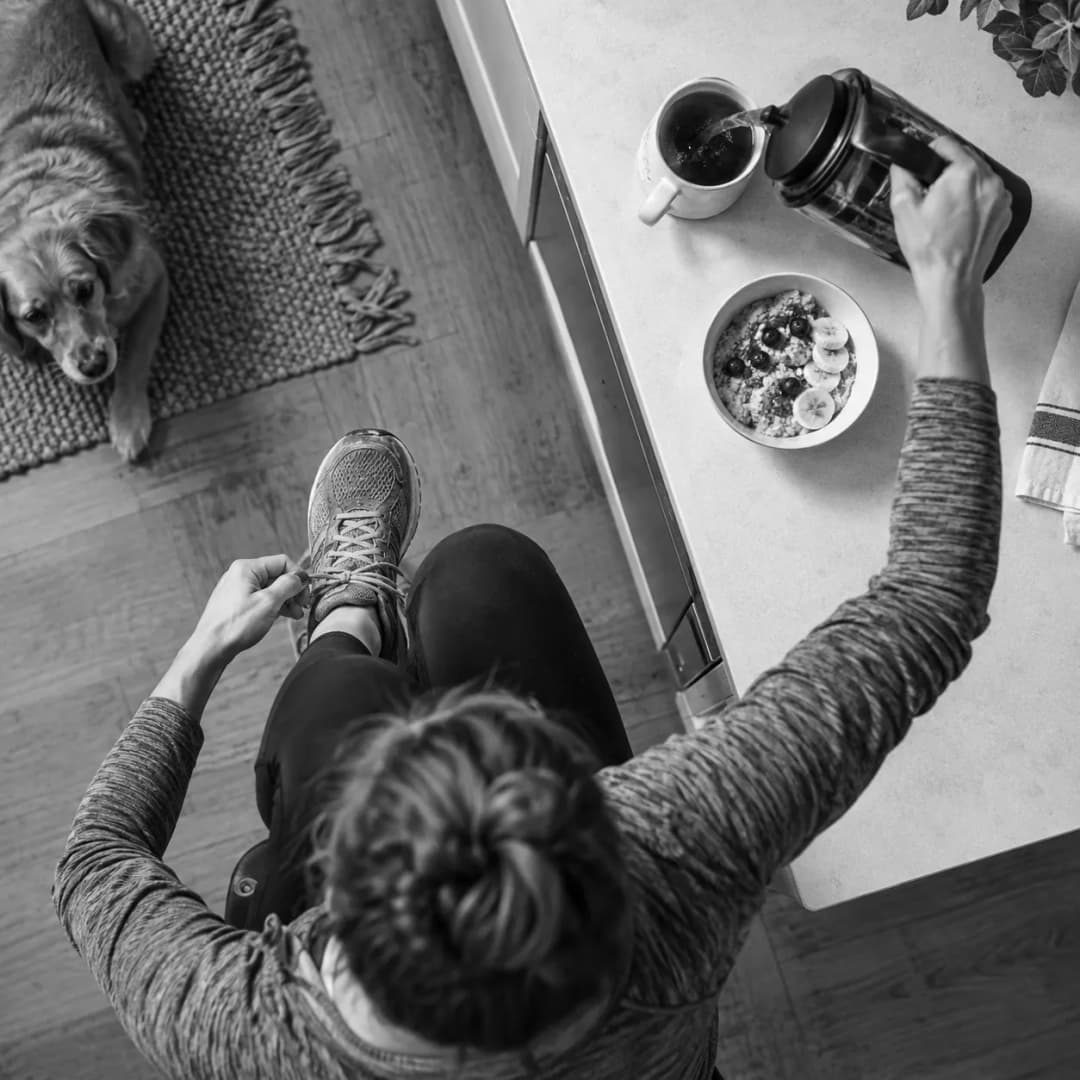
Automaticity is how far a behaviour runs without deliberate thought, effort or awareness. It is the quality most habit researchers measure, usually by asking people how automatic an action feels. In the best-known study it rose along a curve and then levelled off, at very different speeds for different people.
What it is
Phillippa Lally and colleagues at University College London asked 96 volunteers to choose one eating, drinking or exercise behaviour and to perform it once a day in the same setting, after breakfast for example, for 12 weeks. Each day they rated how automatic it felt on a standard questionnaire. The study appeared in the European Journal of Social Psychology in 2010. Automaticity rose steeply at first and then flattened. The time people took to reach 95 per cent of their own plateau ranged from 18 days to 254, and the longest figures were projections beyond the study's 84 days. The figure usually quoted is 66 days, which the authors' later summary for family doctors gives as the average. Missing a single day did not materially set anyone back.
How often a behaviour is repeated, and what it is attached to, appear to matter. In a 2013 study of 50 people, Gaby Judah, Benjamin Gardner and colleagues found that more frequent flossing predicted stronger automaticity, and that people told to floss after brushing their teeth, rather than before, formed stronger routines and were still flossing more often eight months later.
A 2023 study in PNAS by Anastasia Buyalskaya and colleagues measured something related but different: how predictable a behaviour became from its context. Across 30,110 gym members and 3,124 hospital caregivers, it took about four to seven months for gym attendance and nine or ten shifts for handwashing, and the authors rejected the idea of a single number of days.
In effect
A routine you want to run on its own, whether a weekly shop or a morning app, is likely to take months rather than weeks to feel automatic. Attaching it to an action you already do, in a fixed place and at a fixed time, gives it the best chance, and one missed day is no reason to start the count again.
What it does not say
The measure is a feeling. Of Lally's 96 starters, 82 gave enough data, a curve could be fitted for 62 and it fitted well for 39, so the famous number describes fewer than half of those who began. The behaviours were simple daily ones, and the volunteers, flossers, gym members and hospital staff were not tested as shoppers. Predictability, the measure in the 2023 study, is not the same thing as felt automaticity, and its authors note that a predictable gymgoer is not necessarily a habitual one. None of this research supports the popular figure of 21 days, which traces to Maxwell Maltz's 1960 remarks on how long surgical patients took to adjust to a changed face.
Sources
- Lally, P., van Jaarsveld, C. H. M., Potts, H. W. W., & Wardle, J. (2010). European Journal of Social Psychology, 40(6), 998-1009. doi:10.1002/ejsp.674.
- Gardner, B., Lally, P., & Wardle, J. (2012). British Journal of General Practice, 62(605), 664-666. doi:10.3399/bjgp12X659466.
- Judah, G., Gardner, B., & Aunger, R. (2013). British Journal of Health Psychology, 18(2), 338-353. doi:10.1111/j.2044-8287.2012.02086.x.
- Buyalskaya, A., and colleagues (2023). Proceedings of the National Academy of Sciences, 120(17), e2216115120. doi:10.1073/pnas.2216115120.