Box Breathing
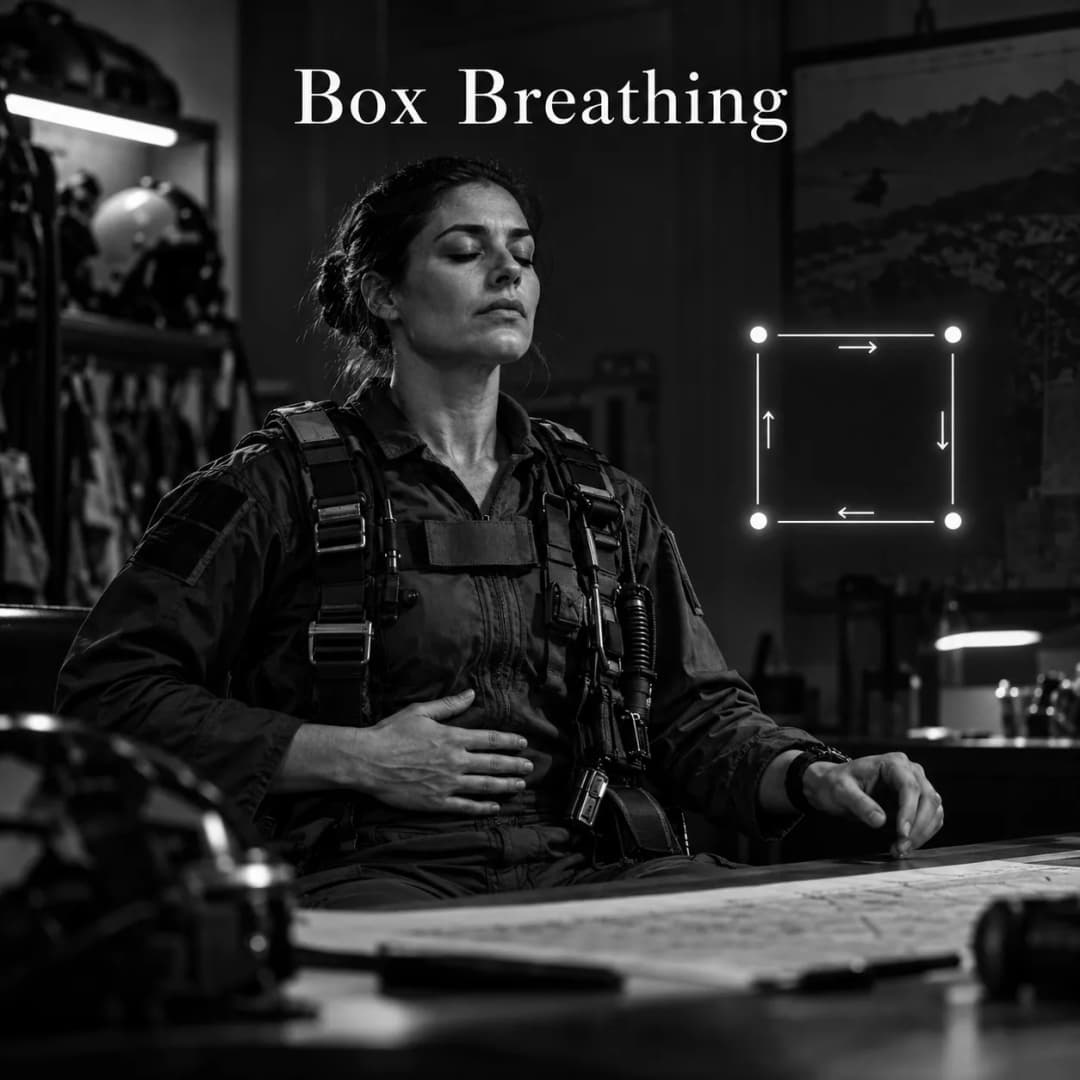
Box breathing is a paced-breathing convention with a memorable shape: breathe in, hold, breathe out, hold, each for an equal count. It is taught in military and first-responder training as a way to bring arousal down before or during a high-stakes task. The benefit is real and modest, the equal counts are a convention rather than an optimum anyone has established, and there is no identifiable originator.
What it is
The technique has no founding paper and no named author. It is a training convention that spread through aviation and special forces instruction and from there into popular self-help writing, which is why the name attaches to a shape rather than to a protocol anyone has validated.
Physiologically it belongs to the wider family of slow-breathing practices, and the channel it is usually thought to act through is heart rate variability. The justification most often offered for it in popular writing is the arousal and performance relationship, the idea that performance suffers at both very low and very high arousal, so bringing arousal down from a peak should help.
In effect
The evidence is for the family rather than for the shape. Guy Fincham and colleagues ran a meta-analysis of randomised trials in 2023 and found that breathwork reduced self-reported stress with small to moderate effects and considerable variation between studies, and they warned explicitly about the gap between the hype and the evidence.
Box breathing specifically has not been shown to beat other slow-breathing patterns. Melis Yilmaz Balban and colleagues compared several practices over a month in 2023 and found cyclic sighing improved mood more than box breathing or mindfulness did.
There is also a cost that popular accounts leave out. This publication's audit records a just-in-time trial in which box breathing lowered acute anxiety and was followed by slower reaction times. That trade matters much more for a pilot than for someone about to give a presentation, and it is the part the book this page is written from omits.
What it does not say
It does not say the counts matter. Nobody has found an optimum, and the shape is a mnemonic.
It does not say box breathing is the best slow-breathing practice. In the one direct comparison this vault holds, it was not.
It does not say the effect is large. The randomised evidence supports small reductions in self-reported stress with high heterogeneity between studies.
It does not extend to everyone. Paced breathing can cause light-headedness, and people with respiratory or cardiac conditions or a history of panic should take advice from a clinician first. Nothing on this page is medical guidance and no protocol is prescribed here.
The nasal-breathing claim made alongside it in the book this page draws on was not established.
Sources
- Fincham, G. W., Strauss, C., Montero-Marin, J., & Cavanagh, K. (2023). Scientific Reports, 13, 432. Meta-analysis of randomised trials of breathwork.
- Balban, M. Y., et al. (2023). Cell Reports Medicine. Cyclic sighing improved mood more than box breathing or mindfulness over a month.
- Lee, H. The Art of Clear Thinking, pp. 213 to 214. Breathing protocols given without the attention cost; the nasal-breathing claim at p. 214 was not established.