Capgras Delusion
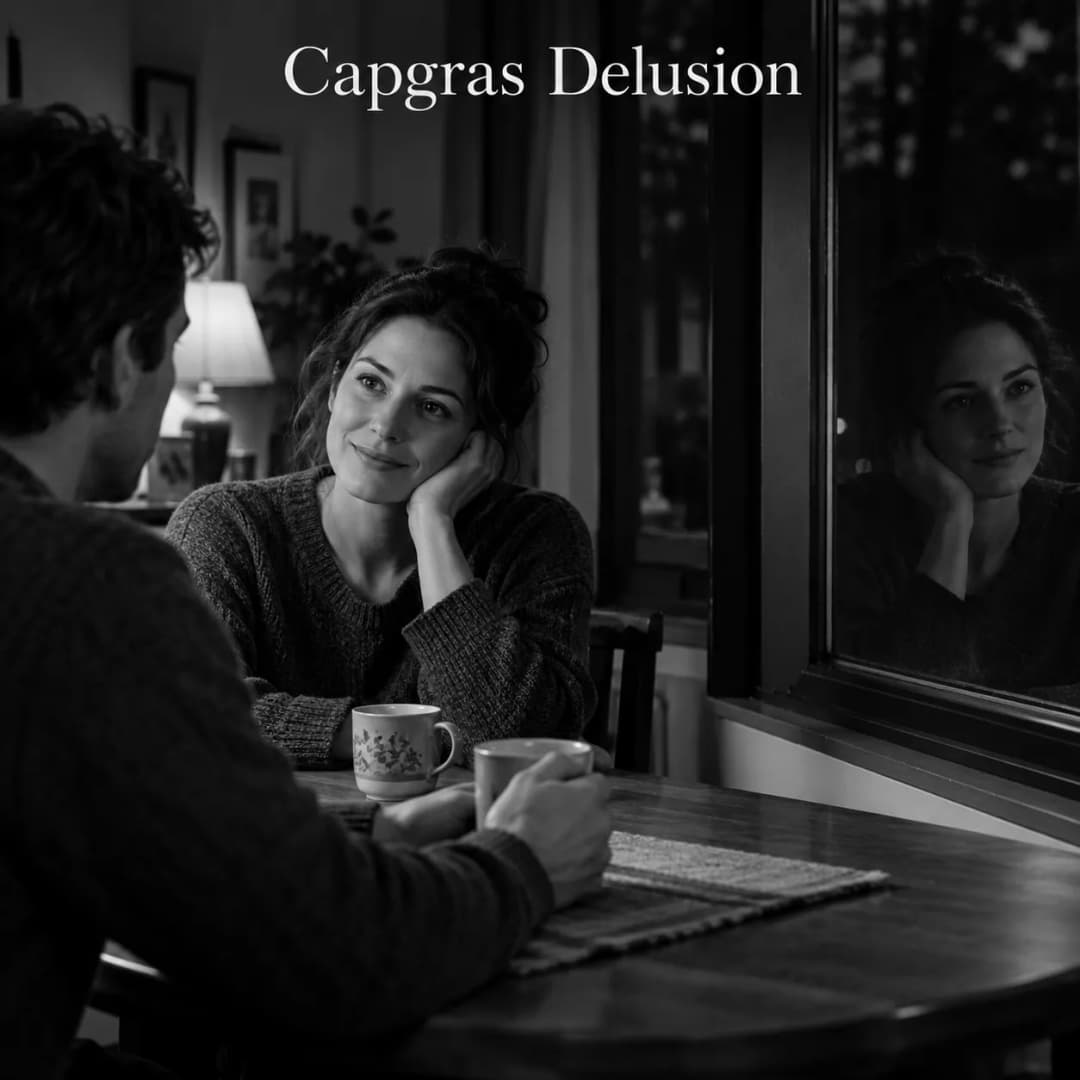
Capgras delusion is the belief that a familiar person, most often a spouse or a parent, has been replaced by an identical-looking impostor. Recognition is intact. What is missing is the feeling that ought to accompany it. The first description is Joseph Capgras and Jean Reboul-Lachaux's, in 1923. It is an accepted clinical description rather than a standalone diagnosis, and the mechanism proposed for it is not settled.
What it is
Capgras and Reboul-Lachaux described the syndrome in 1923 in the Bulletin de la Societe Clinique de Medecine Mentale, under a title that translates as the illusion of doubles in a chronic systematised delirium. The index patient is the woman the literature calls Madame M. The popular account this page draws on gives the attribution and the year correctly and names only the first author. Both are named here, because the second author is a person and dropping him is how a name disappears.
The syndrome is not a standalone diagnosis in either DSM-5 or ICD-11. It is described as a syndrome or a delusional theme occurring within schizophrenia, in severe depression with psychotic features, in dementia and after brain injury, and it sits inside the family of delusional misidentification syndromes alongside Fregoli, subjective doubles and mirrored-self misidentification.
In effect
The most developed account of the mechanism is the two-factor theory of delusions. On that account the first factor is the loss of the autonomic response to a familiar face, which gives recognition without felt familiarity, and the second is a belief-evaluation deficit that allows the impostor hypothesis to be adopted and held. Reduced skin conductance responses to familiar faces have been reported in small patient series, which is the empirical support the first factor rests on.
Prediction-error accounts are the main rival, and neither account is settled.
The condition also serves this library as a standing illustration of a design problem. The evidence base is overwhelmingly single cases and small series, which is a constraint on every claim in the area rather than a criticism of any one paper.
What it does not say
It does not say the patient fails to recognise the person. Recognition is preserved, which is what makes the syndrome interesting and what the two-factor account is built to explain.
It does not settle the mechanism. The two-factor theory is influential and rests on single cases and small samples, and prediction-error accounts remain live.
It does not carry the weight of a replicated effect. The clinical description is accepted; the mechanistic literature behind it is best graded mixed.
The 1923 original was not opened for this page.
Sources
- Capgras, J., & Reboul-Lachaux, J. (1923). "L'illusion des sosies dans un delire systematise chronique." Bulletin de la Societe Clinique de Medecine Mentale. Not read here; consulted through secondary sources.
- Dingman, M. Bizarre. Ingested 2026-09-23. Attribution and year correct; the second author is not named there.
- Coltheart, M., and colleagues. The two-factor theory of delusions, the framework built largely on this case.