Cruel Optimism
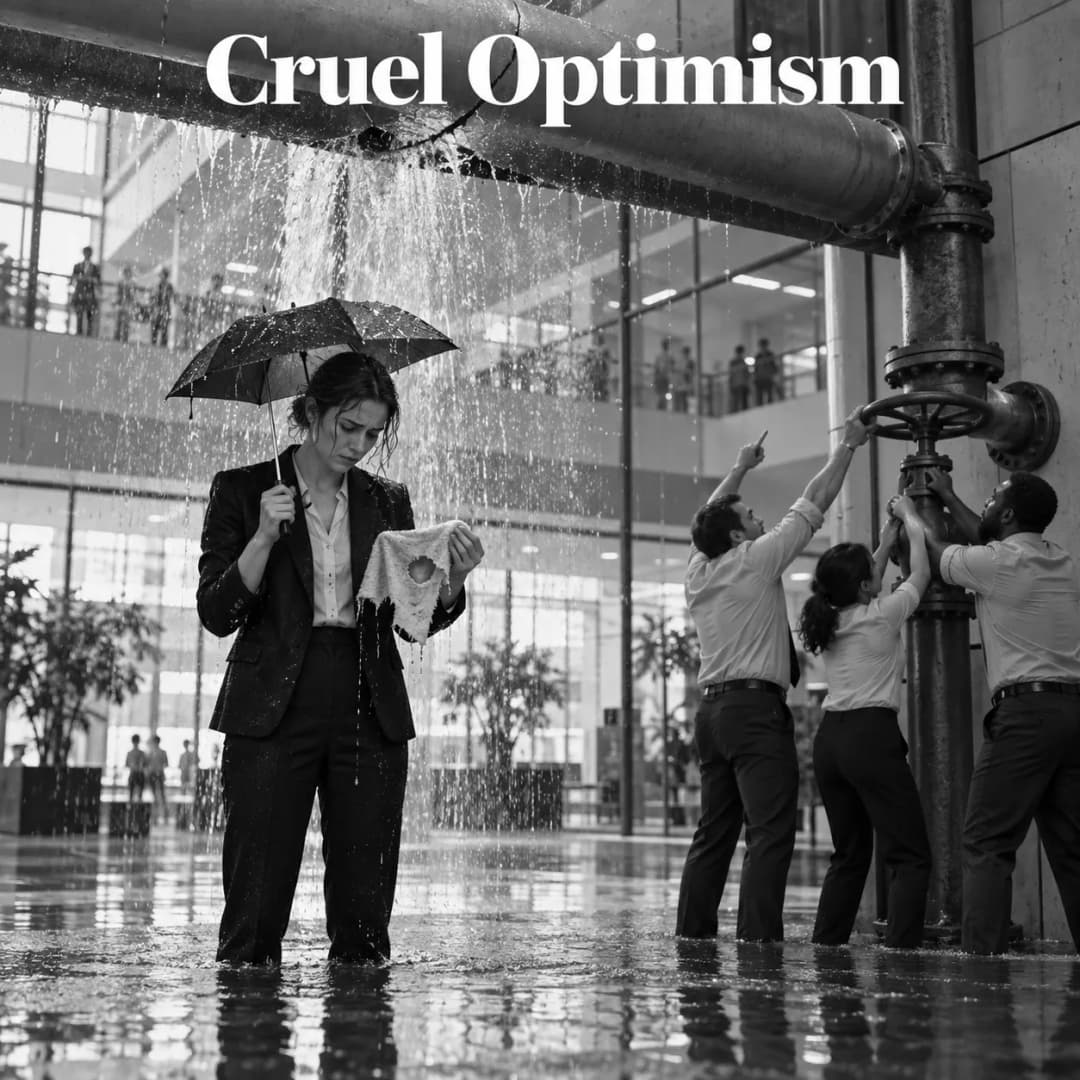
Cruel optimism names a rhetorical move: offering a simple individual solution, in upbeat language, to a problem whose causes are structural, so that when the solution fails the person who tried it blames themselves rather than the structure. The cruelty is not in the failure but in the attribution the failure produces. The term is Lauren Berlant's. It is a critical framework rather than a testable effect, and replication does not apply to it, which is precisely why it survives an audit that much of the surrounding material does not.
What it is
The chain of custody matters here more than usual, because none of it is research. Johann Hari takes the term from Ronald Purser, whom he interviewed and who wrote McMindfulness, and Purser takes it from Lauren Berlant. So the idea reaches a reader of Stolen Focus as an interviewee talking, sitting on top of a term that neither the interviewee nor the interviewer coined.
One attribution error travels with it and should be corrected on sight. Hari describes Berlant as a historian. Berlant's field was literary and cultural theory. The book gives no year for the coinage, and this page does not supply one.
Hari's own counter-term is authentic optimism, which is his synthesis rather than anyone's finding: name the barriers honestly, then organise collectively to remove them.
The worked example in the book is stress, and it is built as a two-sided comparison. On one side is a bestselling book telling readers that stress is self-imposed thought, something a person does to themselves and can therefore stop doing. On the other is a list, from the Stanford Graduate School of Business, of the structural causes of workplace stress: no health insurance, the threat of lay-offs, lack of autonomy, long hours, low organisational justice and unrealistic demands. Not one of the six is a thought a reader can decide to stop having. That list arrives at two removes, reaching Hari via Purser via Dana Becker's book, so it is a framing device and not a citation.
In effect
The concept earns its place because it names what goes wrong at the end of almost every piece of consumer psychology writing. The reader arrives with a problem, the piece explains the mechanism, and the last section tells them what to do. When the mechanism just described was environmental and the advice is individual, the move has been performed. An article that spends two thousand words explaining that attention is being harvested by an industry, and then closes on turning off notifications, has handed the reader who still cannot finish a book one more piece of evidence that the problem is them.
The test, usable in an edit pass, is a single question. If this advice fails, who will the reader blame? If the honest answer is themselves, the structural half needs restoring before the piece ships.
It is also the sharpest tool available for a disagreement this vault already holds. Hari devotes a chapter to arguing that Nir Eyal's individual-fixes approach is cruel optimism. Eyal answers, in the same book, that Hari is running a moral panic and garbling the social science. Both positions are kept. Eyal is right that individual technique works for the individual who applies it, and Purser and Hari are right that selling it as the answer to a structural problem manufactures self-blame at scale. An article can hand a reader a technique and still say out loud that the technique is not the fix.
James Williams supplies a third position and a more useful one, because his objection is different in kind. Hari's complaint is about what individual advice does to the reader who fails, and it is an accusation. Williams's complaint is about what individual advice lets the designer off, and it is an argument. He never calls anyone cruel. He says the individual remedy is futile, and he says it to the industry: asking users to just adapt to distraction, he writes, amounts to telling someone that thousands of the world's brightest psychologists and designers are working to tear down their willpower, so they need more willpower. He rejects the whole slate by name, including detox, media literacy on its own, corporate self-regulation, countertechnologies as bandages and mindfulness programmes run inside technology companies. And unlike Hari he supplies the structural half the edit-pass test asks for: advertising ethics as a profession, ad blocking on by default, benefit-corporation structures, regulated transparency of persuasive goals, public measurement of attentional harm and collective user representation.
What it does not say
It does not say that individual advice never works. It says that individual advice offered as the whole answer to a structural cause produces self-blame in the majority for whom it does not work. Those are different claims and the second does not imply the first.
It does not come with evidence, because it is not that kind of idea. It is a name for a rhetorical pattern, and the only thing about it that can be checked is the attribution chain, one link of which is already known to be printed wrong.
It does not license the opposite error. Blaming the structure for something it did not cause is its own failure mode, and the counterweight has to be stated: the vault's own reading of the workplace interruption literature records that roughly two thirds of interruptions are generated by the person being interrupted. A purely structural account has to answer that number, and none of the books on this page does.
And it does not settle who is right about attention. It gives you a way to notice when a piece of writing has quietly transferred responsibility, which is a smaller and more durable thing.
Sources
- Hari, J. (2022). Stolen Focus: Why You Can't Pay Attention. Bloomsbury. The term as taken from Purser in interview, the stress example, the Stanford Graduate School of Business list and the Dana Becker intermediary. Read this book's reliability audit before citing anything further from it.
- Purser, R. (2019). McMindfulness. Repeater Books. Hari's source for the term.
- Berlant, L. Cruel Optimism. The originating use. Hari gives no year and describes Berlant as a historian; her field was literary and cultural theory.
- Williams, J. (2018). Stand Out of Our Light. Cambridge University Press. Chapter 11 for the futility argument and the rejected slate of individual remedies.
- Evidence status set in the vault on 2026-09-03 as not-a-research-claim. This is a term of art and a critical framework, not a testable effect.