Marketing Placebo Effect
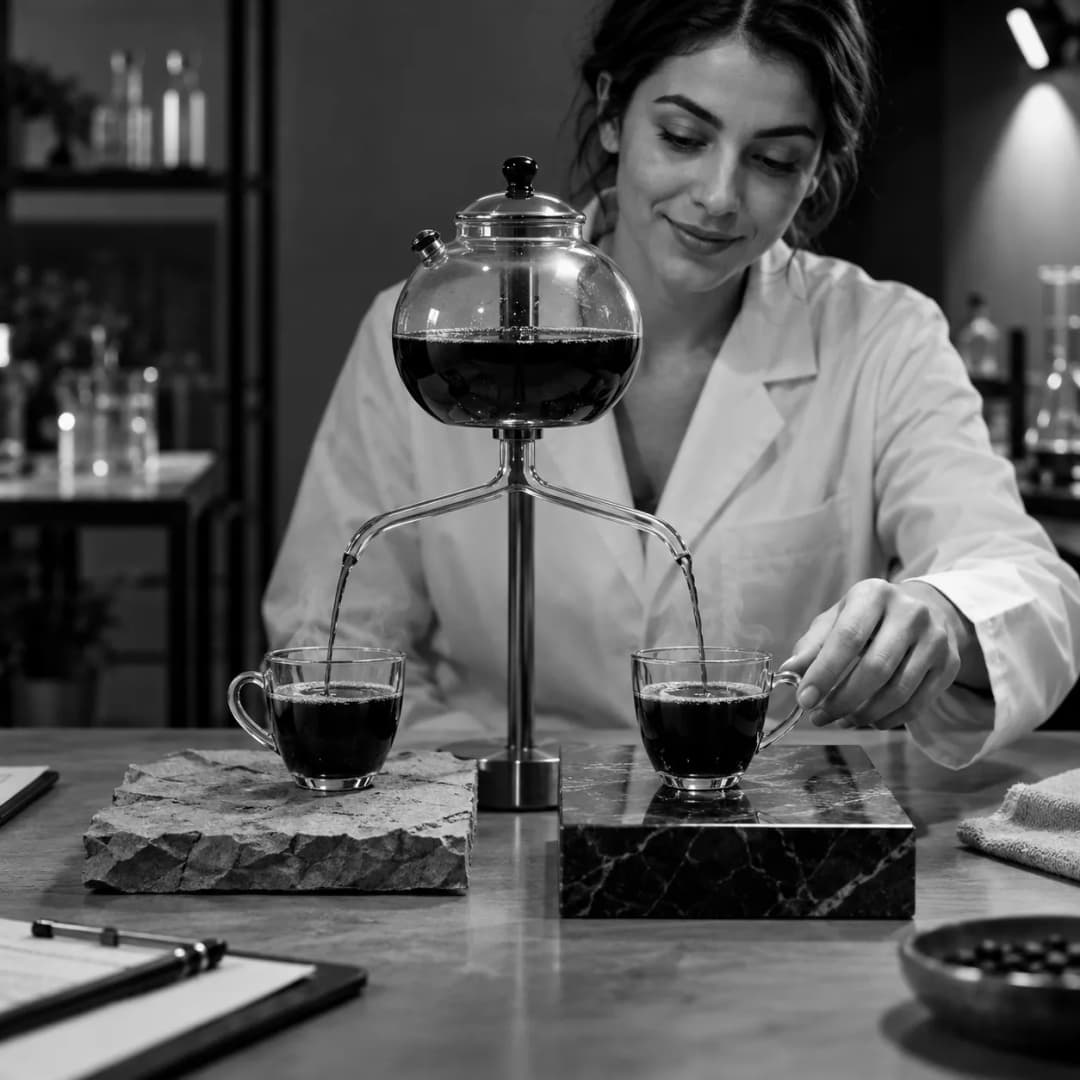
The marketing placebo effect is the finding that a price or a label changes how much a product is enjoyed, or how well it works, even though the product is unchanged. It is usually explained by expectation. The largest recent tests suggest a price moves expectations more reliably than it moves experience.
What it is
The best-known test was published in 2008 in the Proceedings of the National Academy of Sciences by Hilke Plassmann and colleagues. Twenty adults who liked red wine were scanned while sampling what they were told were five Cabernet Sauvignons identified by price. There were three. One appeared once at $5 and once at $45, another at $10 and at $90. Each repeated wine was rated more pleasant at the higher price, and activity rose in the medial orbitofrontal cortex, a region widely thought to track pleasantness. Ratings of intensity did not shift. Eight weeks later, tasted without prices, the differences had gone. In 2017 Liane Schmidt, with Plassmann as senior author, repeated the task in Bonn with 54 recruits, 30 of whom gave usable brain data, and found the same direction, driven mostly by a €3 label pulling ratings down.
Price can also change performance. In 2005 Baba Shiv, Ziv Carmon and Dan Ariely reported three experiments in which people who paid a discounted price for an energy drink sold as improving mental sharpness solved fewer puzzles than people who paid the regular price. The authors traced the gap to expectations, through a process that appears not to be conscious. In a 2008 JAMA research letter led by Rebecca Waber, 85 per cent of volunteers who believed they had an expensive inert painkiller reported less pain from mild shocks, against 61 per cent of those given the cheap version, according to Stanford's summary.
David Robson's The Expectation Effect (2022) supplies the general frame, describing the brain as a prediction machine that builds perception partly from what it expects.
In effect
A visible price can change how much you report enjoying something. A blind comparison at home, two bottles in identical glasses numbered by someone else, removes the label from the decision. In Robin Goldstein and colleagues' 2008 analysis of more than 6,000 blind tastings, the link between price and liking was small and negative for people without wine training.
What it does not say
The strongest evidence on the other side is a 2023 paper by Jacqueline Kurz and two colleagues: six studies with 2,842 participants in which a higher price raised expectations every time, while its effect on quality and liking after trying the product was inconsistent. They concluded the effect may be less dependable and less general than assumed. The two brain-scanning studies come from one research group and used small samples, and the 2008 authors themselves raised the concern that participants might not want to admit a cheap wine tasted better. Against the null results, the brain data and puzzle scores do not depend on what people choose to report.
Sources
- Plassmann, H., O'Doherty, J., Shiv, B., & Rangel, A. (2008). Proceedings of the National Academy of Sciences, 105(3), 1050-1054. doi:10.1073/pnas.0706929105.
- Schmidt, L., Skvortsova, V., Kullen, C., Weber, B., & Plassmann, H. (2017). Scientific Reports, 7, 8098. doi:10.1038/s41598-017-08080-0.
- Shiv, B., Carmon, Z., & Ariely, D. (2005). Journal of Marketing Research, 42(4), 383-393. doi:10.1509/jmkr.2005.42.4.383.
- Waber, R. L., Shiv, B., Carmon, Z., & Ariely, D. (2008). JAMA, 299(9), 1016-1017. doi:10.1001/jama.299.9.1016.
- Robson, D. (2022). The Expectation Effect. Canongate. Chapter 1, pp. 23-24.
- Goldstein, R., and colleagues (2008). Journal of Wine Economics, 3(1), 1-9. doi:10.1017/S1931436100000523.
- Kurz, J., Efendić, E., & Goukens, C. (2023). Psychology and Marketing, 40(6), 1115-1129. doi:10.1002/mar.21799.