Neuroaesthetics
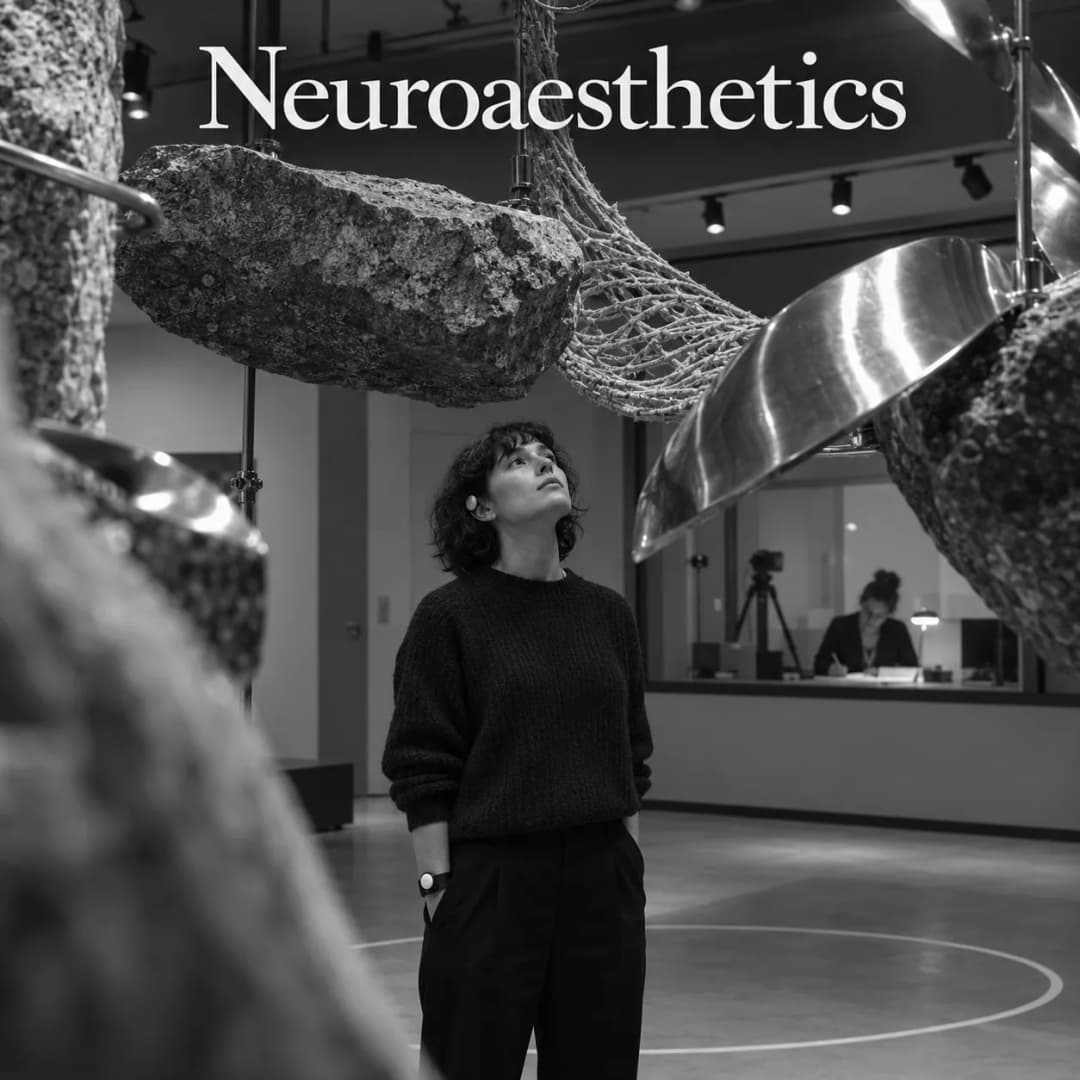
Neuroaesthetics is the study of what happens in the brain and the body when a person makes, performs or encounters art, design, music, dance, architecture or anything else carrying aesthetic weight. It is a research field rather than a movement, it is young, and it has not yet settled the question it was founded on. Semir Zeki is commonly credited with founding it. This publication treats it as a field worth reading and treats no health claim as established on its authority.
What it is
The field's ambition is to give an account of aesthetic experience in terms of the systems that produce it. Semir Zeki is named as its originator in this library's only source on the subject, which also gives his motive, that he began with beauty because he wanted a brain-based explanation for it. No founding date appears in that source and none was checked, so this publication records the year as unknown rather than guessing one.
Its best-developed product so far is not a finding but a framework. The aesthetic triad, set out by Anjan Chatterjee and colleagues around 2014, organises aesthetic experience into sensory-motor, emotion-valuation and meaning-knowledge systems, and it is correctly labelled a theoretical model rather than a result.
The founding question is still open, and the field's own advocates say so. At page 174 of Your Brain on Art the authors concede that a global definition of beauty is elusive, that much of what a person registers as beautiful is personal, and that there is still debate about whether there is a central location for beauty in the brain at all. A discipline that cannot yet say whether its central object has a brain address is early.
In effect
Some of the work the field draws on is solid and old. Enriched environments goes back to Marian Diamond in 1964 and is the best-sourced claim in this library's source on the subject. The arts-and-health epidemiology, which is a neighbouring literature rather than this one, has real prospective cohorts behind it, including a fourteen-year follow-up by Daisy Fancourt and Andrew Steptoe.
The brain claims are where the sourcing is thinnest. This publication's audit of Your Brain on Art found that where the book makes a claim about the brain, the source is very often a science-communication intermediary rather than the study. The same audit searched for a published critique of the book by a neuroscientist and found none, because the reception has come almost entirely from arts, design and wellness outlets. An advocacy literature with no adversarial reading of it is not the same as a settled one.
The field's most abused warrant is neuroplasticity. That the brain changes with experience is true and uncontroversial, which is exactly why it establishes nothing about any particular intervention. That the brain changes does not tell a reader whether the change is large, lasting or good.
What it does not say
It does not say that any aesthetic experience produces a health outcome. Nothing recorded here supports an outcome claim, and this publication does not make one on the field's authority.
It does not say that the neuroplasticity argument does any work. A mechanism that is available for every experience a person has cannot single out one of them.
It does not say that the field is the same thing as neuroarts. The research field asks what the brain does. The applied and advocacy arm argues what should therefore be built, funded and prescribed, and the second can be right or wrong independently of the first.
It does not say that the absence of published criticism is endorsement. It is a fact about who has been reading, and nothing more.
Sources
- Magsamen, S., & Ross, I. Your Brain on Art. Canongate, 2023. This library's only source on the field, used as a map of who to read and never as a source for a finding. Semir Zeki is named as the field's originator at p. 174, with no founding date given. The field-level concession is at the same page. The book carries no superscripts, its notes are keyed retrospectively by page and catch-phrase, and roughly forty per cent of its pages carry no note at all.
- Chatterjee, A., and colleagues, for the aesthetic triad, around 2014. A theoretical model.
- Diamond, M. (1964), for enriched environments. Fancourt, D., & Steptoe, A., for the fourteen-year arts-and-health follow-up in the neighbouring epidemiological literature.
- Verification pass, 2026-09-20. No review by a neuroscientist critically assessing the book's evidential standards could be found; recorded as an absence.