Neurodiversity
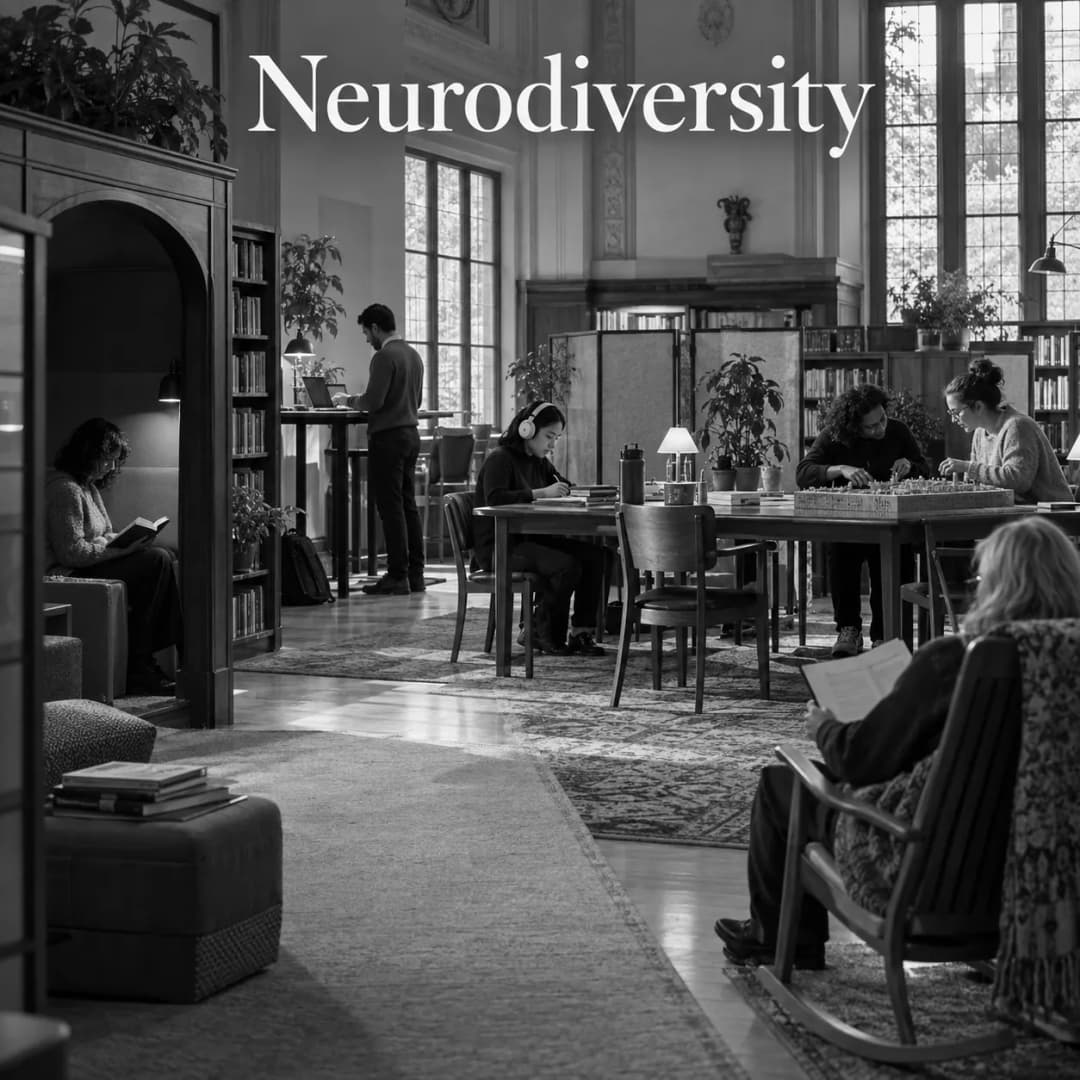
Neurodiversity is the position that variation in how people think and feel is normal biological variation rather than pathology, and that some of what gets labelled a severe disorder is better read as a difference. It is a normative and conceptual position about how to understand neurological variation, not a testable effect, and it is an argument about where the problem sits rather than a diagnosis. The term is commonly credited to Judy Singer's 1998 sociology honours thesis, and a 2024 correction argues that the idea was developed collectively in autistic online communities before her writing. Both views are credited here.
What it is
The claim is about location. Either the difficulty lies in the person, or it lies in the fit between the person and an environment built for someone else. That is what makes neurodiversity an argument rather than a clinical category.
On attribution, the term is commonly credited to Judy Singer's honours thesis of 1998, and it appeared in print the same year in Harvey Blume's article in The Atlantic. Monique Botha, Robert Chapman, Morénike Giwa Onaiwu and colleagues argued in Autism in 2024 that the concept emerged collectively on autistic mailing lists before Singer's writing, and set that out as an overdue correction to the origin story. Anyone crediting the term should carry both.
Adrian Furnham's framing in The New Psychology is a continuum. The conditions in question are developmental, at least partly genetic, frequently comorbid, and vary in severity right across the general population, with diagnosed people sitting at one clinical extreme of natural variation rather than in a separate category. He offers a compromise position that reads some of them as a poor fit with society's norms rather than as intrinsic dysfunction, and he cites the British Psychological Society's 2023 statement, which describes neurodiversity in terms of more extreme differences between a person's strengths and weaknesses. Singer is not named anywhere in his chapter.
In effect
The liveliest application, and the least evidenced, is self-diagnosis through social media, and it is worth keeping because so few accounts write about both halves of it.
On one side Furnham lists sense-making, a frame that explains a life that did not previously make sense; a healthier self-concept; belonging to a community that shares the experience; avoiding the cost and the waiting lists of formal assessment; and bypassing the sociocultural barriers that make women, people of colour and gender minorities less likely to be diagnosed. On the other he notes that creators are motivated to make psychiatric content relatable rather than accurate, which is a selection pressure on the content itself, and that such content may inflate the number of people who believe they are at clinical levels.
His strongest claim is speculation and must be read as such. He suggests that people below the diagnostic threshold may end up worse off than more severely affected people who receive treatment. That rests entirely on the word may, with no study, no sample and no mechanism behind it.
One printed figure needs handling. The chapter states that attention deficit hyperactivity disorder persists into adulthood for thirty to fifty per cent of children diagnosed, and nothing in its bibliography supports it. The figure is definition-dependent: Stephen Faraone, Joseph Biederman and Eric Mick estimated in Psychological Medicine in 2006 that about fifteen per cent retain the full diagnosis by age twenty-five and about sixty-five per cent meet criteria when partial remission is counted. A single range given without saying which definition it uses is misleading, and this publication does not print one.
What it does not say
It does not say that diagnosis is unnecessary, that support is not owed, or that anyone should reconsider their own care. Nothing here is guidance for an individual, and questions about a person's own situation belong with a clinician.
It does not settle the social model against the continuum model. The two answer different questions, one about what should change and the other about how a trait is distributed, and this publication holds both: the continuum framing is a fair description, the social model is a fair claim about response, and a poor fit is still a real cost to the person living it.
It does not license self-diagnosis, and it does not condemn it either. What the evidence supports is that the material circulating is selected for relatability, which is a fact about the medium rather than about any viewer.
It does not supply the thirty to fifty per cent persistence figure as data. Cite a definition or cite nothing.
Sources
- Singer, J. (1998), sociology honours thesis, commonly credited with the term; Blume, H. (1998), The Atlantic, where it appeared in print the same year.
- Botha, M., Chapman, R., Giwa Onaiwu, M., et al. (2024). "The neurodiversity concept was developed collectively: an overdue correction on the origins of neurodiversity theory." Autism.
- Faraone, S. V., Biederman, J., & Mick, E. (2006). Psychological Medicine, 36(2), 159-165. About 15 per cent retain the full diagnosis at age 25; about 65 per cent when partial remission is counted.
- British Psychological Society (2023), cited by Furnham as a professional-body position statement rather than as a finding.
- Furnham, A. The New Psychology, ch. 33. Judy Singer is not named. The 30 to 50 per cent persistence figure is uncited and unsupported by the chapter bibliography. The self-diagnosis section names two video sources in the prose.
- Evidence review, 2026-09-25. Verdict: not-a-research-claim.