Perceived Physical Activity
Perceived physical activity is how active people believe they are, usually compared with others their age, measured separately from what they actually do. The two come apart, and the perception is linked to health in large observational data. This page is general information, not medical or exercise advice.
What it is
In 2017 Octavia Zahrt and Alia Crum analysed 61,141 American adults from three nationally representative surveys, linked to national death records with follow-up of up to twenty-one years. People who saw themselves as less active than their peers were up to 71 per cent more likely to die during follow-up than those who saw themselves as more active, after adjusting for measured activity and other factors.
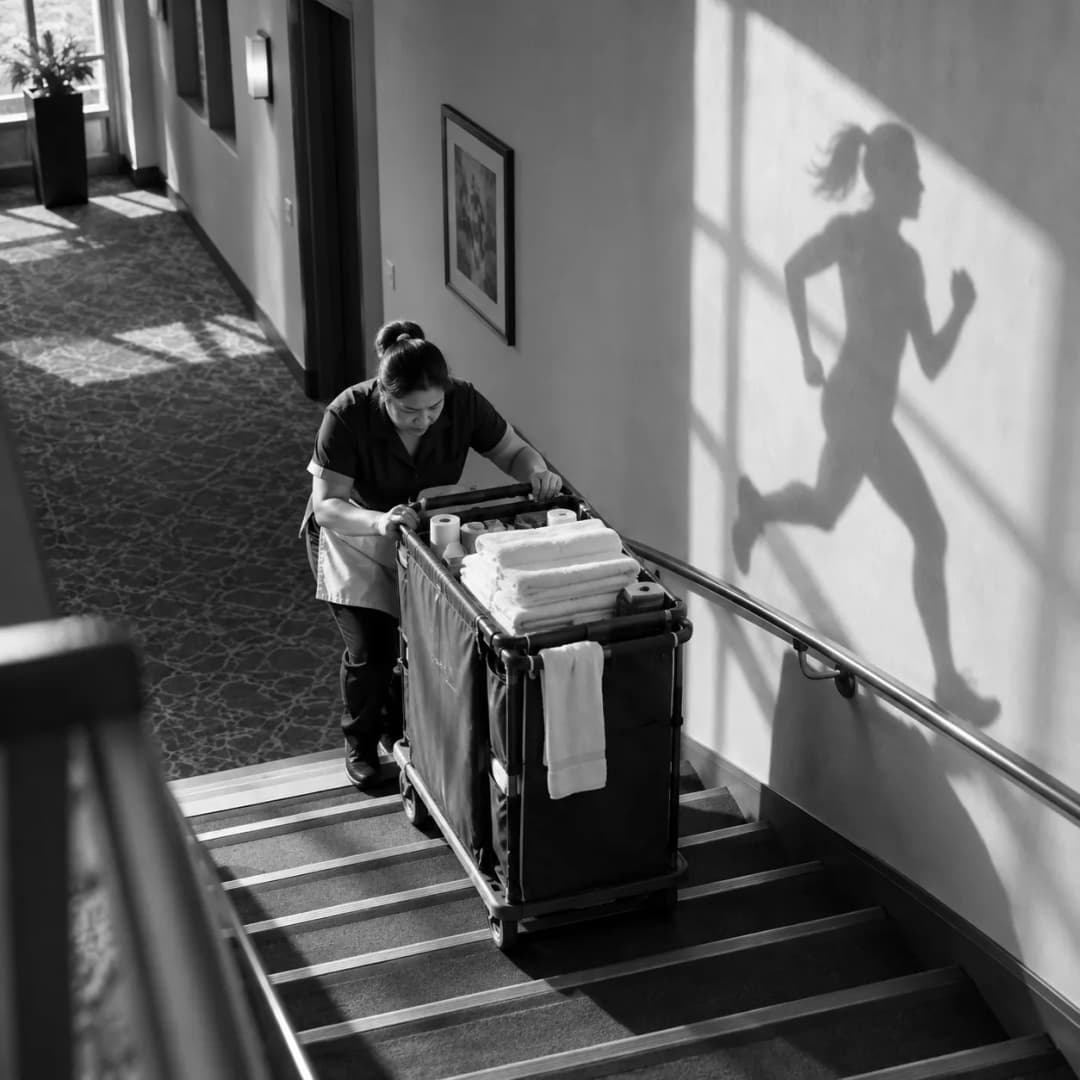
The smaller experimental companion is Crum and Ellen Langer's 2007 study of 84 hotel housekeepers. Housekeepers in hotels told that their work was good exercise saw themselves as getting more exercise four weeks later and, compared with the others, showed reductions in weight, blood pressure, body fat, waist-to-hip ratio and body mass index.
In effect
People tend to undercount the activity in ordinary life, and comparing yourself with unusually active friends can make you feel inactive when you are not. A record of what you actually did in a week is a better picture than a comparison with the people around you.
What it does not say
It does not show that a belief causes death. The 2017 study is observational, and illness may drive both how active people feel and how long they live.
It does not show that believing you are active can replace being active.
The housekeepers study is small, was assigned by hotel rather than by person, ran for four weeks, and may reflect changes in effort. No replication has been located in either direction.
Sources
- Zahrt, O. H., & Crum, A. J. (2017). "Perceived physical activity and mortality: evidence from three nationally representative U.S. samples." Health Psychology, 36(11), 1017-1025. doi:10.1037/hea0000531.
- Crum, A. J., & Langer, E. J. (2007). "Mind-set matters: exercise and the placebo effect." Psychological Science, 18(2), 165-171. doi:10.1111/j.1467-9280.2007.01867.x.