Planned Hedonic Deviations
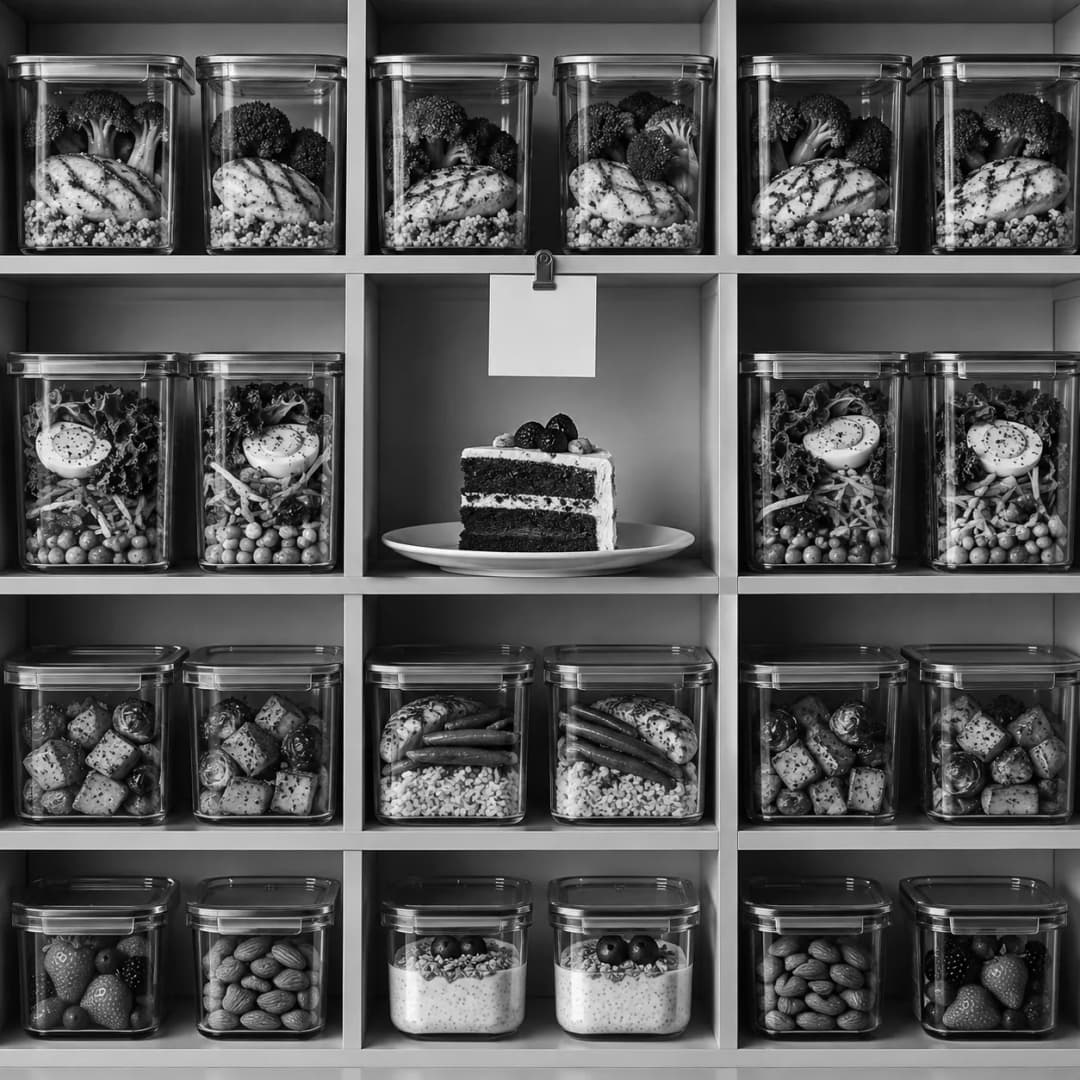
Planned hedonic deviations are indulgences built into a long goal plan in advance, such as a scheduled treat day in a diet or a budgeted night out in a savings plan. In experiments published in 2016, plans that included planned deviations kept people more motivated and in a better mood than rigid plans.
What it is
The idea was tested by Rita Coelho do Vale and colleagues in the Journal of Consumer Psychology. In two controlled experiments, one simulated and one with people who were actually dieting, participants following plans with scheduled indulgences stayed more motivated and in a better mood than those following plans with no allowance. A third study of people pursuing a range of goals found a similar benefit.
The key word is planned. The indulgence is part of the goal, decided in advance, so when it happens it does not count as a failure.
In effect
Planned deviations work against the abstinence violation effect. That effect depends on a goal framed as a clean record: one slip breaks the record, and the person concludes the goal is lost. A plan that includes indulgences keeps the record intact, because the indulgence was always allowed.
The same logic applies to how goals are written. A goal set as a rate, such as no takeaways on most nights of the month, can absorb an occasional exception in a way that an absolute rule cannot.
What it does not say
Planned deviations are not permission to abandon a goal. The benefit in the 2016 studies came from deviations that were scheduled in advance, not from indulgence whenever it is wanted.
The paper also explains part of the benefit as restoring self-control resources. That framing sits uneasily with the replication record on willpower as a resource that runs down, but the findings on motivation and mood do not depend on it.
Sources
- Coelho do Vale, R., Pieters, R., & Zeelenberg, M. (2016). The benefits of behaving badly on occasion: successful regulation by planned hedonic deviations. Journal of Consumer Psychology, 26(1), 17-28. doi:10.1016/j.jcps.2015.05.001