Psychological Ownership
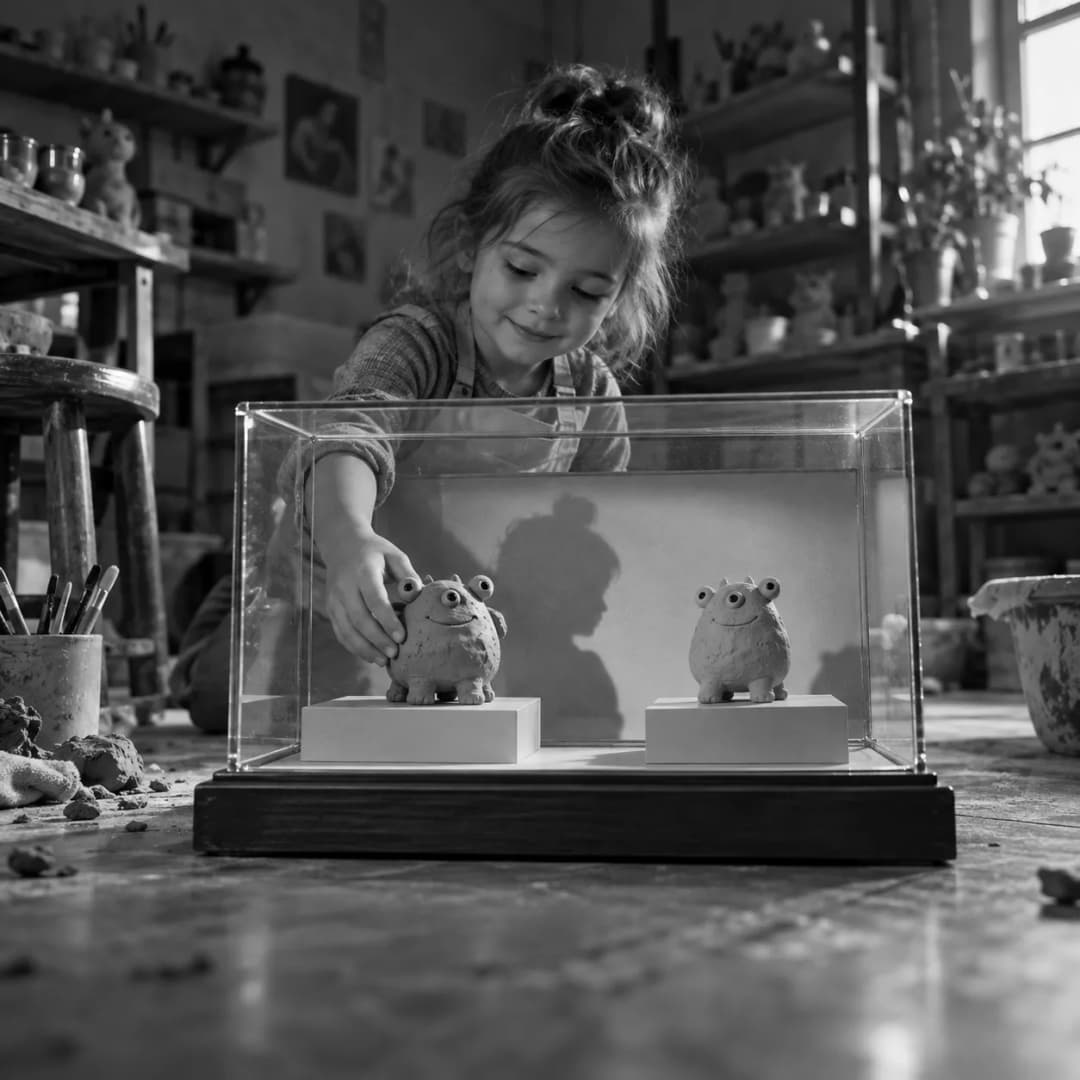
The feeling that something is yours, held whether or not it legally is. It raises what you think the thing is worth. It was the obvious candidate for what self-made objects gain once effort looked like the wrong explanation, and the study that tested it found ownership alone cannot account for the effect either.
What it is
The IKEA effect is the finding that people value what they built above identical things built by somebody else. The obvious explanation is effort: you put work in, so you justify the work by valuing the output.
Lauren Marsh, Patricia Kanngießer and Bruce Hood tested that developmentally in Cognition in 2018, and the result points elsewhere. The bias emerges around age five, which they connect to milestones in self-concept formation. And in five and six year olds it was not moderated by the amount of effort invested.
If valuation does not scale with effort, effort is not the mechanism, at least not there. Their third study tested the next candidate and ruled it out: ownership alone cannot explain why children value their creations more. Their own summary is that the series is incompatible with existing theories of the bias, and they propose instead a link between a person's creations and their self-concept, emerging at age five.
In effect
The practical difference survives even though both candidate mechanisms failed. If effort were the ingredient, a longer and harder setup should produce more attachment. On the evidence, it is not, so extra difficulty only adds chances to give up. And if what matters is a link between the thing and the maker's sense of self, then the design question is whether the person ends up with something recognisably theirs, which is close to the ownership answer without being the same claim.
The original paper supports the second reading from a different direction: Norton, Mochon and Ariely found the effect dissipating when participants destroyed their creations or failed to complete them. Completion, not exertion.
What it does not say
It does not establish any mechanism in adults. Two candidates were removed in children and a third proposed, and none of that transfers automatically to people valuing flat-pack furniture.
It does not say effort is irrelevant to anything. Effort justification is a separate literature with its own evidence.
And nobody in this area appears to have measured how long the inflated valuation lasts, which is the question that decides whether this is a fact about products or about afternoons.
Sources
- Marsh, L. E., Kanngiesser, P., & Hood, B. (2018). "When and how does labour lead to love? The ontogeny and mechanisms of the IKEA effect." Cognition, 170, 245-253. doi:10.1016/j.cognition.2017.10.012. Verified at the published record, 5 October 2026. Published online 25 October 2017, in the January 2018 issue, so the issue year is cited here.
- Norton, M. I., Mochon, D., & Ariely, D. (2011). "The IKEA effect: when labor leads to love." Journal of Consumer Psychology, 22(3), 453-460. doi:10.1016/j.jcps.2011.08.002.