The Oprah Model
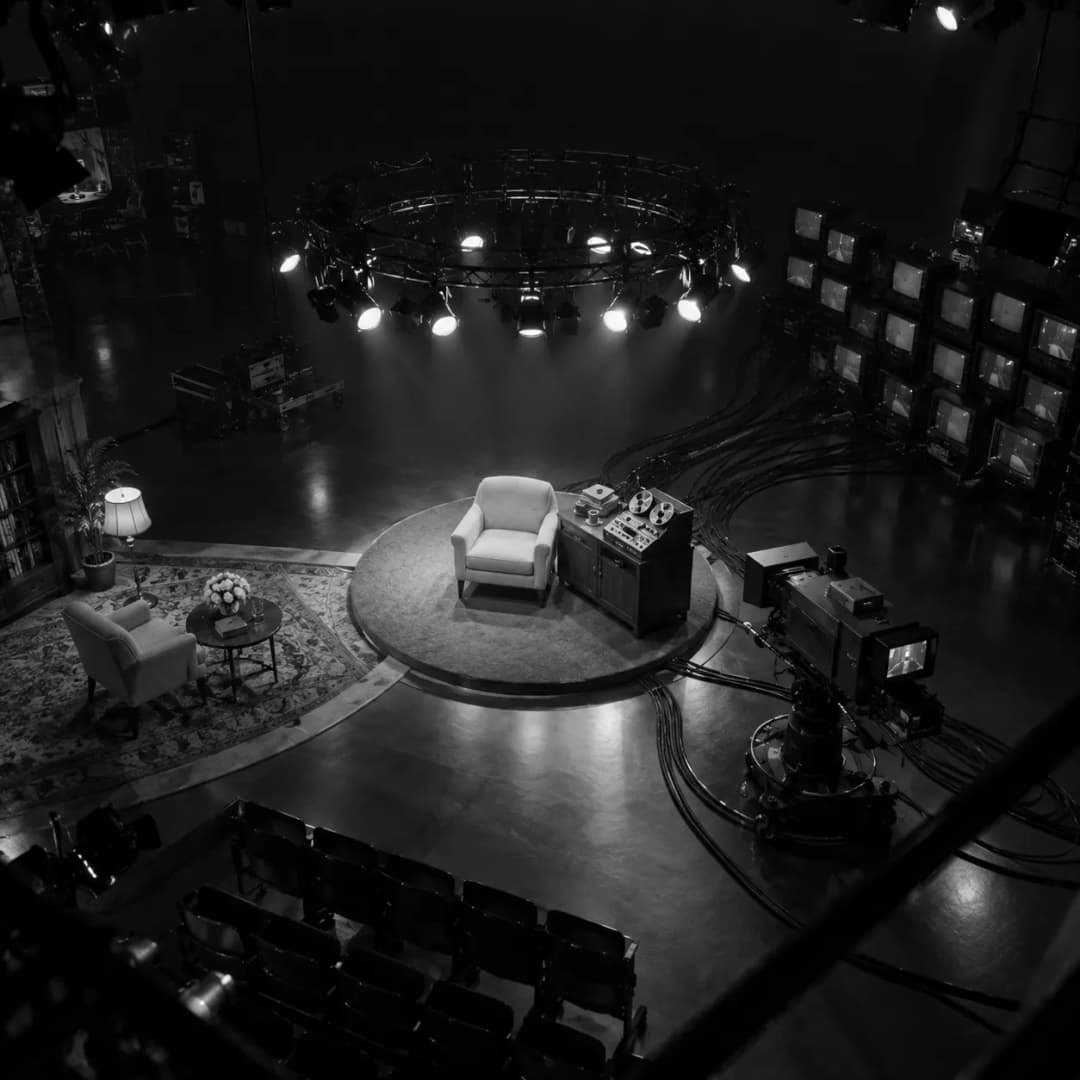
The Oprah model is a vault label for Tim Wu's account, in The Attention Merchants in 2016, of what happens when three attention technologies that used to be separate are fused into a single person: confessional intimacy, broadcaster scale reach and quasi-religious moral authority. Most celebrities are a product of the machine that promotes them. The argument here is that Oprah Winfrey owned the machine. It is a case study rather than a tested effect.
What it is
Winfrey's own framing was explicit, and Wu quotes it at page 230: she described herself as the instrument of God and her show as her ministry. The structural half of the story is regulatory. Rules adopted by the Federal Communications Commission in 1970 limited how much programming a network could own and control. The Prime Time Access Rule was adopted in 1970 and took effect in 1971, and the financial interest and syndication rules date from 1970. Winfrey owned her show through Harpo, with distribution by King World, from the late 1980s, which made her an independent power rather than network property.
That business arrangement is as important to the model as the on-screen persona, and it is the part usually left out of accounts that treat her reach as purely a matter of charisma.
In effect
The paradox worth keeping is that a refusal to sell explicit on-air endorsements is what made offhand ones so potent. Restraint used that way multiplies monetisable trust rather than leaving it on the table. Wu illustrates this at page 231 with a reading lamp that booked a large jump in sales after a passing remark on the programme; the specific sales figure in the book was not traced to a primary source in the vault's verification pass and is recorded here as untraced rather than repeated.
The failure mode sits in the same chapter. The same accumulated trust was later spent promoting The Secret and the law of attraction, across pages 234 to 235, which is Wu's demonstration that the model has no internal check: whatever the authority is pointed at inherits it.
What it does not say
It does not measure endorsement power. The claim that restraint multiplies the value of an endorsement is a plausible reading of the cases, not an effect anyone has estimated.
It does not say the model is replicable. It describes a particular fusion that depended on a specific regulatory window, a specific medium and a specific performer, and the platform era equivalent is a different arrangement operating under different economics.
It does not supply the psychology. The intimacy half of the model is parasocial interaction, which is Donald Horton and Richard Wohl's from 1956 and has its own literature, and the endorsement half is social proof operating at broadcast scale. Both belong on their own pages rather than being read out of this case.
Sources
- Wu, T. (2016). The Attention Merchants. Knopf. The "instrument of God" quotation at p. 230; the endorsement example at p. 231; The Secret and the law of attraction at pp. 234-235.
- Horton, D., & Wohl, R. R. (1956). "Mass communication and para-social interaction." Psychiatry, 19(3), 215-229.
- Vault verification pass, 2026-09-25. Verdict: not-a-research-claim. Corrections recorded: the Prime Time Access Rule was adopted by the FCC in 1970 and took effect in 1971, and the financial interest and syndication rules date from 1970, not 1972 as the book has it. The reading-lamp sales figure rests on the book alone and was not traced to a primary source; it is recorded as untraced and is not cited here.