The Von Restorff Effect
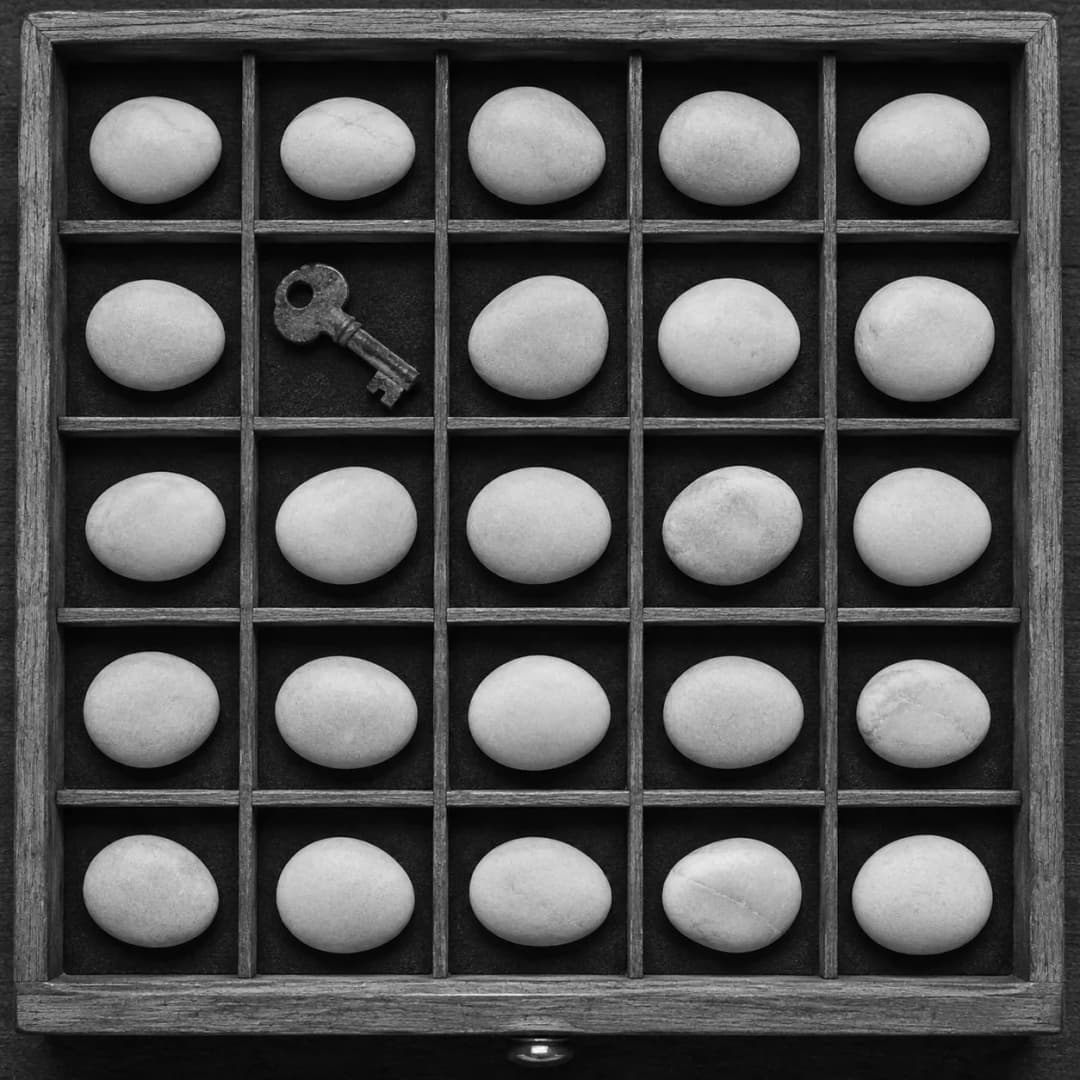
The von Restorff effect, also called the isolation effect, is the finding that the odd item in a list of similar items is remembered better. Hedwig von Restorff showed in 1933 that it holds even when the odd item comes too early in the list to look unusual. What makes it memorable is that everything around it is alike.
What it is
Von Restorff published her experiments in Berlin in 1933, in German, and the paper has never appeared in English. In 1995 R. Reed Hunt had it translated and set out what she did in Psychonomic Bulletin and Review, calling it a "widely cited but little read piece". Her lists were ten items long: nine nonsense syllables and one number, or nine numbers and one syllable. She placed the misfit second or third, before her volunteers could know what the rest would contain, so that it would not stand out to the eye. Among 15 volunteers, 70 per cent recalled the isolated item after ten minutes of reading, against 40 per cent for the same kind of item in a control list. Hunt repeated the experiment with 40 undergraduates and got 70 against 40 per cent for an odd syllable and 80 against 30 per cent for an odd digit.
The control list is the clever part. In it, all ten items differed from one another, so a syllable was just as different from its neighbours as in the isolation list, yet it was remembered less well. Hunt distinguishes difference, a property of the items, from distinctiveness, what the mind makes of difference against a background of similarity.
Cimbalo and Brink found the effect in 1982 in both students and older adults, stronger in the young. Richard Shotton's The Choice Factory (Bias 4, pages 27 to 28) reports his own rerun with 500 people, including a list of eleven car logos and one fast-food logo; the fast-food brand was mentioned four times as often as the average car brand.
In effect
On a shelf, the pack most likely to be remembered is the one that breaks a pattern the eye has already settled into, while a row of packs that each shout in a different colour looks more like the all-different list. Nobody in these studies tested a shelf, so that is a prediction. Remembered is not the same as better: Milica Milosavljevic and colleagues found in 2012 that in fast choices, visual saliency could outweigh what people actually preferred.
What it does not say
The popular retelling, that the odd item is remembered because it grabs attention, misses von Restorff's own point about early placement. The effect is one of the most reliable in memory research, and debate concerns its mechanism rather than its existence. It does not show that being remembered leads people to choose well. Shotton's replication is unpublished, so it works as an illustration rather than evidence.
Sources
- von Restorff, H. (1933). Psychologische Forschung, 18(1), 299-342. doi:10.1007/BF02409636. Read through Hunt (1995).
- Hunt, R. R. (1995). Psychonomic Bulletin and Review, 2(1), 105-112. doi:10.3758/BF03214414.
- Cimbalo, R. S., & Brink, L. (1982). Journal of General Psychology, 106(1). Shotton, R. (2018), The Choice Factory, Harriman House, Bias 4, pp. 27-28.
- Milosavljevic, M., Navalpakkam, V., Koch, C., & Rangel, A. (2012). Journal of Consumer Psychology, 22(1), 67-74. doi:10.1016/j.jcps.2011.10.002.