The What-The-Hell Effect
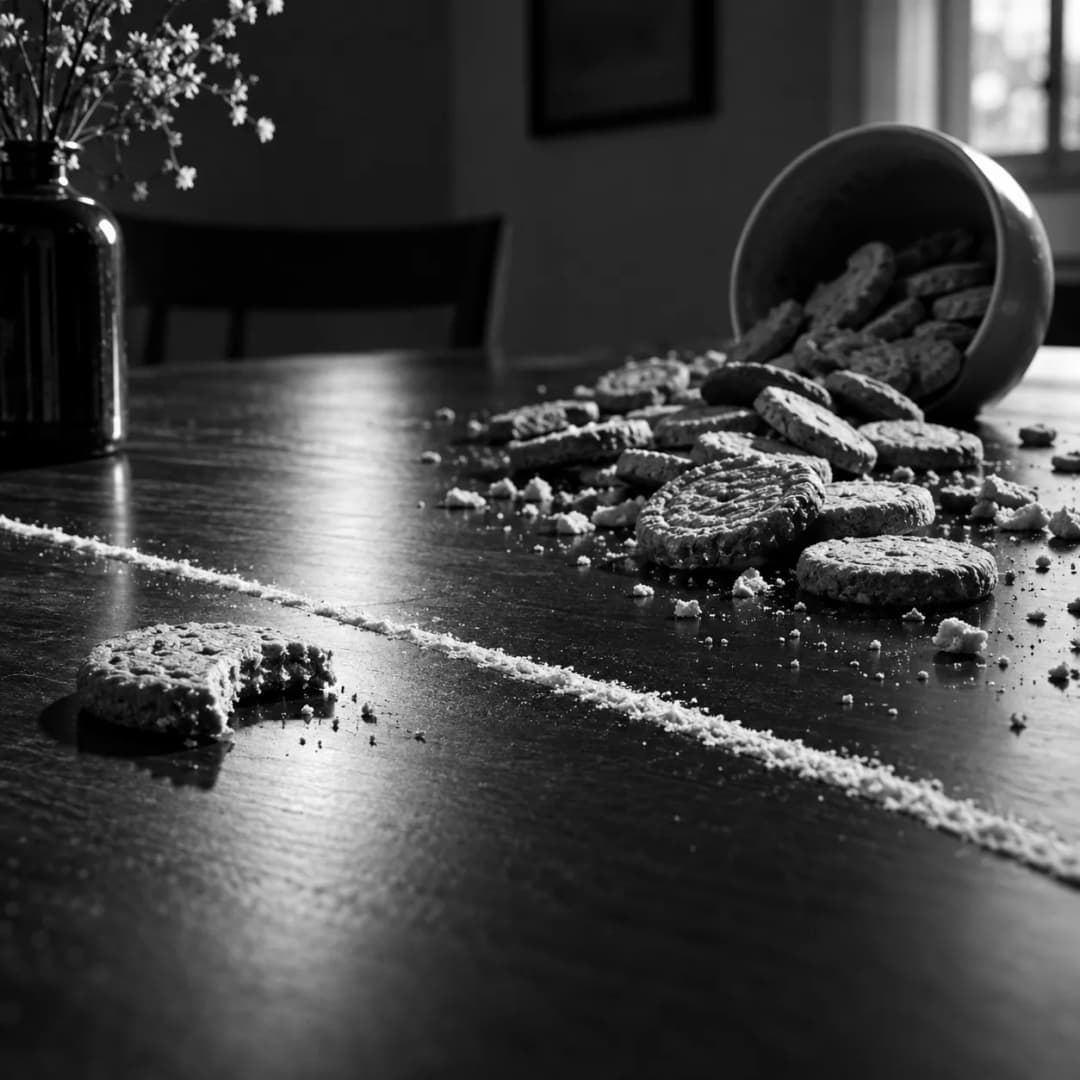
The what-the-hell effect is the tendency of dieters to eat more once they believe their diet is already broken for the day. Peter Herman and Janet Polivy gave it that name in a 1980 chapter on restrained eating, after laboratory studies found that dieters ate more, not less, after being made to eat a high-calorie preload. It is the eating-research counterpart of the abstinence violation effect.
What it is
The finding comes from preload studies. In Herman and Mack's 1975 study, participants drank a milkshake and then tasted ice cream. People who did not diet ate less ice cream the more milkshake they had been given, as hunger would predict. Chronic dieters, called restrained eaters, did the reverse: their intake rose with the size of the preload. Polivy and Herman's 2020 review in Frontiers in Nutrition describes the dieter's reasoning as giving up on the day once the rule is broken, and credits the name to their 1980 chapter.
The effect has a ceiling. When the milkshake preload was doubled to 30 ounces, dieters and non-dieters alike ate very little afterwards.
In effect
The idea spread beyond eating because the reasoning is familiar: once a budget, a streak or a resolution is broken, the rest of the day, week or month can feel as if it no longer counts. That is the everyday form of the abstinence violation effect, first described in relapse-prevention work by Alan Marlatt and Judith Gordon in 1985.
A broken goal also shapes what people choose next. Goldsmith and colleagues reported in 2019, in a paper titled "You don't blow your diet on Twinkies", that when every available option conflicts with a goal, consumers choose the option most suited to the immediate choice even when it is the greatest violation, because it is the easiest to justify.
What it does not say
The effect does not say that one slip inevitably leads to a binge. The 30-ounce result shows a limit, and later research suggests the response to a slip can be changed. Claire Adams and Mark Leary found in 2007 that a short self-compassion exercise after a diet-breaking snack reduced later eating among highly restrictive eaters.
It is also a finding about restrained eaters in laboratory settings, and about the day of the slip. It does not establish how far the pattern extends to other goals; the spending and streak examples often attached to it are illustrations of the same reasoning, not tested cases.
Sources
- Herman, C. P., & Mack, D. (1975). Restrained and unrestrained eating. Journal of Personality, 43(4), 647-660. doi:10.1111/j.1467-6494.1975.tb00727.x
- Polivy, J., & Herman, C. P. (2020). Overeating in restrained and unrestrained eaters. Frontiers in Nutrition, 7, 30. doi:10.3389/fnut.2020.00030
- Goldsmith, K., Friedman, E. M. S., & Dhar, R. (2019). You don't blow your diet on Twinkies: choice processes when choice options conflict with incidental goals. Journal of the Association for Consumer Research, 4(1), 21-35. doi:10.1086/700840
- Adams, C. E., & Leary, M. R. (2007). Promoting self-compassionate attitudes toward eating among restrictive and guilty eaters. Journal of Social and Clinical Psychology, 26(10), 1120-1144. doi:10.1521/jscp.2007.26.10.1120