The Zero-Apparatus Book
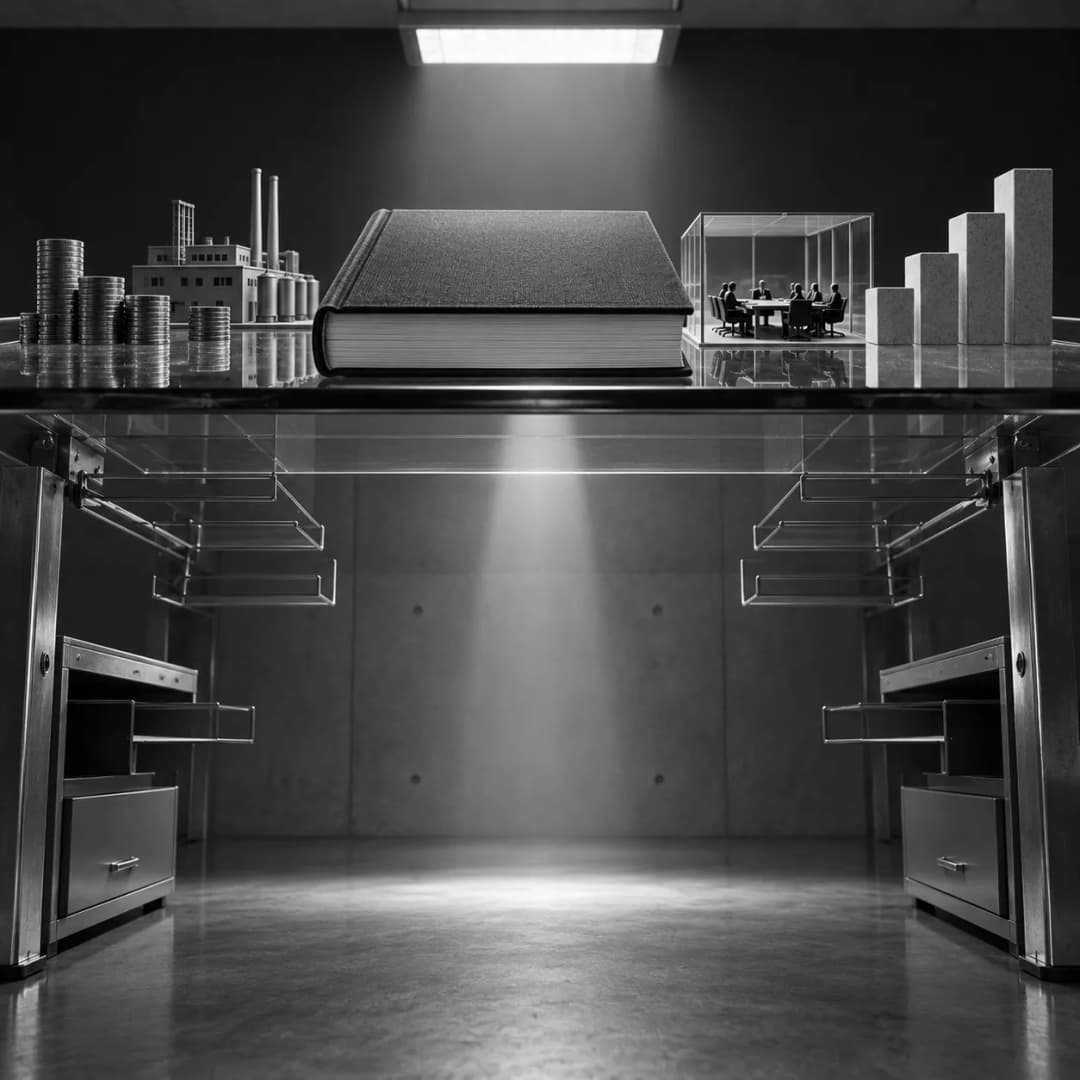
The zero-apparatus book is a work of non-fiction that makes factual claims with no citations of any kind, no notes, no bibliography and no markers, and does not say so. It is a separate position from a weak apparatus. A book with no apparatus cannot mislead a reader about its apparatus, but silence is not honesty either. Having nothing is honest only when the book admits that the evidence is the author's memory. The judgement is about a publishing convention, not about an author.
What it is
The shape is easiest to see in the business memoir. A founder's book reports revenue growth, conversion figures and quoted boardroom dialogue, and the back matter runs straight from the last chapter to the acknowledgments. A reader cannot tell which figures came from filings, which from memory and which from a conversation with someone who has an interest in the story, and there is no mechanism by which they could find out.
The defining case in this library is The Algorithm, by Jon McNeill. Counted by hand across every printed page from the front matter to the end of the text, it carries zero endnotes, zero footnotes, zero parenthetical citations, zero web addresses and zero bibliography entries, with six books named in prose without publisher or year.
In effect
The vault's three practitioner memoirs make a set, and the set is what gives this category its use. One carries an apparatus pointing at the wrong class of source. One carries a thin apparatus and an explicit admission that the evidence is the author's experience. The third carries none and makes no admission. Ranked on whether the apparatus protects a reader, the order is the reverse of the note count, and the declaration matters more than the count.
The practical consequence is narrow and firm. Such a book is a primary source for what its author believes and remembers, and it is never a source for a figure, a finding or a mechanism. Any number in it that matters has to be found somewhere else before it can be printed.
What it does not say
It does not say the book is dishonest or the claims false. It says they are uncheckable, which is a different and more specific complaint.
It does not require a scholarly apparatus of every trade book. One sentence saying what the evidence is would satisfy the test entirely.
It does not apply to books that declare their basis. A memoir that says it is a memoir has done the thing this category asks for.
Sources
- The Algorithm, Jon McNeill. Apparatus counted by hand across all printed pages from ix to 191: zero of every kind, with six books named in prose without publisher or year. The defining case.
- The three-memoir set: Start with Why (an apparatus pointing at the wrong class of source), Radical Candor (a thin apparatus with an explicit admission), and The Algorithm (none, undeclared). See The Practitioner Memoir.
- Evidence status not-a-research-claim. An editorial category for grading apparatus, not a research finding.