Ultradian Rhythms
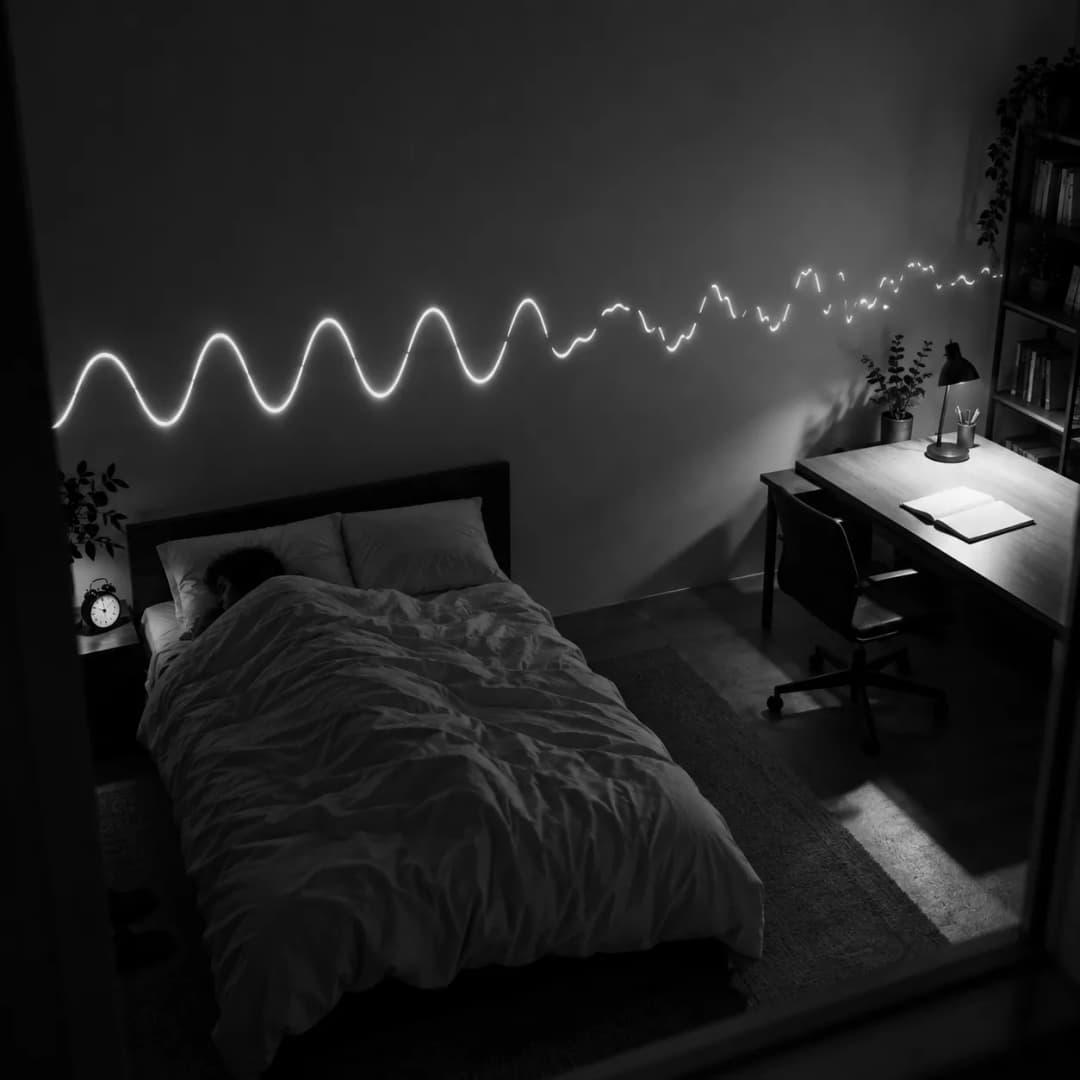
Ultradian rhythms are cycles that repeat more than once a day, as opposed to the roughly twenty-four-hour circadian cycle. The one everybody means is the ninety-minute cycle, a rise and fall said to run through the waking day the way sleep stages run through the night. The sleep half is well documented. The extension to waking cognitive performance, and from there to a rule about how a working day should be arranged, is much weaker than the popular presentation suggests, and the grading here is a verdict on that extension rather than on the sleep research.
What it is
The underlying idea is the basic rest-activity cycle, which belongs to Nathaniel Kleitman. Kleitman is rarely named in the popular versions, and that attribution is this publication's rather than theirs.
Two claims are routinely run together and need separating. Sleep architecture cycles on roughly a ninety-minute period, and that is not in dispute. The extension of the same cycle to waking cognitive performance is a different claim, and the waking literature is thin, inconsistent on the period length, and does not establish that a person's capacity for demanding work rises and falls on a clean ninety-minute schedule. Nothing in it tests the scheduling rules derived from it.
Zelana Montminy's Finding Focus is where the concept reaches this library, and the presentation there is the flat version: the ninety-minute waking cycle stated as an established property of human physiology, with no originator, no study, no researcher and no year given in the prose, and a recommendation about concentrating demanding work into a small number of sessions following directly from it.
In effect
This is the study-to-advice gap in one of its cleaner forms. A real phenomenon in one domain is transplanted to another and then used to warrant a protocol that neither domain tested. The same book recommends a ninety-minute break rhythm while citing alongside it a figure of about fifty-two minutes drawn from software telemetry, which is a different number from a different kind of source.
The part of the treatment that survives is the self-tracking instrument, and it is worth separating from the theory it is attached to. Rating energy, focus and mood on a simple scale at intervals across several days produces a record of one person's own pattern, and it makes no claim beyond individual variation, which is the one claim in the vicinity that is safe. Montminy also says explicitly that everyone's internal clock is unique, which is a real hedge and should be credited. Advice that places demanding work where a person's own record says their energy is highest survives even if the ninety-minute cycle does not, because it no longer depends on it.
What it does not say
It does not say the ninety-minute sleep cycle is in doubt. It is not, and the grading here does not touch Kleitman's sleep work.
It does not establish any schedule. Nothing in the waking literature warrants a rule about how many sessions a day anyone should work, and the popular versions state the cycle more firmly than the evidence allows.
It is not advice about sleep, rest or working hours, and nothing here should be read as a recommendation about any of them. A self-rating scale is also not a measurement, and the self-report problem applies to it in full.
Sources
- Kleitman, N. The basic rest-activity cycle. This identification is ours rather than the book's, which is why originator confidence is recorded as medium.
- Finding Focus, Zelana Montminy, 2026-09-04. The ninety-minute waking cycle is stated flat and used to warrant a small number of demanding work sessions a day, with no originator, study or year given in the prose. The energy, focus and mood self-rating grid is hers, as is the statement that everyone's internal clock is unique.
- The book's endnote for this passage is not recorded in our copy. The apparatus is real and invisible, and the notes at pp. 271-289 should be checked before this concept is used in anything published.
- Sleep architecture cycles on roughly a ninety-minute period and that is not in dispute. The waking basic rest-activity literature is thin and inconsistent on period length, and does not test the scheduling rules derived from it.
- Evidence status contested, as a verdict on the waking extension and the advice built on it, not on Kleitman's sleep work.