Upper Limiting
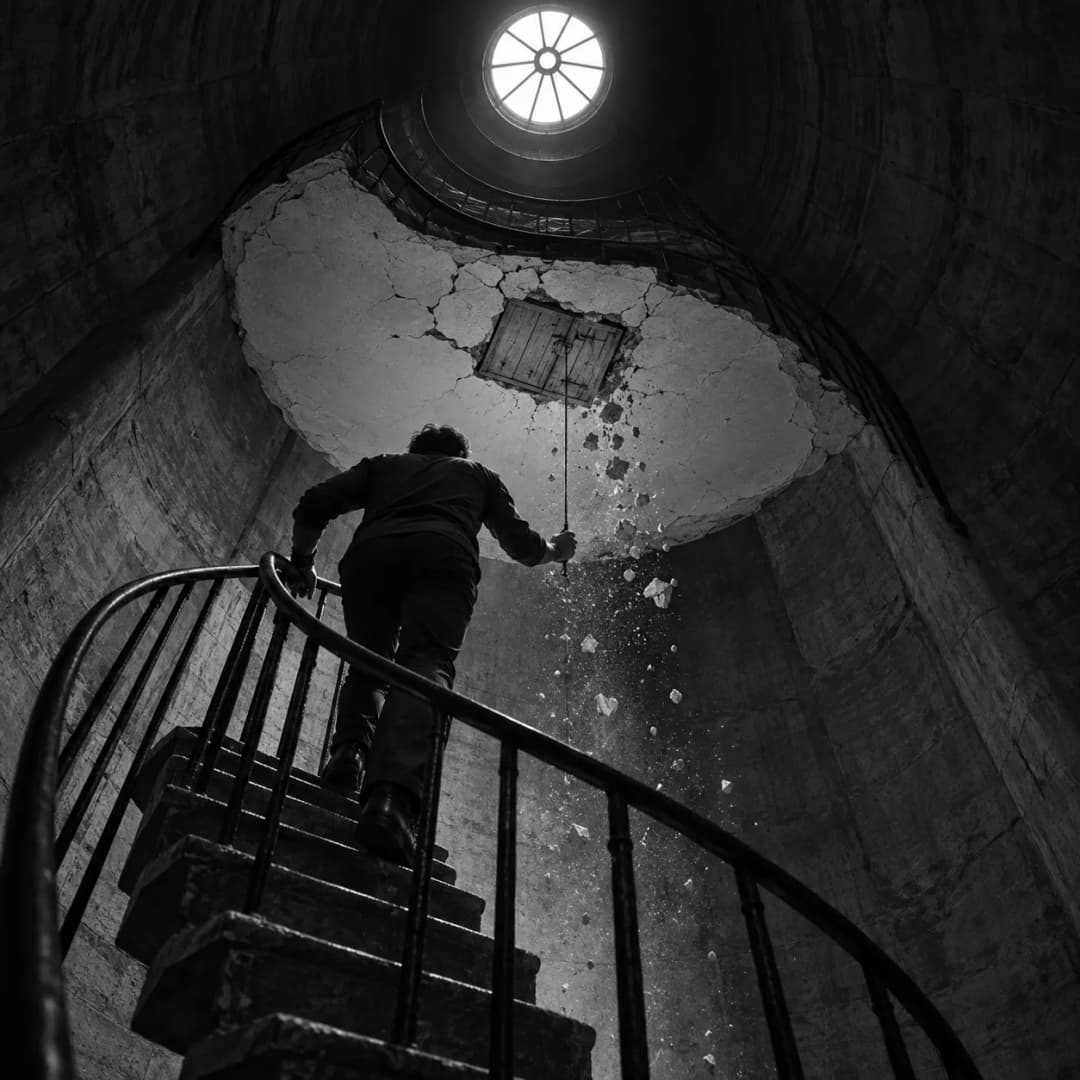
Upper limiting is the idea that each person carries an unconscious ceiling on how much happiness and success they can tolerate, and that when life rises above it they manufacture a problem to bring themselves back to the familiar level. It is credited to Gay Hendricks. It is a practitioner's framework rather than a tested effect, with no instrument, no published study named in the sources that carry it, no effect size and no stated condition under which it would be wrong. Use it as a prompt for noticing a pattern, never as an account of why the pattern exists.
What it is
The claim is not that good things attract trouble but that the person creates the trouble, below awareness, to restore a set level. Picking a fight after a good week, finding a flaw in something that is going well, falling ill on holiday. Hendricks's own image, quoted in the book that brings the idea into this library, is that the correction arrives either as a feather or as a sledgehammer, depending on how early it is noticed.
The worked shape is standard for the personal-development literature. Amber Rae applies it to herself, describing a stretch in which work, health and relationships were all going well, followed by her generating a grievance out of nothing, and the recognition afterwards that the grievance had a function. That shape is what makes the idea appealing, because it converts an unexplained slump into an intelligible act with an author.
In effect
The attribution is clean as far as it goes. Rae names Hendricks as the originator and quotes him directly. She gives no publication, so her book cannot be used to source the idea further, and no date or title should be attached until the primary text has been opened.
Both sides are owed. The lens does describe something people recognise, and self-sabotage after success is not an invented phenomenon. Against that, a homeostatic ceiling on happiness is a strong causal mechanism to assert with no measurement behind it, and duller explanations are available for most cases: regression to the mean in mood, the fatigue that follows a sustained good stretch, and the ordinary fact that problems noticed during a calm period were already there. This publication holds with the deflationary reading, and notes that Rae herself uses the idea the defensible way, as a prompt rather than as a mechanism.
What it does not say
It does not name a measured effect. Nothing here has been tested, and it should never be written up as a finding.
It does not survive the falsifiability test. Any downturn following any upturn can be read as upper limiting, and nothing counts against it, which is the property that makes it useful in a coaching room and useless as an explanation.
It does not rule out the simpler accounts. Regression to the mean should be the first thing considered in any instance, and in most instances it will be enough.
Sources
- Choose Wonder Over Worry, Amber Rae. Credits Gay Hendricks by name and quotes the feather-or-sledgehammer line verbatim. No book, paper or year is given.
- No primary source has been read here. Publication details for Hendricks's own statement of the idea are not recorded, and none should be attached until the text has been opened.
- See Regression to the Mean for the statistical account that will explain most instances without any mechanism at all, and Hedonic Adaptation for the evidenced neighbour, a real drift back toward baseline that needs no unconscious saboteur.
- Evidence status not-a-research-claim.