Verbal Overshadowing
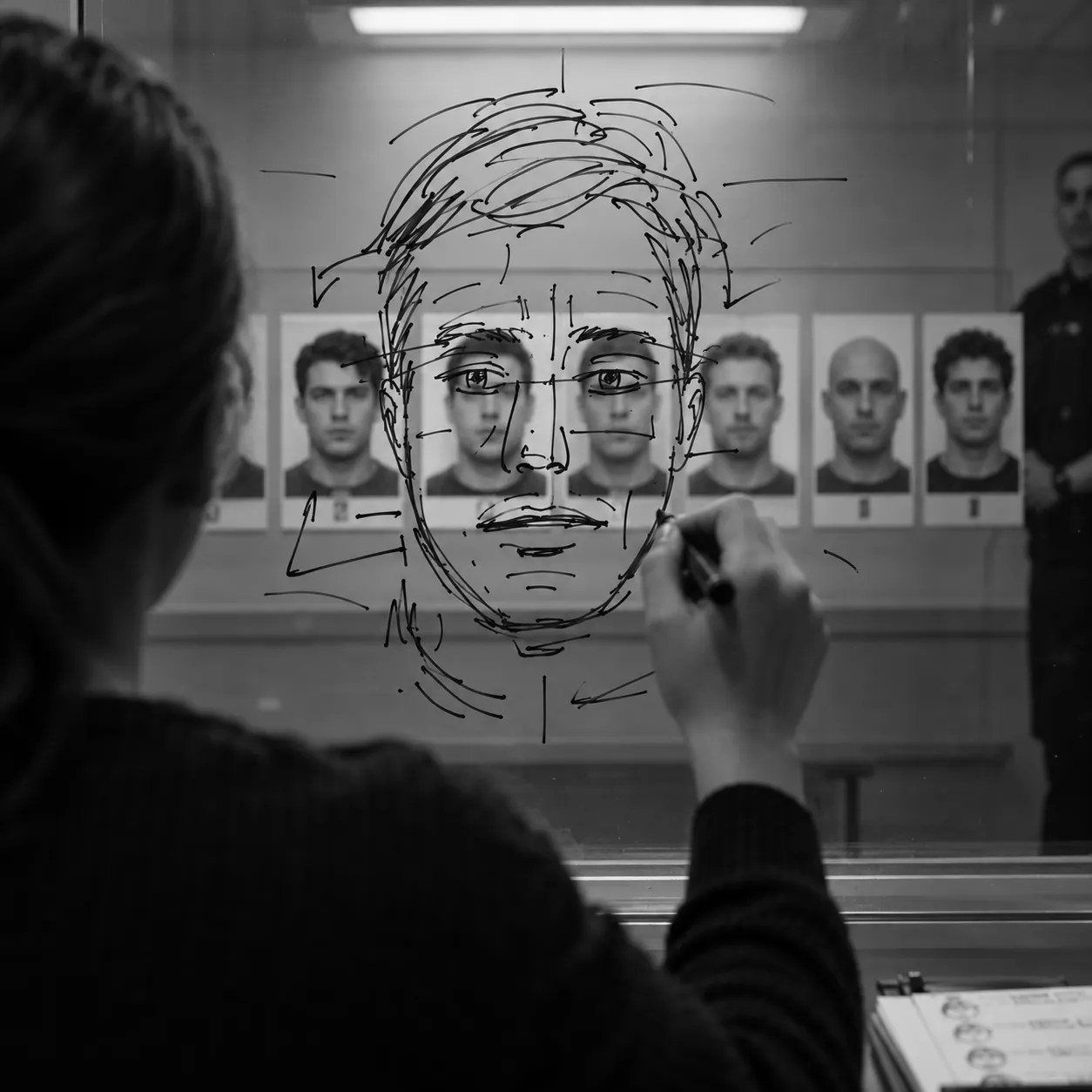
Verbal overshadowing is the finding that describing something you have seen, such as a face, can make you worse at recognising it later. It is one of the better-tested effects in its area: a large registered replication in 2014 found it real, smaller than first reported, and sensitive to timing.
What it is
The original 1990 study, led by Jonathan Schooler, had people watch a video of a robbery. Some then wrote a description of the robber's face. Those who described him were less likely to pick him out of a line-up afterwards.
In 2014 a registered replication report, run across many laboratories and led by V. K. Alogna, tested the effect again. Describers were 4 per cent less likely to identify the robber in one version and 16 per cent less likely when a 20-minute delay was added, against 25 per cent in the original report. The authors called the effect robust and strongly influenced by the relative timing of the description and the test.
In effect
Putting a perception into words can interfere with it. That is relevant to eyewitness procedures, and it is a useful reminder for anyone who asks people to explain a taste or an impression: the explanation is not a neutral readout.
What it does not say
It is about memory for faces and similar perceptions, not about preferences among products. It lends no direct support to findings that explaining a preference changes it, which come from a different paradigm.
It does not say descriptions are always harmful. The size of the effect depended heavily on timing.
Sources
- Alogna, V. K., and colleagues (2014). "Registered replication report: Schooler and Engstler-Schooler (1990)." Perspectives on Psychological Science, 9(5), 556-578. doi:10.1177/1745691614545653.