Why a Badge Makes an Account Feel Trustworthy
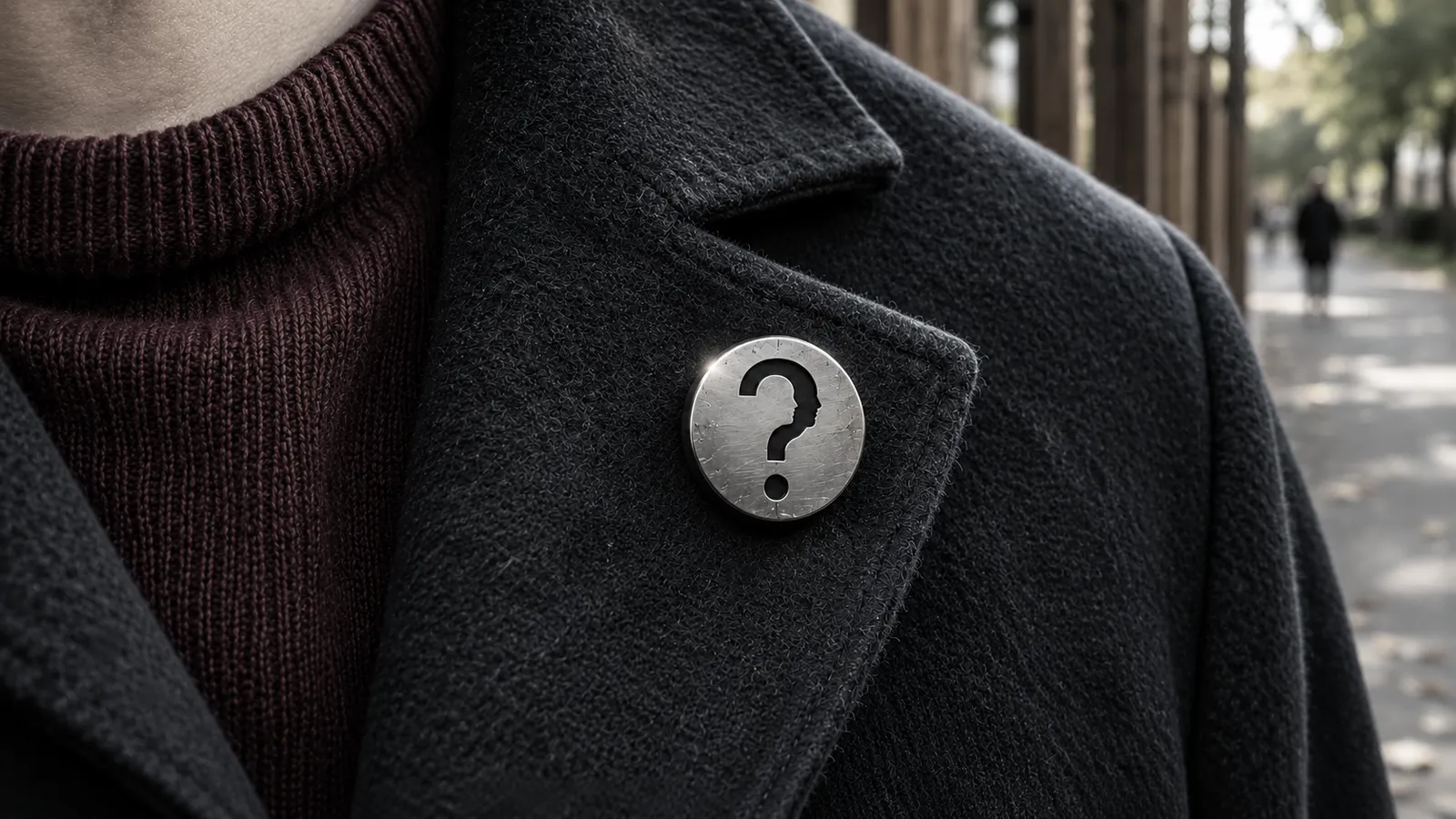
A badge is meant to save a reader the work of checking. The experiments show the saving only happens when the mark is noticed, understood and carried over from the account to what it says.
Do verification badges make people trust accounts more?
Verification badges do not reliably make people trust accounts more. Several experiments found little or no effect on credibility or sharing, while another found that a credential badge raised credibility once its meaning was explained, even when unrelated to the post. A badge works only if it is noticed, understood and carried over to the message.
Key takeaways
- In focus groups with 109 participants, most people relied on others and on mental shortcuts to judge credibility online, not on systematic checking (Metzger and colleagues, 2010).
- In an experiment on news accounts, little attention was paid to the verification mark when readers judged credibility, even when little else was said about the account or content (Edgerly and Vraga, 2019).
- Across two online studies with 748 and 2,041 participants, a verification indicator had no significant effect on willingness to share a post or act on its contents (Vaidya and colleagues, 2019).
- In two designs with 963 participants in all, a verification label beside a news source made no difference to credibility, while the source itself did (D'haeseleer and colleagues, 2024).
- After participants were told how to read the cues, posts were rated higher when the author held a verified credential, even when it was unrelated to the topic (Geels and colleagues, 2024).
Verification badges offer a reader a shortcut. Instead of weighing an account, its record and its message, the reader can lean on a small mark that says someone has checked, a cue that researchers have tested on news accounts, on shared posts and on shop sites. The mark stands in for work the reader would otherwise do alone, and that is its whole appeal: it is cheap to read and it arrives before the message does. For that shortcut to change a judgement, though, three things have to go right in the few seconds a reader spends on a post, and each is a separate step that can fail on its own:
- The mark is noticed.
- The mark is understood as saying something about the account, such as who it is, what it does or how good its work is.
- That meaning is carried over from the account to the message it posts.
Studies of verification badges have caught the shortcut failing at each of these points, and working too well at the last.
Shortcuts readers already use
Most people do not check what they read online from first principles. In focus groups with more than a hundred participants, Miriam Metzger, Andrew Flanagin and Ryan Medders found that most relied on other people to make credibility judgements, often through group-based tools, and that they used mental shortcuts routinely and did not work through information systematically. Verification badges are made for that way of judging: ready-made cues that stand in for a check somebody else carried out.
Timothy Levine's Duped adds a reason the shortcut may matter less than it seems. His account is that people take what they hear and read as honest by default and give up that default only when something triggers doubt, and that judging honesty from how a source looks or acts is a weak guide. If belief starts high, a badge has little to add to a post a reader already accepts, and more to offer once something raises doubt. Whether verification badges do so depends on whether the reader sees them.
Badges are often not noticed
Across several experiments, the mark itself drew little weight. When Stephanie Edgerly and Emily Vraga tested it on news accounts, readers paid it little attention while judging credibility, even with little else said about the account. How ambiguous the account was, and whether it fitted the reader's own outlook, counted for more.
A reader does not have to ignore a mark for it to add little: if the name, the record and the message already give something to go on, the mark beside the name has less left to do.
Sharing tells the same story. Two online studies run a year apart, with 748 and 2,041 participants, found no significant effect of the verification indicator on willingness to share a post or act on what it said, and readers could generally tell credible content apart, even from unfamiliar accounts (Tavish Vaidya and colleagues).
Who posts counted for more than the label. Stephanie D'haeseleer and colleagues showed a news message on a photo-sharing platform to 963 participants across two designs: messages from a news outlet and from a non-governmental organisation were rated more credible than messages from less established sources, and a verification label beside the source made no difference. Other cues on the page can carry the same weight, such as the photo in Why We Trust a Review With a Photo.
What does the mark certify?
A badge transfers trust only if the reader knows what it certifies, and most readers do not. More than half of the 299 US adults surveyed by Madelyne Xiao and colleagues about one large platform's badges could not correctly say what a standard badge required, and more than 80 per cent could not say what the newer indicators required. The mark was visible, and its meaning was less settled.
Verification badges also differ in what they certify. Some confirm that an account belongs to the person or organisation it names; others confirm a role or an employer. Neither kind of verification badge says that a given post is accurate, so a reader who takes either as a sign of quality credits the mark with more than it states.
Seals on shop sites run on the same logic. Guohua Wu, Xiaorui Hu and Yuhong Wu built a model of first-time trust in an online vendor and found that perceived web assurance, the sense that a third party stands behind the shop, raised initial trust, as did perceived interactivity. The authors class assurance as an institution-based source of trust: it rests on the body behind the mark and not on anything the shop has yet shown.
For a badge on an account the chain is the same. Trust goes to whoever issues the mark, and the weight a mark carries follows the weight a reader gives to the issuer and to what the issuer checks.
Credentials that do not fit
A credential can lift a post it has nothing to do with. Two preregistered online experiments by Jorrit Geels, Paul Graßl, Hanna Schraffenberger, Martin Tanis and Mariska Kleemans compared posts with no source information, posts with an identity-verification badge, and posts with a credential-verification badge showing a role, such as an employer, that was either relevant to the post or unrelated to it. Reactions at first sight were hard to predict, and many effects were inconclusive. Because the posts dealt with neutral topics, the participants were all based in the UK and accuracy was never varied, the results speak to ratings and not to whether readers spot accurate posts.
After participants were told how to read the cues, two reasoning slips appeared. Participants treated a verified identity as evidence that the message was credible, though a verified identity says who is speaking and not whether what they say is right. And posts were rated higher when the author held a verified credential even when it had nothing to do with the topic, an effect the authors named the virtual lab coat effect. That pull of a credential on a claim outside its field is the same gap between cue and substance found in Why We Trust the Expert in the Advert.
The authors concluded that credential verification, as tested, did not help readers judge credibility more accurately, though other designs for verification badges may be worth exploring. In the second experiment, when the credential was relevant, a line of text naming the author's expertise, placed below the message and describing what the author knew and not where the author worked, raised ratings of the source by more than a badge did, and it did so before any explanation of the cues had been given to the participants who rated it.
A verification badge, then, answers one question, who is speaking, and a reader can take that answer gladly. What it cannot answer is whether the speaker is right on this subject, today, in this post. The line that described what the author knew worked better than the mark because it handed the reader something to weigh instead of something to defer to. Verification badges ask for trust in advance, and a description invites a judgement, which is the habit the shortcut was meant to save a reader from and the one worth keeping.
When a mark appears beside a name, ask what it was issued for, then ask separately what the post itself gives you to go on. The second question was always the reader's own.
Common questions
Do verification badges make people trust accounts more?
Only in narrow conditions. Tests of the verification badge on news accounts, shared posts and a news message on a photo-sharing platform found the mark drew little attention and moved credibility or sharing very little. Ratings rose when participants had been told how to read a credential badge, and they rose even when the credential had nothing to do with the post.
Why might a badge fail to change what people think?
Three steps have to go right: the reader notices the mark, understands what it certifies and carries that meaning over to the message. In the studies the mark often drew little attention, and in a survey many respondents did not correctly identify what a platform's badges required.
What is the virtual lab coat effect?
It is the finding, reported from two preregistered online experiments, that posts were rated more credible when the author held a verified credential, even when the credential had no connection to the post's topic, once participants had been told how to read the credential.
Sources
Levine, T. Duped. Seed book.
Metzger, M. J., Flanagin, A. J., & Medders, R. B. (2010). Social and heuristic approaches to credibility evaluation online. Journal of Communication, 60(3), 413-439. doi:10.1111/j.1460-2466.2010.01488.x https://doi.org/10.1111/j.1460-2466.2010.01488.x
Edgerly, S., & Vraga, E. K. (2019). The blue check of credibility: Does account verification matter when evaluating news on Twitter? Cyberpsychology, Behavior, and Social Networking, 22(4), 283-287. doi:10.1089/cyber.2018.0475 https://doi.org/10.1089/cyber.2018.0475
Vaidya, T., Votipka, D., Mazurek, M. L., & Sherr, M. (2019). Does being verified make you more credible? Account verification's effect on tweet credibility. Proceedings of the 2019 CHI Conference on Human Factors in Computing Systems, 1-13. doi:10.1145/3290605.3300755 https://doi.org/10.1145/3290605.3300755
D'haeseleer, S., Van Damme, K., Pearce, H., & Evens, T. (2024). The credibility cocktail on Instagram: Assessing the impact of source, verification label and image manipulation on news message credibility. Journal of Applied Journalism & Media Studies. doi:10.1386/ajms_00158_1 https://doi.org/10.1386/ajms_00158_1
Xiao, M., Wang, M., Kulshrestha, A., & Mayer, J. R. (2023). Account verification on social media: User perceptions and paid enrollment. arXiv preprint. doi:10.48550/arXiv.2304.14939 https://doi.org/10.48550/arXiv.2304.14939
Wu, G., Hu, X., & Wu, Y. (2010). Effects of perceived interactivity, perceived web assurance and disposition to trust on initial online trust. Journal of Computer-Mediated Communication, 16(1), 1-26. doi:10.1111/j.1083-6101.2010.01528.x https://doi.org/10.1111/j.1083-6101.2010.01528.x
Geels, J., Graßl, P., Schraffenberger, H., Tanis, M., & Kleemans, M. (2024). Virtual lab coats: The effects of verified source information on social media post credibility. PLOS ONE, 19(5), e0302323. doi:10.1371/journal.pone.0302323 https://doi.org/10.1371/journal.pone.0302323
Related concepts
People
More articles
- Why We Watch Other People Shop
Viewers of haul videos describe a pleasure with no purchase in it. The research asks what they get from the format, what it does to their own buying, and why the habit holds.
- Why Flash Sales Feel Hard to Resist
A flash sale gives a lower price a short window. The research finds that the window changes the rule people use to decide, and that excitement can do part of the persuading.
- Why an Added Extra Closes the Sale
A seller names a price, pauses, and improves the offer before the buyer has replied. The that's-not-all technique turns one offer into two, and the research shows where that helps and where it stops.
- Why Big Spenders Are Rarely the Most Loyal
A spend ranking counts what the till records. Loyalty is about the share of a person's buying you hold and why. Research on income, tenure and attitude shows how often the two lists diverge.