How Far the Halo Effect Spreads
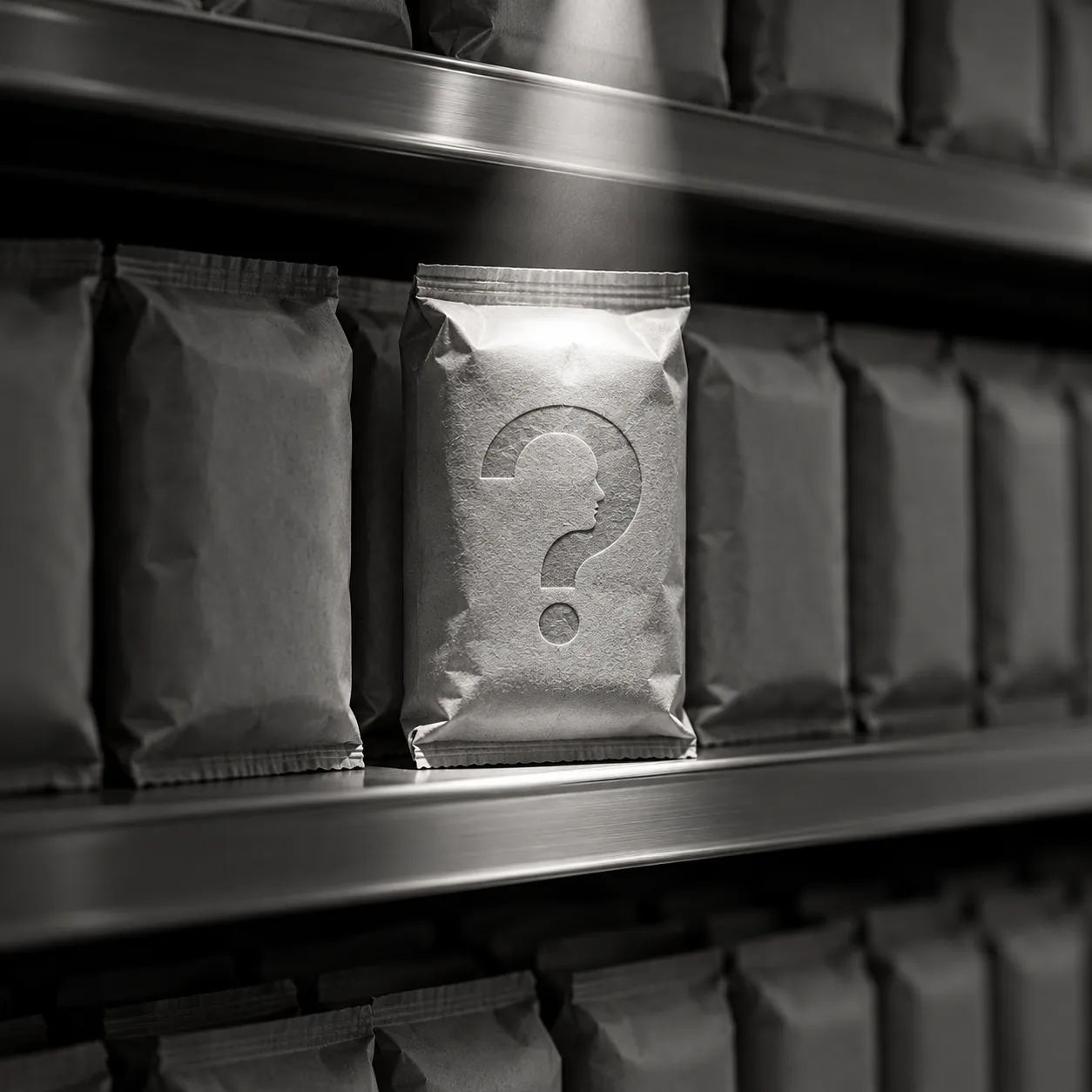
Beauty filters, organic labels and a lecturer's warm manner all change how people judge qualities they never checked. The idea's sharpest critic argues that some of that agreement is earned.
Answer to the question
Why do attractive things seem better at everything?
Because of the halo effect, one appealing quality colours judgements of unrelated ones. Edward Thorndike named it in 1920. In a 1977 study, students judged the same lecturer's looks, mannerisms and accent more kindly when he seemed warm, without noticing. The spillover is largest for perceived social skill and close to zero for integrity.
Key takeaways
- Edward Thorndike named the halo in 1920 after army officers' ratings for physique, intelligence, leadership and character hung together more tightly than the qualities plausibly could.
- In Richard Nisbett and Timothy Wilson's 1977 study, a lecturer's warmth changed how students judged his looks, mannerisms and accent, and they did not realise it.
- Alice Eagly's 1991 meta-analysis found the attractiveness stereotype largest for social competence and near zero for integrity and concern for others.
- In a 2010 study, Oreo cookies labelled as made with organic flour and sugar were judged lower in calories, although both labels listed 160 calories a serving.
Attractive things do seem better at everything, and the people doing the judging rarely notice it happening. A good face, a warm manner or a virtuous label lifts opinions of qualities nobody has checked. The lift is large for charm and competence, close to nothing for integrity, and partly earned.
A constant error in army ratings
Edward Thorndike named the halo effect while studying how army officers were rated by their superiors.
The superiors scored each man separately on physique, intelligence, leadership and character. The scores hung together far more tightly than the underlying qualities plausibly could. An officer rated highly for physique tended to be rated highly for intelligence and character as well. Thorndike described "the constant error of the halo, as we have called it" and drew a practical conclusion: a rater should judge each quality on its own evidence, without knowing the evidence for the others.
A much later experiment by Richard Nisbett and Timothy Wilson showed how little the judges know about it. They filmed the same college instructor, a Belgian who spoke English with a European accent, in two interviews. In one he was warm and friendly, in the other cold and distant. Each interview lasted about seven minutes, and half the students saw each version. Among the University of Michigan students who took part, most participants who watched the warm version found his appearance and mannerisms attractive. Those who watched the cold version mostly found his appearance, his mannerisms and his accent irritating.
The students then insisted that liking or disliking him had not shaped those ratings. Those who saw the cold version reported the reverse of what had happened, saying that his irritating attributes had lowered their opinion of him. The paper's summary is that the subjects "were unaware of this influence of global evaluations on ratings of attributes". That blindness is what makes the halo effect so hard to correct from the inside: people who are swayed by a general impression usually do not know why their judgements agree.
Faces, filters and the assumptions beauty buys
Faces are where the halo effect has been studied hardest. A 1972 study led by Karen Dion asked people to judge men and women who varied in physical attractiveness, both on personality and on how their lives were likely to turn out. The attractive people were assumed to have more socially desirable personalities and were expected to lead better lives, as more competent husbands and wives and more successful workers. The authors described the result as a "what is beautiful is good" stereotype.
Judgements about character, marriage and career all moved in the same direction as judgements about looks.
Beauty filters have given the stereotype a new test. A 2024 study in Royal Society Open Science, led by Aditya Gulati at ELLIS Alicante, had 2,748 online participants rate the faces of 462 people, shown either untouched or after a beauty filter. Filtering made almost every face look more attractive.
Those same people were then rated more intelligent, trustworthy, sociable and happy, though only the image had changed.
What the halo effect does not do is spread evenly. In 1991 a meta-analysis led by Alice Eagly, which treated the earlier experiments on the physical attractiveness stereotype as one large body of data, appeared in Psychological Bulletin. It concluded that the stereotype is "not as strong or general" as the slogan suggests, and that its average size was moderate. Attractive people were seen as much more socially skilled, somewhat more intelligent and better adjusted, and barely more principled or caring. The strength of the stereotype also changed when people were given other information about the person they were judging.
Good looks buy an assumption of charm and competence. They buy almost no assumption of integrity, which is the quality a customer most needs to judge in a seller, a landlord or a company, and the one a pleasing surface tells you least about.
Good looks buy an assumption of charm and competence. They buy almost no assumption of integrity.
Cash machines, organic biscuits and the brand halo
Richard Shotton's The Illusion of Choice (2023) takes the idea from people to the things they buy. Chapter 14, on the halo effect, builds on Thorndike's 1920 paper and argues that the same spillover shapes how people judge places, business partners and products, so a strong impression on one attribute colours judgements of the rest. One of its best examples, on page 164, comes from the design centre at the electronics firm Hitachi.
There, a study led by Masaaki Kurosu asked 252 students to rate 26 layouts for a cash dispenser screen, once for how easy each looked to use and once for how beautiful it looked. The two ratings rose and fell together. Most measures of how easy a layout really was, such as the order in which a user's eyes and fingers would have to move, had little bearing on how easy it looked.
The ease people saw in a screen was partly a judgement of its looks, so the appearance of ease is an unreliable signal.
On page 160 the book adds a caution: "while the halo effect reveals that many metrics correlate, it doesn't show they move in lockstep", so improving one attribute in the hope of lifting another may be an inefficient route.
Food labels show the halo effect in its most commercial form, usually called a health halo. In a 2010 study, Jonathon Schuldt and Norbert Schwarz at the University of Michigan showed 114 students Oreo cookies described either as ordinary or as made with organic flour and sugar. Both labels listed 160 calories a serving. The organic version was judged lower in calories and fine to eat more often. In a second study, a fictional dieter who chose an organic dessert was judged more entitled to skip her run than one who chose an ordinary dessert.
A single word on a label did what a nutrition panel printed beside it could not undo.
A single word on a label did what a nutrition panel printed beside it could not undo.
A face, an organic claim or a luxury label each works as one cue that colours qualities the buyer has no easy way to check.
Real merit and illusory halo in ratings
Not everyone accepts Thorndike's framing. A 1993 review in the Journal of Applied Psychology, led by Kevin Murphy of Colorado State University, argued that the standard account of halo error was "either wrong or problematic" in every major element. Its central point is that good qualities often do go together. If an employee is capable, they may well be organised and good with clients too, so correlated ratings can reflect true halo as well as error, and most studies cannot separate the two. The authors proposed a moratorium on using halo measures as evidence in applied research.
That critique bites hardest on the oldest evidence. Thorndike had judged his correlations higher than reality could allow, which is the very step the 1993 review questioned. Thorndike's strongest officers may really have been strong across the board, and no one can now check. It bites much less on the experiments. Nisbett and Wilson used one man in two moods. Gulati's team used the same faces with and without a filter. Schuldt's cookies listed the same calories. When the thing being judged is held still and the judgement still moves, the movement cannot be merit.
Where people and products genuinely differ in ways that cluster, a strong first impression is partly a reasonable guess. Where the object has been held constant, the effect is spillover and nothing more, and it runs on the cues sellers find easiest to adjust: lighting, filters, packaging and a single word on a label.
The practical habit follows from that split. When the halo effect may be at work, name the single cue doing the persuading and ask what it can tell you. A face can suggest whether someone will be easy company. An organic claim describes how the flour was grown. Neither says much about integrity, value or calories, and those are usually what the purchase depends on.
Common questions
Why do attractive things seem better at everything?
Because of the halo effect, one appealing quality colours judgements of unrelated ones. Edward Thorndike named it in 1920. In 1977 Richard Nisbett and Timothy Wilson found students judged the same lecturer's looks, mannerisms and accent more kindly when he seemed warm, and did not realise it. The spillover is largest for social skill and near zero for integrity.
Is the health halo real?
There is good evidence for it. In Jonathon Schuldt and Norbert Schwarz's 2010 study, Oreo cookies labelled as made with organic flour and sugar were judged lower in calories than ordinary ones, although both labels listed 160 calories a serving, and students thought the organic version could be eaten more often.
Does the halo effect work on products as well as people?
Yes. In a 1995 Hitachi study, 252 students rated 26 cash dispenser screen layouts, and how beautiful a layout looked tracked how easy it looked to use far more closely than its measured ease of use did. Richard Shotton's The Illusion of Choice cites the study in chapter 14.
Sources
Thorndike, E. L. (1920). 'A constant error in psychological ratings.' Journal of Applied Psychology, 4(1), 25-29. doi:10.1037/h0071663. Full text read: ratings of officers made by their superiors in the army on physical qualities, intelligence, leadership and personal qualities (character); 'the constant error of the halo, as we have called it'; aviation officer correlations averaged .67.
Nisbett, R. E., & Wilson, T. D. (1977). 'The halo effect: evidence for unconscious alteration of judgments.' Journal of Personality and Social Psychology, 35(4), 250-256. doi:10.1037/0022-3514.35.4.250. Full text read: 118 University of Michigan students; one Belgian instructor filmed warm and cold; liking means 5.48 against 3.18; subjects denied any influence and the cold-condition subjects reported the reverse direction.
Dion, K., Berscheid, E., & Walster, E. (1972). 'What is beautiful is good.' Journal of Personality and Social Psychology, 24(3), 285-290. doi:10.1037/h0033731. Abstract read: attractive stimulus persons, male and female, assumed to possess more socially desirable personality traits and expected to lead better lives, for example as more competent husbands and wives and more successful occupationally.
Gulati, A., Martínez-Garcia, M., Fernández, D., Lozano, M. A., Lepri, B., & Oliver, N. (2024). 'What is beautiful is still good: the attractiveness halo effect in the era of beauty filters.' Royal Society Open Science, 11(11), 240882. doi:10.1098/rsos.240882. Full text read: 2,748 Prolific participants; 462 individuals in original and filtered versions; attractiveness rose for 96.1 per cent of faces; filtered faces rated higher on intelligence, trustworthiness, sociability and happiness.
Eagly, A. H., Ashmore, R. D., Makhijani, M. G., & Longo, L. C. (1991). 'What is beautiful is good, but...: a meta-analytic review of research on the physical attractiveness stereotype.' Psychological Bulletin, 110(1), 109-128. doi:10.1037/0033-2909.110.1.109. Abstract read: average effect moderate; largest for social competence, intermediate for potency, adjustment and intellectual competence, near zero for integrity and concern for others; varied with individuating information.
Kurosu, M., & Kashimura, K. (1995). 'Apparent usability vs. inherent usability: experimental analysis on the determinants of the apparent usability.' Conference Companion on Human Factors in Computing Systems (CHI '95), 292-293. doi:10.1145/223355.223680. Full text read: Hitachi Design Center; 26 cash dispenser layouts rated by 252 students; apparent usability and beauty correlated at 0.589; apparent usability less correlated with inherent usability measures.
Schuldt, J. P., & Schwarz, N. (2010). 'The "organic" path to obesity? Organic claims influence calorie judgments and exercise recommendations.' Judgment and Decision Making, 5(3), 144-150. Full text read: Study 1, 114 students, both labels 160 calories per serving, organic judged lower in calories (3.94 against 5.17 on a 7-point scale) and fine to eat more often; Study 2, 214 students, skipping exercise judged more acceptable after an organic dessert.
Murphy, K. R., Jako, R. A., & Anhalt, R. L. (1993). 'Nature and consequences of halo error: a critical analysis.' Journal of Applied Psychology, 78(2), 218-225. doi:10.1037/0021-9010.78.2.218. Abstract read: the major elements of the standard conception of halo are 'either wrong or problematic'; unresolved confounds of true and illusory halo; a moratorium on halo indices as dependent measures in applied research.
Shotton, R. (2023). The Illusion of Choice: 16 1/2 Psychological Biases That Influence What We Buy. Harriman House. Read in full by this publication, with a reliability audit. Ch. 14, The Halo Effect, pp. 157 to 166; Thorndike at p. 158, the lockstep caution at p. 160, the Hitachi cash dispenser study at p. 164.