Is phone addiction real?
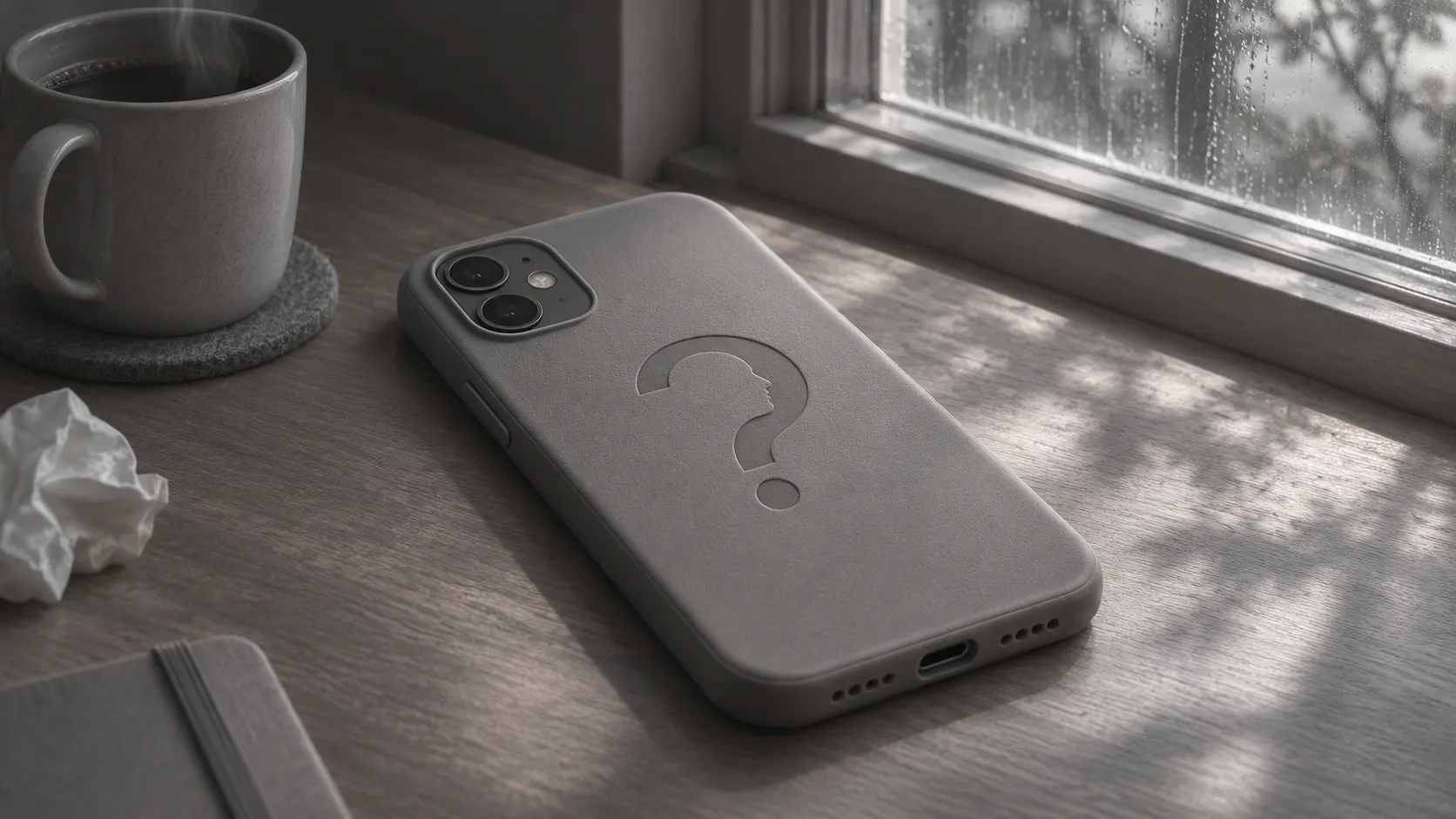
Seventy-eight scales measure excessive smartphone use, and researchers disagree about what to call it. Four papers show where the argument stands.
Answer to the question
Is phone addiction real?
Researchers agree that many people report difficulty managing their phone use. They disagree about whether addiction is the right name for it. Some built scales to measure phone addiction, while others argue the evidence supports the wider term problematic use. The papers describe measurement and labels, not outcomes for individuals.
Key takeaways
- Min Kwon and colleagues published a smartphone addiction scale in 2013, completed by 197 adult volunteers aged 18 to 53, and reported it as reliable and valid.
- A 2020 review by Bethany Harris and colleagues covered 78 scales for excessive or problematic smartphone use and found that many lacked adequate reliability or had little research behind their theory.
- Tayana Panova and Xavier Carbonell concluded in 2018 that the evidence does not support the addiction label from an addiction standpoint, and proposed problematic use as the term.
- Joël Billieux and colleagues argued in 2015 that a process-based description of one person's heavy phone use captured more than an addiction-model description.
- The papers measure and label phone use; they do not report outcomes for individuals, and they do not advise anyone on their own use.
A systematic review in Frontiers in Psychology counted seventy-eight scales built to measure excessive or problematic smartphone use. Much of the research on phone addiction runs through questionnaires of this kind, so whether phone addiction is real depends partly on what a questionnaire score is taken to show. The researchers who use the term and the researchers who prefer another one agree that some people use their phones in ways they would like to change, and they disagree about the name, which carries different assumptions about what the behaviour is. Adam Gazzaley and Larry D. Rosen, in The Distracted Mind, treat heavy device use as a question about attention in a high-technology world.
Where did the idea of phone addiction come from?
Min Kwon and colleagues published a smartphone addiction scale in PLoS ONE in 2013. They built it on a Korean scale for internet addiction and on features specific to smartphones, and 197 adult volunteers aged 18 to 53 completed it alongside several other questionnaires. After one subscale was removed, the scale had six factors. The authors reported that it was reliable and valid, that its scores correlated with the internet addiction scales used in the same study, and that scores differed with self-reported smartphone addiction.
A scale gives researchers a way to count. A person who scores high has answered a set of questions in a particular pattern, and the score records that pattern. The scale was written to measure phone addiction, so it cannot by itself show that phone addiction exists as a separate thing.
Bethany Harris and colleagues reviewed what followed the early scales. Their review covered 78 scales developed over 13 years to measure or characterise excessive or problematic smartphone use, and it assessed both their theoretical foundations and their psychometric properties. Many scales, the authors found, lacked adequate internal consistency and test-retest reliability, and many had little research behind their theoretical basis. They called for further work to characterise problematic smartphone use so that assessment tools can be developed more efficiently and the field is not flooded with redundant instruments.
Why do some researchers prefer another label?
Tayana Panova and Xavier Carbonell reviewed quantitative and qualitative research on smartphone use in the Journal of Behavioral Addictions in 2018. They concluded that most studies assume smartphone addiction exists and that the evidence does not support the claim from an addiction standpoint. In their account, excessive use, difficulty controlling impulses and negative outcomes do not on their own justify the label. They proposed problematic use as the term and recommended studying the behaviour in its sociocultural context, including the needs it serves, the motivations behind it and the rewards it provides. Their review drew on both quantitative and qualitative research on smartphone use, so the conclusion rests on more than one kind of study.
Joël Billieux and colleagues made a related argument in Clinical Psychology and Psychotherapy in 2015. They described one person's heavy phone use in two ways, once with a symptom-based description drawn from the addiction model and once with a process-based description built around that person's own psychological processes. The authors argued that the process-based description captured more, and that treating behaviours such as gambling, sex and internet use as addictions can oversimplify a person's psychological functioning.
Read side by side, the positions differ less on the behaviour than on the name. The scale developers measured a pattern of answers and called it phone addiction. Panova and Carbonell, and Billieux and colleagues, treated heavy phone use as worth studying and asked whether the addiction label explains it.
| Term | How it is used in these papers |
|---|---|
| Phone addiction | The label the Kwon scale was built to measure, and the label Panova and Carbonell question |
| Problematic smartphone use | The wider term used in the 78-scale review and proposed by Panova and Carbonell |
| Symptom-based approach | Describing heavy use by matching it to the features of an addiction model |
| Process-based approach | Describing heavy use through the psychological processes of the individual |
What does the evidence show so far?
The title holds three questions, and the papers answer them unevenly. Do people report using their phones in ways they find hard to manage? The scales give a large body of self-reports to that effect, and none of the papers disputes it. Is phone addiction a distinct category with its own boundaries? The scale developers treat it as one, and the two critical papers hold that the evidence is not yet there. Does the phone itself cause the pattern? The papers here are not built to answer that.
The research on attention has its own record, set out in Both Sides of the Screen-Time Argument, and the attention economy is covered in Why You Cannot Stop Scrolling and What is the attention economy.
Our view is that the first question has an answer, the second is open, and the third needs different studies from these. A reader asking whether phone addiction is real can fairly hear three replies. People do report the behaviour. The label is contested among researchers. The scales that count it differ in how well they have been tested.
The Kwon scale study recruited its volunteers between November 2011 and January 2012, and the authors tested the new scale against a Korean scale for internet addiction, a modified version of Young's internet test and a visual analogue scale, before reporting the new scale as reliable and valid in the adults who took part.
Common questions
Is phone addiction real?
Researchers agree that some people report difficulty managing their phone use. They disagree about whether addiction is the right name for it. One group built scales to measure phone addiction, and another argues that problematic use is the better term.
What is the difference between phone addiction and problematic phone use?
Phone addiction presumes the pattern fits an addiction model. Problematic use describes the same behaviour without that presumption, and its proposers suggest studying it in its sociocultural context.
How is phone addiction measured?
Mostly by self-report questionnaires. A 2020 review counted 78 scales for excessive or problematic smartphone use, and found that many had inadequate reliability or little research behind their theory.
Does this article give advice about phone use?
No. It describes how researchers define and measure phone addiction and where they disagree. It makes no clinical claims.
Sources
Gazzaley, A., & Rosen, L. D. The Distracted Mind: Ancient Brains in a High-Tech World. Seed book; vault hub Books/The Distracted Mind.
Kwon, M., Lee, J.-Y., Won, W.-Y., Park, J.-W., Min, J.-A., Hahn, C., Gu, X., Choi, J.-H., & Kim, D.-J. (2013). “Development and validation of a smartphone addiction scale (SAS).” PLoS ONE, 8(2), e56936. doi:10.1371/journal.pone.0056936 https://doi.org/10.1371/journal.pone.0056936
Harris, B., Regan, T., Schueler, J., & Fields, S. A. (2020). “Problematic mobile phone and smartphone use scales: A systematic review.” Frontiers in Psychology, 11, 672. doi:10.3389/fpsyg.2020.00672 https://doi.org/10.3389/fpsyg.2020.00672
Panova, T., & Carbonell, X. (2018). “Is smartphone addiction really an addiction?” Journal of Behavioral Addictions, 7(2), 252-259. doi:10.1556/2006.7.2018.49 https://doi.org/10.1556/2006.7.2018.49
Billieux, J., Philippot, P., Schmid, C., Maurage, P., De Mol, J., & Van der Linden, M. (2015). “Is dysfunctional use of the mobile phone a behavioural addiction? Confronting symptom-based versus process-based approaches.” Clinical Psychology & Psychotherapy, 22(5), 460-468. doi:10.1002/cpp.1910 https://doi.org/10.1002/cpp.1910