What are brand archetypes?
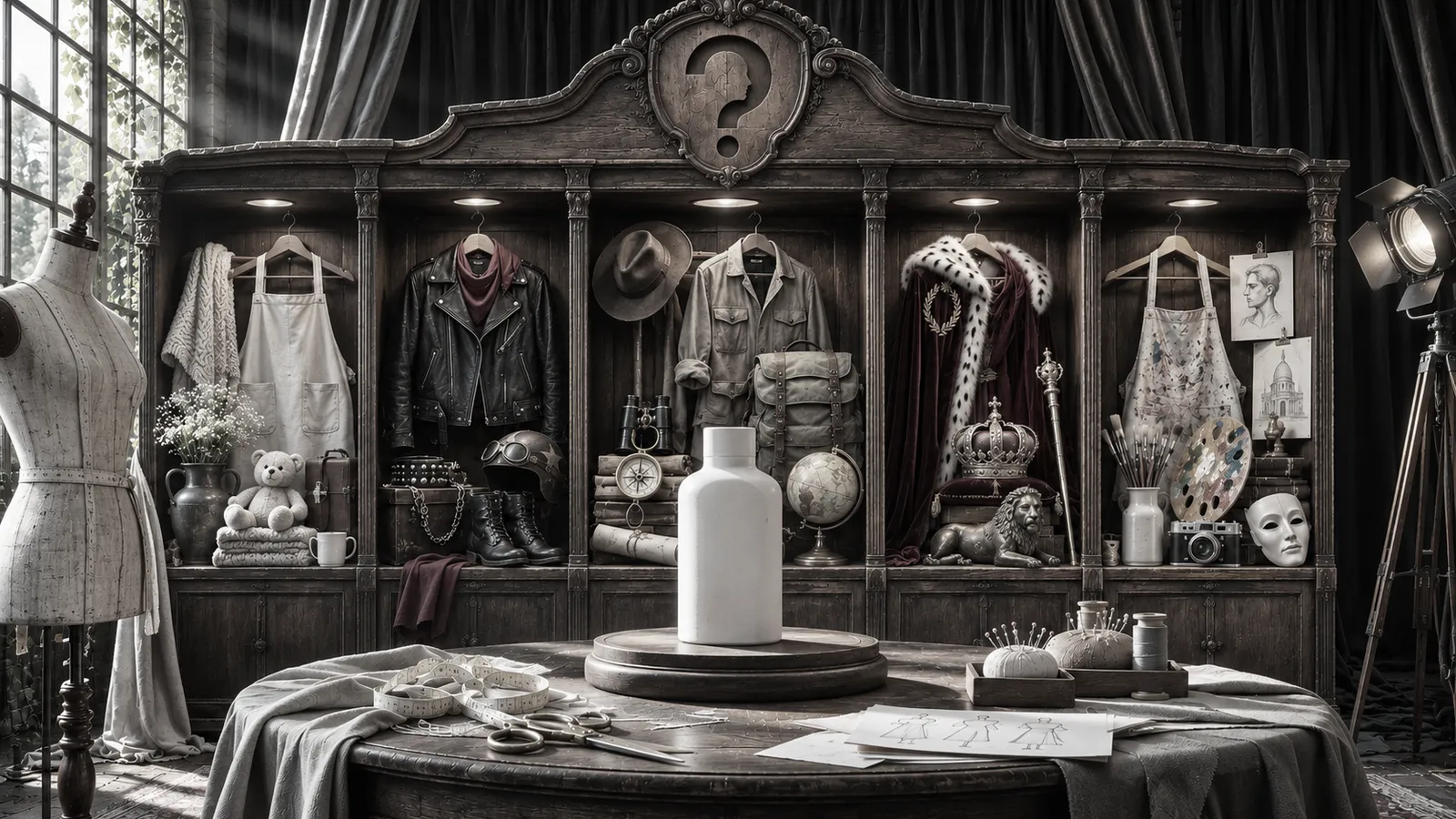
Where the idea came from, what the nearby research on brand character shows, and how a brand can choose one character and keep it.
Answer to the question
What are brand archetypes?
Brand archetypes are familiar story characters, such as the Caregiver, the Explorer or the Outlaw, that a brand adopts so its words, looks and behaviour read as one personality. The idea borrows its vocabulary from Carl Jung and is set out as ten characters by Denise Lee Yohn in What Great Brands Do. Research on brand personality sits close to it.
Key takeaways
- Brand archetypes are familiar story characters a brand adopts so that its words, looks and behaviour read as one personality.
- Denise Lee Yohn's What Great Brands Do lists ten archetypes and advises choosing the ones that rivals are not using.
- Jennifer Aaker's 1997 paper set out five dimensions of brand personality, Sincerity, Excitement, Competence, Sophistication and Ruggedness, with a scale to measure them.
- A meta-analysis by Martin Eisend and Nicola Stokburger-Sauer found the five dimensions interdependent and reflecting a general factor, with each relating to brand attitude in its own way.
- Michael Faber and John Mayer found that people resonate with five clusters of archetypal characters in popular media, and that this resonance predicted life themes and media preferences.
Picture two bookshops, both invented for this example, on the same street. One has a cream door, a handwritten note under every title and an owner who greets regulars by name. The other has black walls, a neon sign and shelves of loud, argumentative titles.
Nobody walking past needs a manual to describe the difference: one feels like a kind neighbour and the other like a rebel. Brand archetypes are the tool that puts names on that difference. They are familiar story characters, such as the Caregiver, the Explorer or the Outlaw, that a brand adopts so that its words, looks and behaviour add up to one recognisable personality.
Where does the idea of brand archetypes come from?
The word behind brand archetypes comes from Carl Jung, the Swiss psychiatrist, who used archetype for recurring figures and patterns that appear in myth, story and imagery across many cultures. Marketing practitioners borrowed the vocabulary to describe the characters a brand can play, on the view that a brand behaving like a recognisable character is easier to remember and to describe.
A fixed list of characters also gives a team a shared language, so that a designer, a copywriter and a shop manager can talk about the same personality. That shared language matters most when a business grows, because new staff and new suppliers can then check their choices against one agreed character instead of guessing at what the founder would have wanted.
Denise Lee Yohn gives a practitioner version in What Great Brands Do. She lists 10 archetypes: the Innocent, the Regular Guy or Girl, the Explorer, the Sage, the Hero, the Outlaw, the Magician, the Lover, the Jester and the Caregiver.
The point of a fixed list is to pin down the role a brand plays in customers' lives. Her advice for using brand archetypes is to pick the ones that rivals are not using, since a character that a competitor already plays gives a newcomer nothing to stand for. In the bookshop example, the cream door and the handwritten notes point to the Caregiver, and the neon sign points to the Outlaw. Neither shop has to be better to be distinct.
What has research found?
The closest body of work concerns brand personality, the human traits that people attribute to brands. Brand archetypes and brand personality are close relatives, since both treat a brand as something with a character, and the measurement work on personality shows what can be tested about that idea. Jennifer Aaker set out to measure it in a 1997 paper in the Journal of Marketing Research. She developed a framework with five dimensions, Sincerity, Excitement, Competence, Sophistication and Ruggedness, and built a reliable scale for measuring them. The paper's starting point was that people use brands symbolically, and personality is one way to read that symbol.
A later meta-analysis by Martin Eisend and Nicola Stokburger-Sauer pooled the evidence on those five dimensions, using lessons from research on human personality. The dimensions turned out to be interdependent and to reflect a general factor, the reliability of the scale differed with how it was measured, and each dimension related to brand attitude in its own way. The practical reading is that a brand character is not a single dial. A brand can be warm and capable at the same time, and which trait moves attitudes depends on the trait.
Do people respond to archetypal characters in media?
The audience side of the idea has its own test. Michael Faber and John Mayer tested it in the Journal of Research in Personality in 2009. They built a scale from examples of archetypal characters in popular music, movies and classic art, and then compared it with other personality and archetype measures. People resonated with five clusters of archetypes, and that resonance predicted their personal life themes and their media preferences.
Two things follow for brand archetypes. People are not blank screens, so the same character will draw some people in more than others, which is a reason to choose one character with confidence and not to chase every audience. And a character works best as a consistent set of cues, because what the audience is responding to is a recognisable figure, not a single feature. The studies measured media tastes and brand perceptions. They did not test whether adopting a named archetype changes what a shop sells, and that claim rests on practitioner experience.
How can a brand choose?
The research and the practitioner advice point the same way: choose a character that is true to what the business does, differs from its rivals and can be repeated everywhere a customer meets it. When brand archetypes are used well, the choice is made once and then applied to hundreds of small decisions. A short working method follows from that.
- Start with daily behaviour. List how the business actually treats customers, since a character that contradicts practice will not hold.
- Map the field. Note which characters nearby competitors already play, and look for a free place.
- Choose one lead archetype and, at most, one supporting one, so the personality stays readable.
- Turn the character into rules for words, colours, packaging and service tone.
- Ask a few customers to describe the brand in their own terms, and compare the answers with the intended character.
Two cautions apply to the first two steps. A shop that calls itself the Caregiver but is slow to answer a customer's message promises something its routine cannot deliver. And two characters that sit close together, such as the Sage and the Explorer, may look alike on a shopfront, so the test is whether a stranger could tell the shops apart without being told, which is also the reason to keep the supporting archetype in the background.
A short round of conversations with regular customers is a cheap way to run the last step, because it shows whether the character the team intended is the one people hear, and it does so before any money goes into new signage or packaging.
Turning the character into rules for words and visuals is the job of an identity system, as How to Build a Brand Identity System sets out, and a character held steady across years feeds the confidence covered in What builds brand trust. Seen from the wider view in What Is Branding The Psychology Behind Strong Brands, the archetype is one input among several.
Common questions
What are brand archetypes?
They are familiar story characters, such as the Caregiver, the Explorer or the Outlaw, that a brand adopts so that its words, looks and behaviour read as one personality.
How many brand archetypes are there?
Denise Lee Yohn lists ten in What Great Brands Do. The number depends on the framework a practitioner chooses, so ten is one common set and not a fixed count.
Are brand archetypes based on research?
The vocabulary comes from Carl Jung, and the framework is a practitioner tool. Nearby research on brand personality and on responses to archetypal characters supports the broader idea that people read brands as characters.
Is a brand archetype the same as brand personality?
Not quite. Brand personality is the set of human traits people attribute to a brand, and it can be measured. An archetype is a named character a brand chooses to express, which gives those traits a story shape.
Sources
Yohn, D. L. What Great Brands Do. Seed book; vault hub Books/What Great Brands Do.
Aaker, J. L. (1997). Dimensions of brand personality. Journal of Marketing Research, 34(3), 347-356. doi:10.1177/002224379703400304 https://doi.org/10.1177/002224379703400304
Eisend, M., & Stokburger-Sauer, N. E. (2013). Measurement characteristics of Aaker's brand personality dimensions: Lessons to be learned from human personality research. Psychology & Marketing, 30(11), 950-958. doi:10.1002/mar.20658 https://doi.org/10.1002/mar.20658
Faber, M. A., & Mayer, J. D. (2009). Resonance to archetypes in media: There's some accounting for taste. Journal of Research in Personality, 43(3), 307-322. doi:10.1016/j.jrp.2008.11.003 https://doi.org/10.1016/j.jrp.2008.11.003