Blink
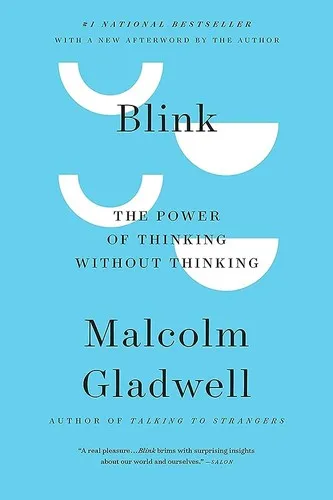
Gladwell's subject is the judgment people make in the first moments of meeting a situation, and his argument has two halves that are often remembered as one. The first is that rapid, unreasoned judgment can be remarkably good. The second, and the one he insists on, is that this is not magic: fast judgment works when it has been trained by long experience in a domain where feedback is honest, and it fails badly when it has not. So the book is as interested in the conditions that spoil snap judgment, including prejudice and information that should have been ignored, as in the cases where an expert knows something in an instant. The practical conclusion is about design rather than instinct, arranging the circumstances in which a decision gets made so the fast system is fed properly. It is written for a general reader and it moves quickly across studies. Several of the experiments it popularised have been re-examined or have failed to replicate in the years since, so any individual finding taken from it should be checked at source.
Written from the publisher description, Open Library.
What this vault takes from it
Reliability
Not audited here. 2 notes in this vault draw on it.
People
- David Meyer
- Gary Klein