Spark
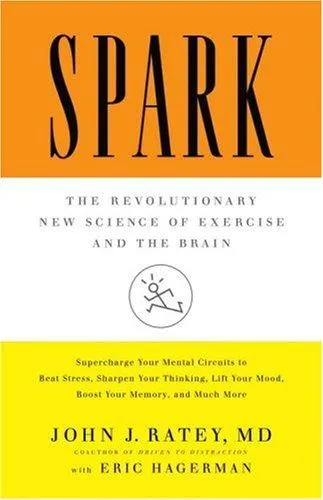
Ratey, a psychiatrist, argues that aerobic exercise should be understood as acting on the brain rather than only on the body. His claim is that raising the heart rate improves mood, attention and memory, and that it does so through physical remodelling rather than by making people feel virtuous, which is why he presents it as a treatment rather than as general advice about health. The book applies this across depression, attention disorders, addiction, anxiety, ageing and hormonal change, and it opens with the case it is best known for, a school district in Illinois that rebuilt its physical education programme around sustained aerobic activity and reported striking academic results. The strength of the underlying evidence varies a good deal across those applications, and the popular presentation is more confident than the research literature, particularly for the school case, which is a single uncontrolled example. The general finding that aerobic exercise benefits mood and cognition is well supported. Anything specific drawn from this book should be checked at source.
Written from the publisher description, Open Library.
What this vault takes from it
Reliability
Not audited here. 1 note in this vault draws on it.
People
- John Ratey