Abundance Aesthetic
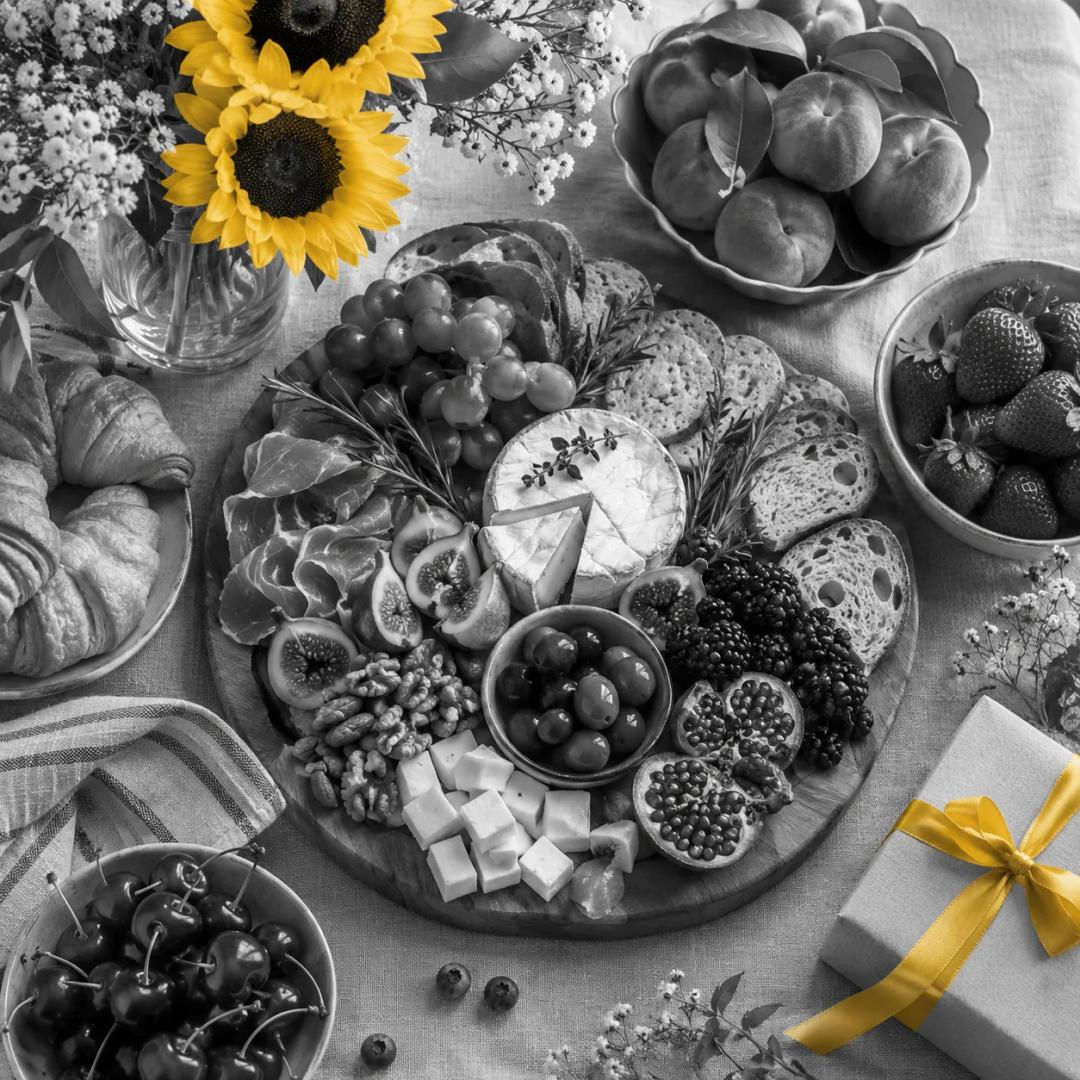
The abundance aesthetic is the second quality in Ingrid Fetell Lee's aesthetics of joy. It covers lushness, multiplicity and variety, and it is the quality with the thinnest direct evidence in this article.
What it is
Lee's abundance covers confetti, sprinkles, a wall of sweet jars and a drawer of coloured pencils. Her case is that many small things repeated give a lift no single piece could, and that the modern form of abundance is sensory richness, layered colour and pattern, rather than owning more.
The nearest research stand-in is visual complexity. Marcos Nadal, Enric Munar, Gisèle Marty and Camilo José Cela-Conde split complexity into at least three properties: the amount and variety of elements, how those elements are organised, and how symmetrical or asymmetrical the arrangement is.
In effect
Set beside that split, Lee's abundance sits almost entirely on the first dimension, while her examples nearly always hold the second in check. Sprinkles are many but similar in size, and a wall of jars is varied but arranged in rows. The organising work is done by her separate harmony quality, built on similarity, symmetry and rhythm.
Our view is that ordered abundance reads as plenty and disordered abundance reads as mess. That is a reading of the framework and the complexity research together, and it is practical for anyone working with many colours on one pack. Abundance is also the cue that works at a glance across a shelf.
What it does not say
Nadal and colleagues found that complexity taken as a whole had no meaningful influence on beauty ratings in their own study, so the research does not show that more is better. The link between Lee's abundance and the complexity dimensions is an interpretation made in this article, not a tested result. The page makes no claim about wellbeing or health.
Sources
- Lee, I. F. Joyful. Seed book.
- Nadal, M., Munar, E., Marty, G., & Cela-Conde, C. J. (2010). Visual Complexity and Beauty Appreciation: Explaining the Divergence of Results. Empirical Studies of the Arts, 28(2), 173-191. https://doi.org/10.2190/EM.28.2.d