Ambient Noise and Taste
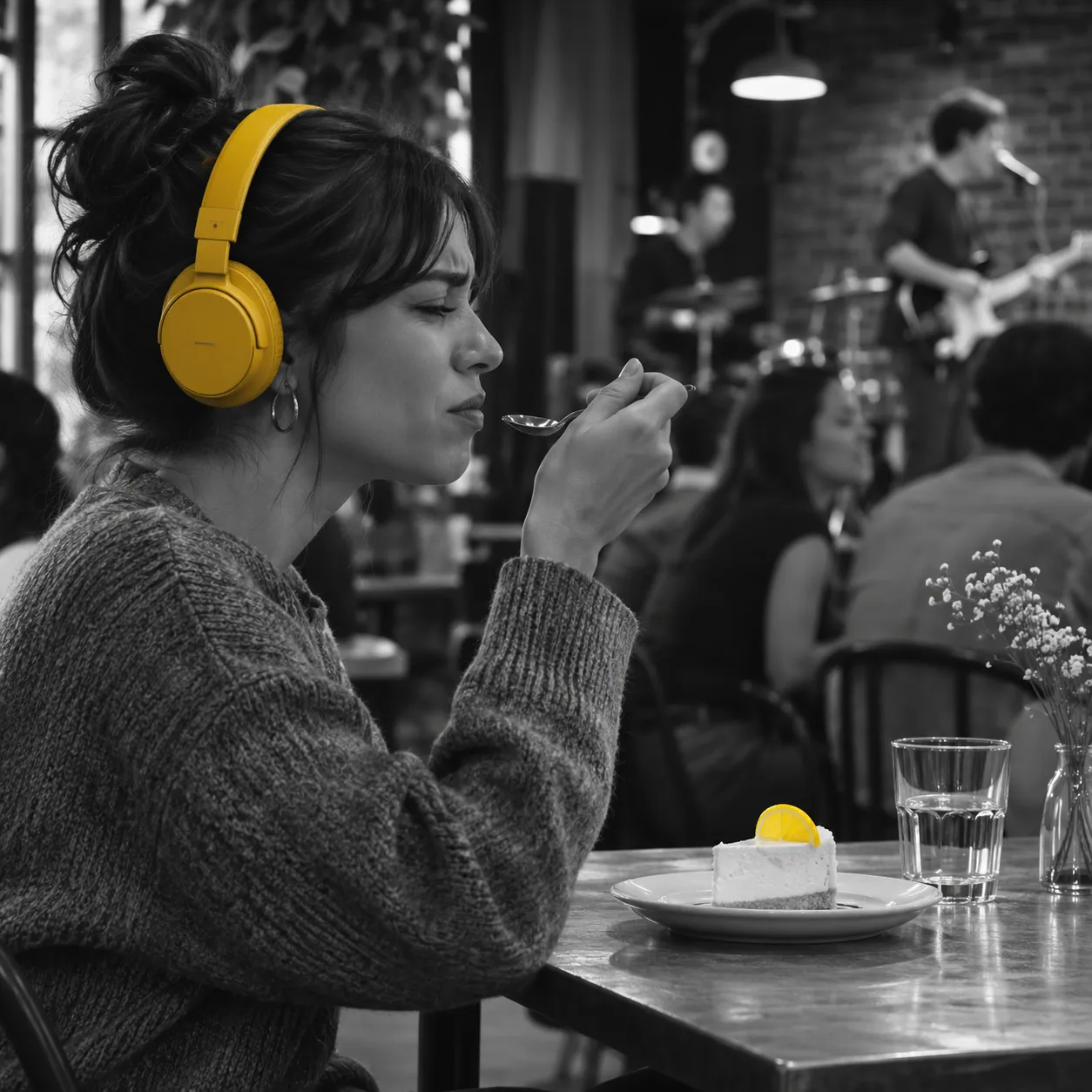
Ambient noise and taste is the effect of unrelated background sound on how food is rated. In one study, loud white noise lowered ratings of sweetness and saltiness while foods were rated crunchier.
What it is
Woods and colleagues, in a 2011 study in Food Quality and Preference, had participants eat foods blind while hearing no sound, quiet white noise or loud white noise. Sweetness and saltiness were rated lower under loud noise than under quiet noise. Foods were rated crunchier when noise was playing, and liking for the noise was related to liking for the food.
In effect
The authors suggest that unrelated background sound reduces taste ratings while enhancing properties that are conveyed by sound. On that reading, noise competes with sweetness and saltiness for attention, while crunch is already a matter of hearing, so a louder room leaves the sound of food with a bigger share of the texture verdict.
The finding sits beside the sound of food itself. Laboratory work on bite sounds shows that crispness and freshness judgements move with what reaches the ear, and the 2011 study shows that sound from outside the food can move taste and texture ratings in different directions.
What it does not say
The page rests on one study of foods eaten blind, with white noise as the background. It does not show how everyday settings such as restaurants or aircraft behave, nor does it settle whether the pattern comes from a contrast between senses or a pull on attention, both of which the authors considered. The page makes no claim about diet or health.
Sources
- Woods, A. T., Poliakoff, E., Lloyd, D. M., Kuenzel, J., Hodson, R., Gonda, H., Batchelor, J., Dijksterhuis, G. B., & Thomas, A. (2011). Effect of background noise on food perception. Food Quality and Preference, 22(1), 42-47. https://doi.org/10.1016/j.foodqual.2010.07.003
- Spence, C. (2015). Eating with our ears: assessing the importance of the sounds of consumption on our perception and enjoyment of multisensory flavour experiences. Flavour, 4, 3. https://doi.org/10.1186/2044-7248-4-3