Appearance Socialisation
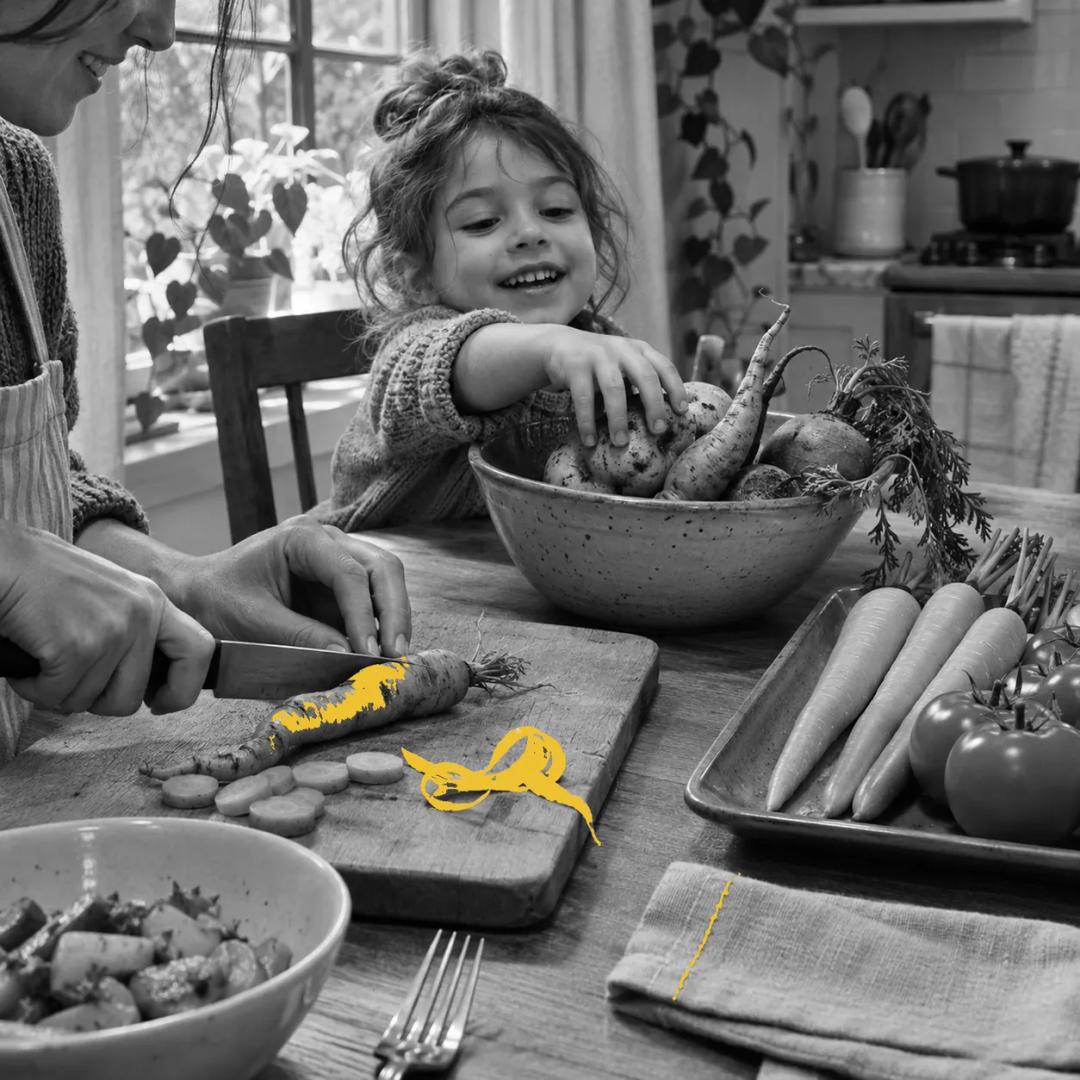
The way family and shared norms teach children which looks of fresh produce are acceptable.
What it is
In 11 focus groups with 97 New Zealand children aged 5 to 11, families who use imperfect produce helped children accept it, while other children absorbed rejection by watching parents' choices, following instructions or adopting shared norms. It is drawn from work by Annesha Makhal and colleagues (2020).
In effect
In the article on skipping ugly fruit, the start of the effect may lie in the kitchen.
What it does not say
The evidence is a set of focus groups with children in one country. It describes how preferences were reported to form there and does not measure how much of adult behaviour the process explains.
Sources
- Makhal, A., Robertson, K., Thyne, M. A., & Mirosa, M. (2020). Normalising the ugly to reduce food waste: Exploring the socialisations that form appearance preferences for fresh fruits and vegetables. Journal of Consumer Behaviour, 20(5), 1025-1039.