Attachment Theory
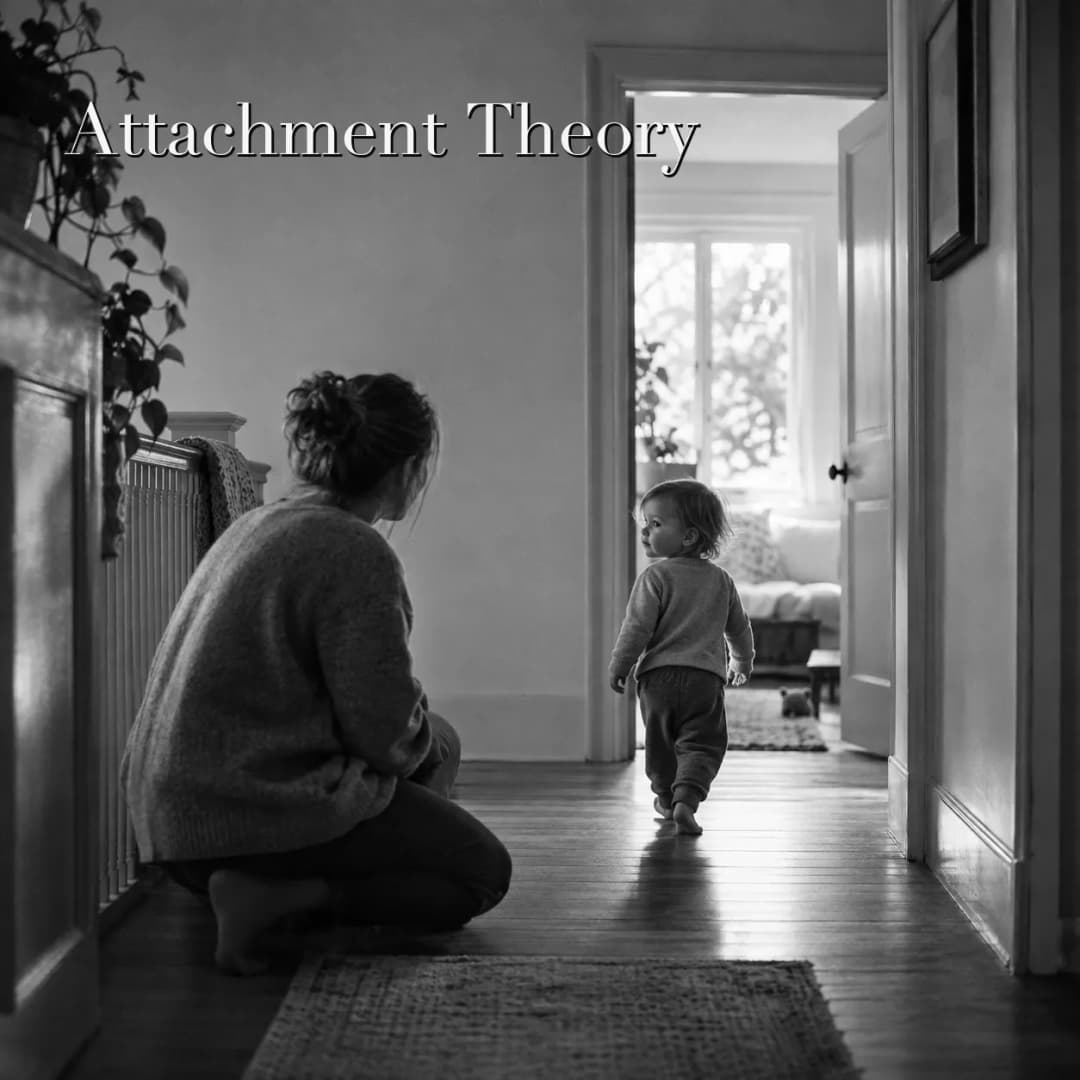
A human baby cannot feed itself, warm itself or get away from anything. A baby that keeps a responsive adult close therefore survives better than one that does not, and attachment theory says the machinery for doing that is built in rather than learned. That much has held up. What is built on top of it, that the bond formed in the first year sets how a person loves for life, is where the evidence runs thin.
What it is
John Bowlby made the argument across three volumes between 1969 and 1980, against the then-standard view that a baby bonds to its mother because she supplies food.
Three claims sit inside it, and they are in very different states of repair.
The drive is innate. Well supported. Schaffer and Emerson tested it in 1964 on sixty Glasgow babies and found attachments forming with the adult who responded, not the adult who fed them. That result killed the learning-through-feeding account.
One bond sits above the others. Bowlby called this monotropy, and it is regularly caricatured as all-or-nothing, which he did not claim. What he did claim was a hierarchy with a principal figure. The same 1964 study found that by eighteen months only about one baby in eight was attached to a single person, and most had several attachments.
An internal working model carries forward. The idea that the early bond leaves a representation of whether others will be available, which shapes later relationships. This is the part that made attachment theory famous and it is the part with the weakest support.