Attention Capture and Transfer
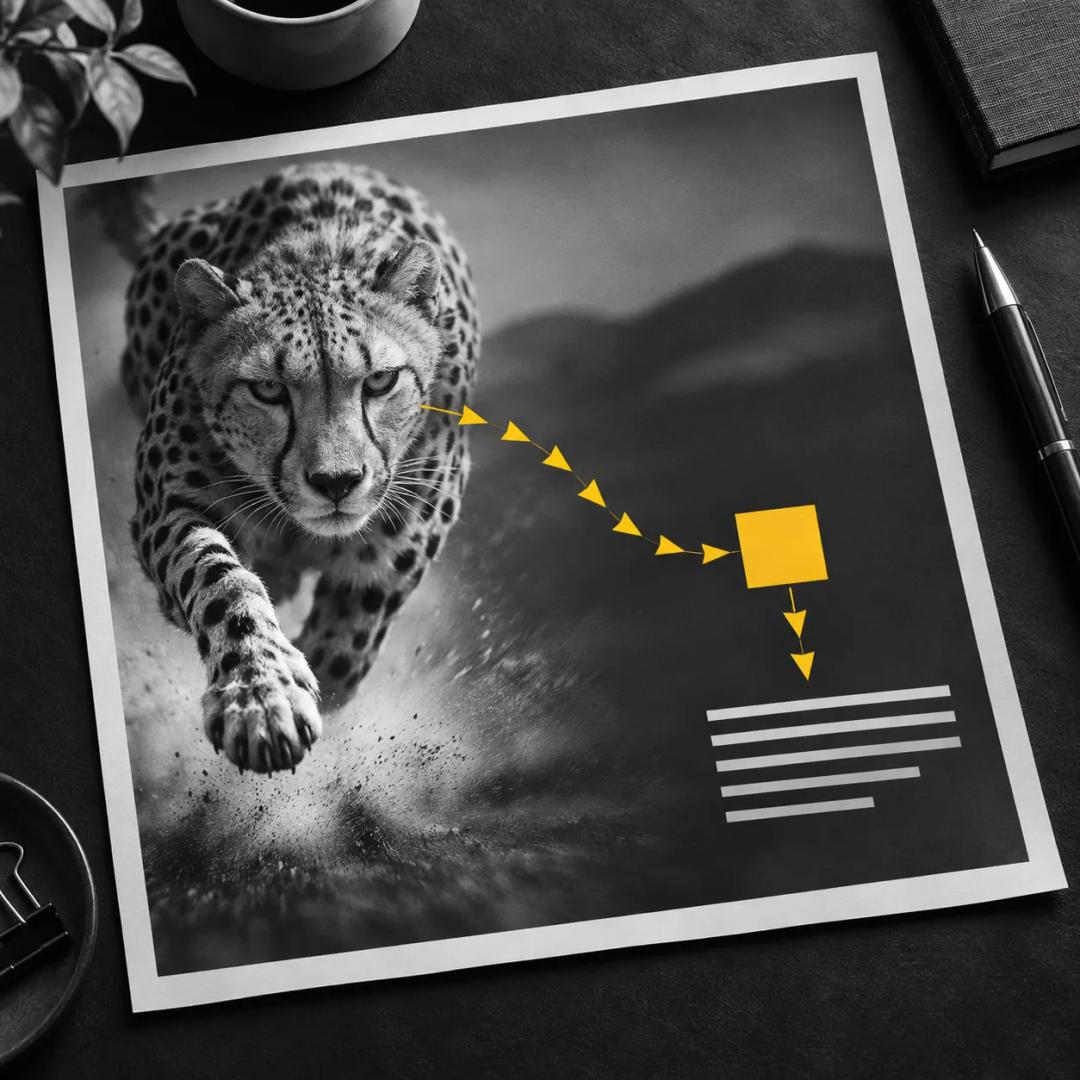
Attention capture and transfer describes how the parts of an advertisement draw the eye and then pass it on to other parts. The term comes from the title of a 2004 Journal of Marketing study by Rik Pieters and Michel Wedel, which used infrared eye tracking to measure how the brand, pictorial and text elements of print advertisements share the viewer's gaze.
What it is
Capture is the first look: which part of an advertisement pulls the eye to it. Transfer is what happens next: which part sends the eye on to the others. Pieters and Wedel studied both, for three key elements of an advertisement, the brand, the pictorial and the text.
The study analysed 1363 print advertisements tested on more than 3600 consumers. Its scale means the findings describe how gaze tends to be shared across many advertisements and many viewers, which is a different thing from the reaction to one layout.
In effect
The authors report that each element has its own effect on attention. The pictorial is superior in capturing attention, independent of its size. The text element captures attention in direct proportion to its size. The brand element most effectively transfers attention to the other elements. Only increments in the text element's surface size produce a net gain in attention to the advertisement as a whole.
They note that the pattern is on par with many commonly held ideas in marketing practice, and they discuss how the findings can support more effective decisions in advertising, such as how to divide space between the parts of a layout.
What it does not say
It does not say how viewers felt about the advertisements. The outcome in the study is attention, measured by gaze, and the findings do not speak to liking, memory or purchase.
It does not say that a larger element is always better. The size result concerns text, where larger text drew more attention in proportion, and the pictorial captured attention whatever its size.
It does not describe any one reader. A pattern across 1363 advertisements and many viewers says how gaze tends to be shared, and a given reader may differ.
Sources
- Pieters, R., & Wedel, M. (2004). Attention capture and transfer in advertising: Brand, pictorial, and text-size effects. Journal of Marketing, 68(2). https://doi.org/10.1509/jmkg.68.2.36.27794