Background Music and Dwell Time
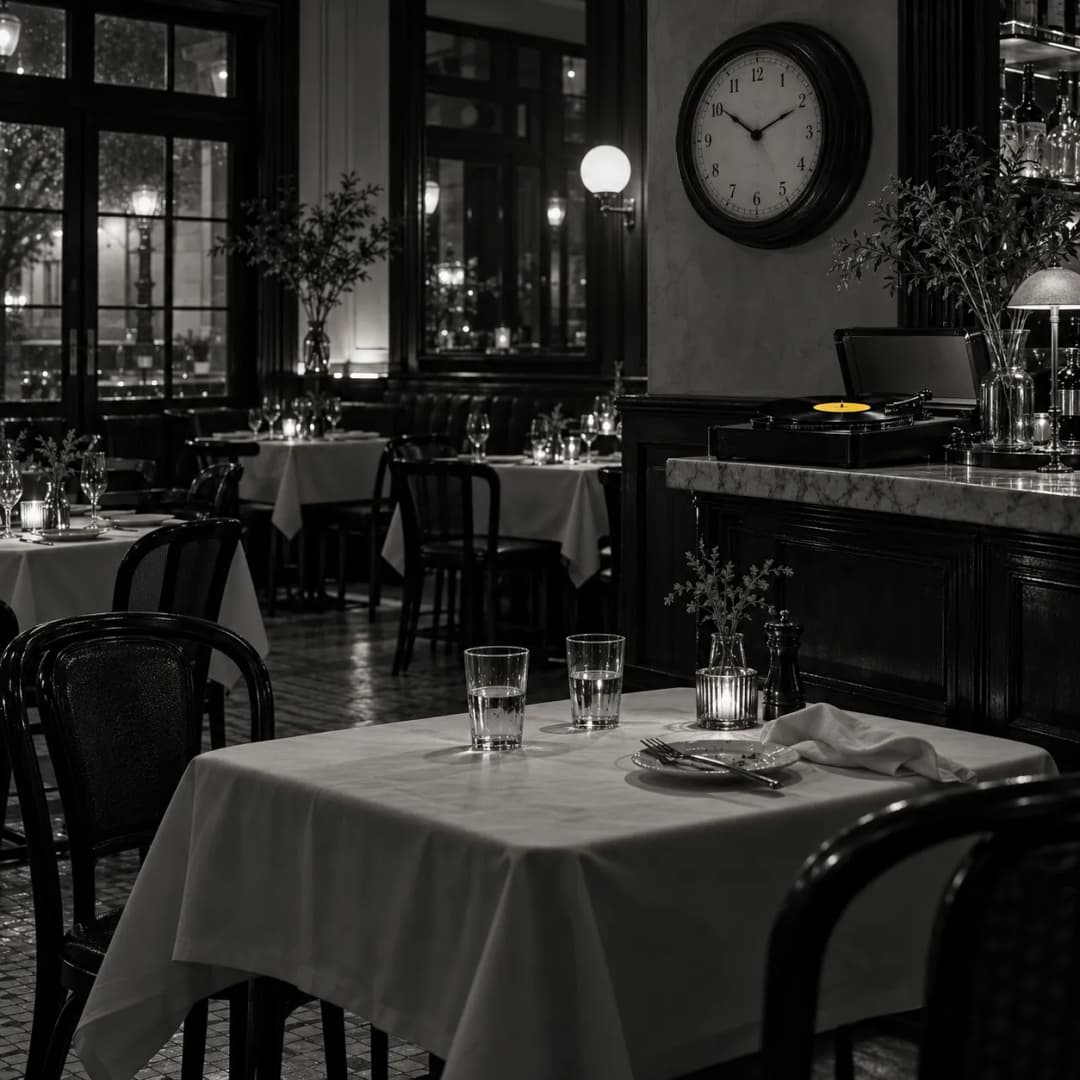
Background music is one of the few atmospheric cues whose effect on how long people stay has been measured directly. Ronald Milliman's 1986 restaurant study reported that variations in music tempo significantly affected purchases and length of stay. The finding matters beyond restaurants because it shows what a clock-and-till measure looks like, and because it shows that a longer stay is only good news for businesses that earn from lingering.
What it is
The concept is the claim that the tempo of background music changes how long customers stay and what they spend. Slow music tends to lengthen a stay, and fast music tends to shorten it. The claim sits inside the wider practice of store atmospherics, the deliberate design of a venue's sound, light, colour and scent.
Milliman's paper, published in the Journal of Consumer Research in 1986, reviewed the thin literature on music in restaurants and reported an empirical study of its effect on patrons. Its abstract states that music tempo variations can significantly affect purchases, length of stay and the other variables examined. The abstract carries no figures, and the full text sits behind a paywall that we did not open. We rely on that abstract and on a published audit of the paper, which found that the paper exists as cited and that later field work has echoed the tempo effect on dining time and spend, with sizes that vary by venue.
In effect
The restaurant with a bar
The textbook reading of Milliman is a business lesson more than a psychological one. A restaurant with a bar gains from slow music, because diners who stay longer also spend more at the bar. A restaurant that depends on quick table turnover does better with faster music, because a long stay is a cost to it. The same effect on dwell time is therefore good or bad news depending on the revenue model, which is why a longer visit is not a result in itself.
What it shows about method
The study is useful as a contrast. It recorded how long diners stayed and what they spent, which are a clock and a till. Much of the rest of the atmospherics literature measures how people felt about a venue, or what they say they would do. In the 2017 pooled analysis of music, scent and colour by Holger Roschk and colleagues, 47 of the 135 effects concerned music. Music is the cue the sources read here measured against a clock and a till, which is part of the reason it reads as more settled than colour.
When cues collide
Music does not act alone. Roschk and Masoumeh Hosseinpour's 2020 meta-analysis of pleasant scents reports incongruent music as a significant moderator of scent effects. It explains the result with a 2005 field study in which expenditures dropped by an average of 40 per cent when slow-tempo music met a citrus scent. That figure is the meta-analysis's characterisation of a paper we have not read, so it is attributed to the meta-analysis. The lesson is limited but real: a music effect measured with nothing else changing may not survive a shop where scent, light and colour change as well.
The link to colour
In the colour literature the clock is rarely read. A 2012 shop study reported, in its abstract, that time in the store was positively associated with soft lighting and negatively associated with a red interior, which is the nearest colour equivalent of Milliman's measure that we found. The pooled colour evidence did not analyse time spent separately. Music is the standard against which the colour record looks thin.
What it does not say
It does not say that slow music raises sales in every venue. The audit of the paper records that effect sizes vary by venue, and Milliman's own business logic has two sides.
It does not say that the effect is the same in a shop. The study was of restaurant patrons. The way people move and decide in a shop floor differs from the way they sit through a meal, and earlier Why We Project work on store atmospherics found that single-variable designs, which dominate the field, do not describe a shop where everything changes at once.
It does not say that every atmospheric cue behaves like music. Colour, for example, has been shown to change felt time on a screen but has hardly been tested on dwell time in a shop.
Sources
- Milliman, R. E. (1986). The influence of background music on the behavior of restaurant patrons. Journal of Consumer Research, 13(2), 286-289. doi:10.1086/209068. Abstract read; full text not consulted.
- Roschk, H., Loureiro, S. M. C., & Breitsohl, J. (2017). Calibrating 30 years of experimental research: a meta-analysis of the atmospheric effects of music, scent, and color. doi:10.1016/j.jretai.2016.10.001. Journal of Retailing, 93(2), 228-240. Accepted manuscript read.
- Roschk, H., & Hosseinpour, M. (2020). Pleasant ambient scents: a meta-analysis of customer responses and situational contingencies. Journal of Marketing, 84(1), 125-145. doi:10.1177/0022242919881137.
- Barli, O., Aktan, M., Bilgili, B., & Dane, S. (2012). Lighting, indoor color, buying behavior and time spent in a store. Color Research & Application, 37(6), 465-468. doi:10.1002/col.20695. Abstract read.