Bazaar Economy
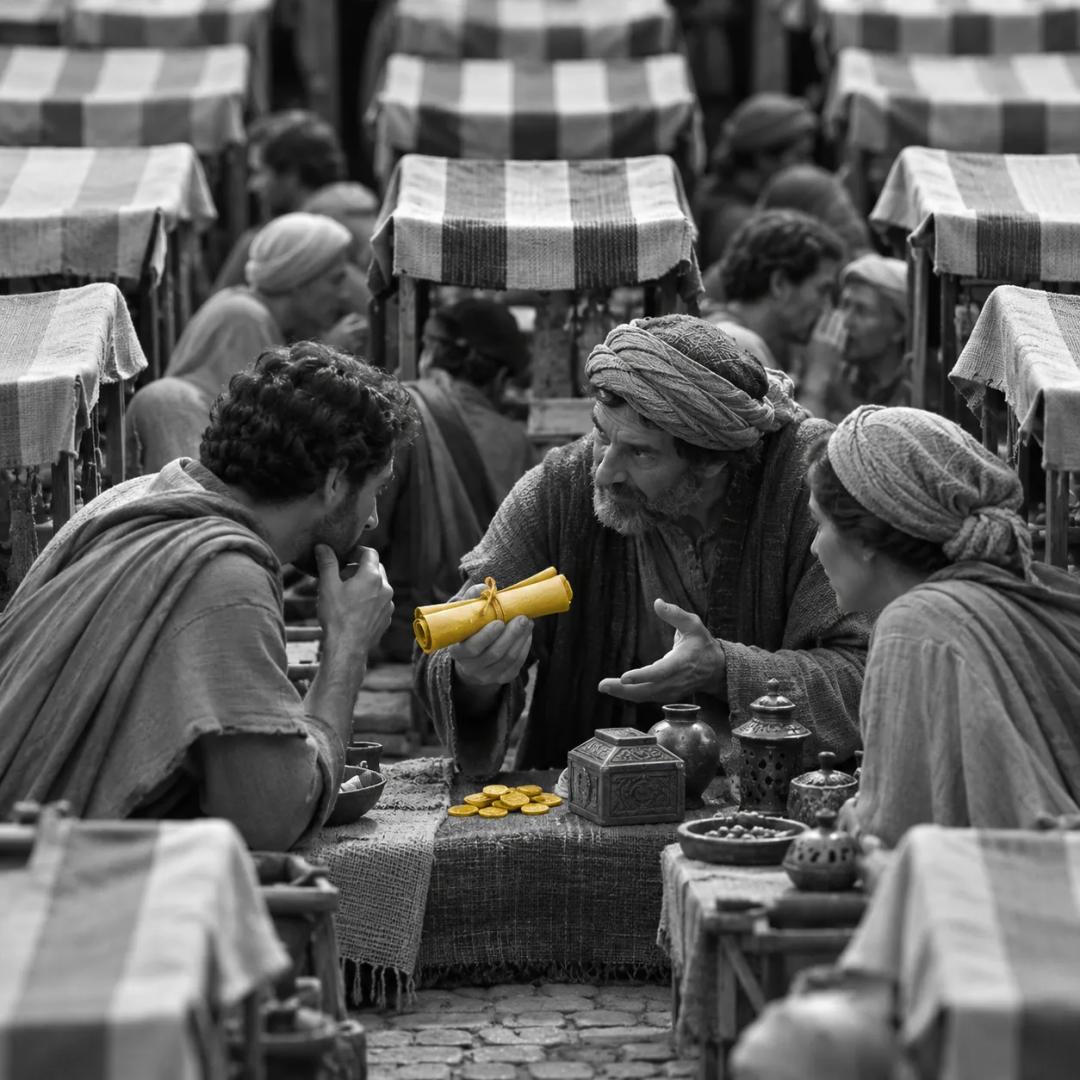
A bazaar economy is Clifford Geertz's term for a market in which information is scarce, unevenly spread and highly valued, so that much of trading is a search for it.
What it is
Geertz built the account on fieldwork from the mid-1960s in Sefrou, a walled market town in Morocco, and published it in the American Economic Review in 1978. In the market he described, buyers and sellers lacked reliable knowledge of quality and price, and trading was in large part a search for the information they lacked.
He identified two procedures that make the search work. One is clientelization, the forming of lasting, reciprocal and still competitive ties with particular partners. The other is bargaining, which he described as multidimensional, since quantity, quality and credit terms can move while the money price stays put.
In effect
The concept explains why an exchange of offers can be the sensible way to set a price. Where each item differs in make or quality and no label says enough, questions about the goods arrive bundled with prices, and the answers are part of what the buyer is paying for. Geertz found that intensive search, probing one offer in depth, carried most of the weight there, more than extensive search across many sellers.
The same reasoning predicts where the pattern fades. When goods are identical and clearly labelled, the tag carries the information and a fixed price does the job.
What it does not say
The term describes how information works in one kind of market, and Geertz drew it from one town studied over a limited period. It is not a ranking of economies, and it does not say that bazaar trading is a stage that other markets pass through. The page makes no claim about any country or culture as a whole.
Sources
- Geertz, C. (1978). The bazaar economy: Information and search in peasant marketing. American Economic Review, 68(2), 28-32. No DOI.