Bias Blind Spot
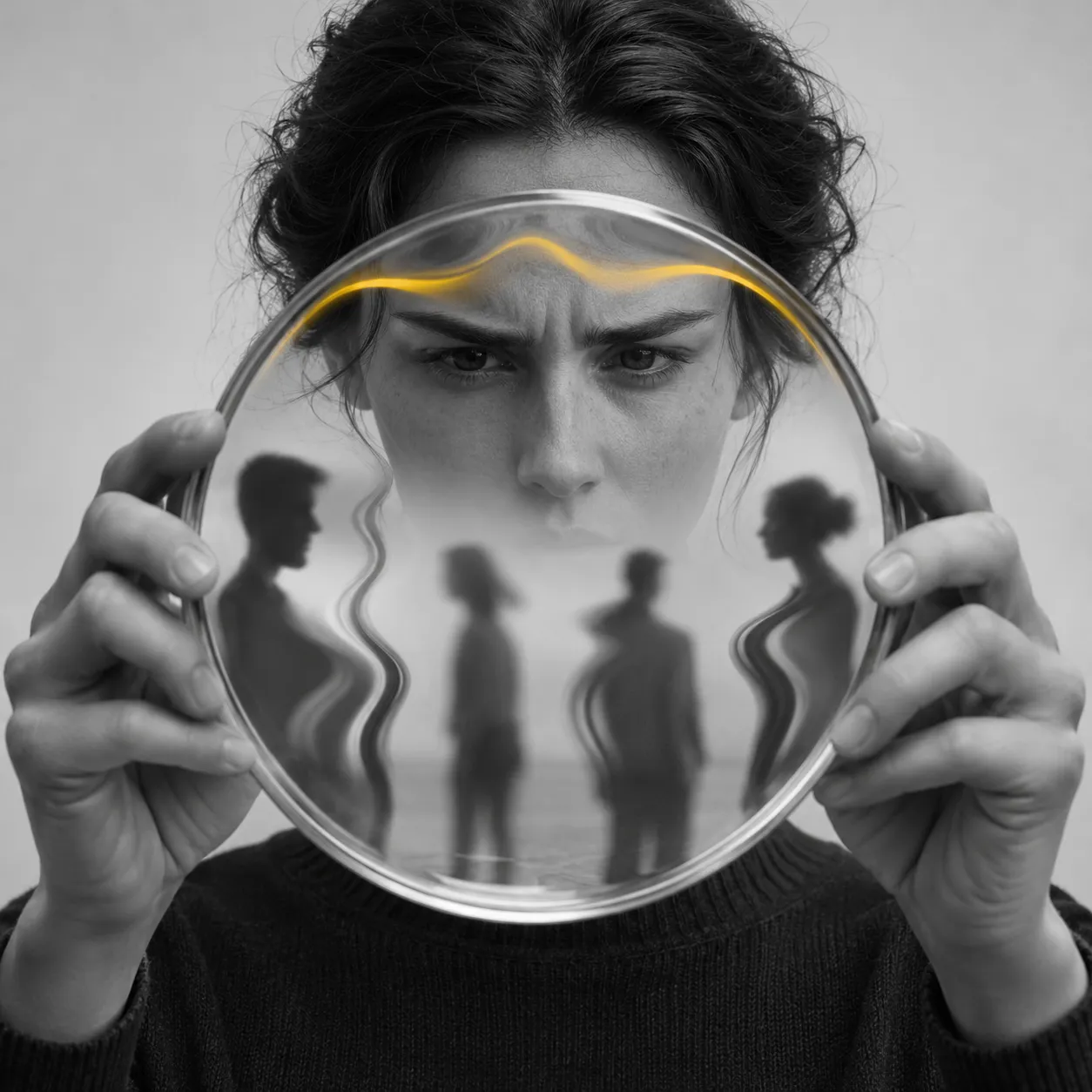
The tendency to see other people as more prone to bias than oneself. Emily Pronin, Daniel Lin and Lee Ross reported it in Personality and Social Psychology Bulletin in 2002, across three studies. In the studies, participants rated themselves as less susceptible to biases than others, and those who showed the pattern still held that their own assessments were accurate and objective after being told how bias could have shaped them.
What it is
The tendency to see other people as more prone to bias than oneself. Emily Pronin, Daniel Lin and Lee Ross reported it in Personality and Social Psychology Bulletin in 2002, across three studies.
It sits close to The Inside View and the Outside View, Curse of Knowledge and The Introspection Illusion in the wider body of research, and is best taken as one idea among several rather than a stand-alone rule.
In effect
In the studies, participants rated themselves as less susceptible to biases than others, and those who showed the pattern still held that their own assessments were accurate and objective after being told how bias could have shaped them. The Why We Project uses it in its article on brand strategy consulting to explain why a team's confidence in its own view of its brand is weak evidence and an outside reading is a second opinion.
What it does not say
The finding comes from the studies named on this page and describes a pattern in those samples. It does not show that the pattern holds for every person, product or market, and it does not tell a brand what to do on its own. It is one input to a decision, to be weighed with other evidence.
Sources
- Pronin, Lin and Ross, Personality and Social Psychology Bulletin 28(3), 2002. https://doi.org/10.1177/0146167202286008