Bouba-Kiki Effect
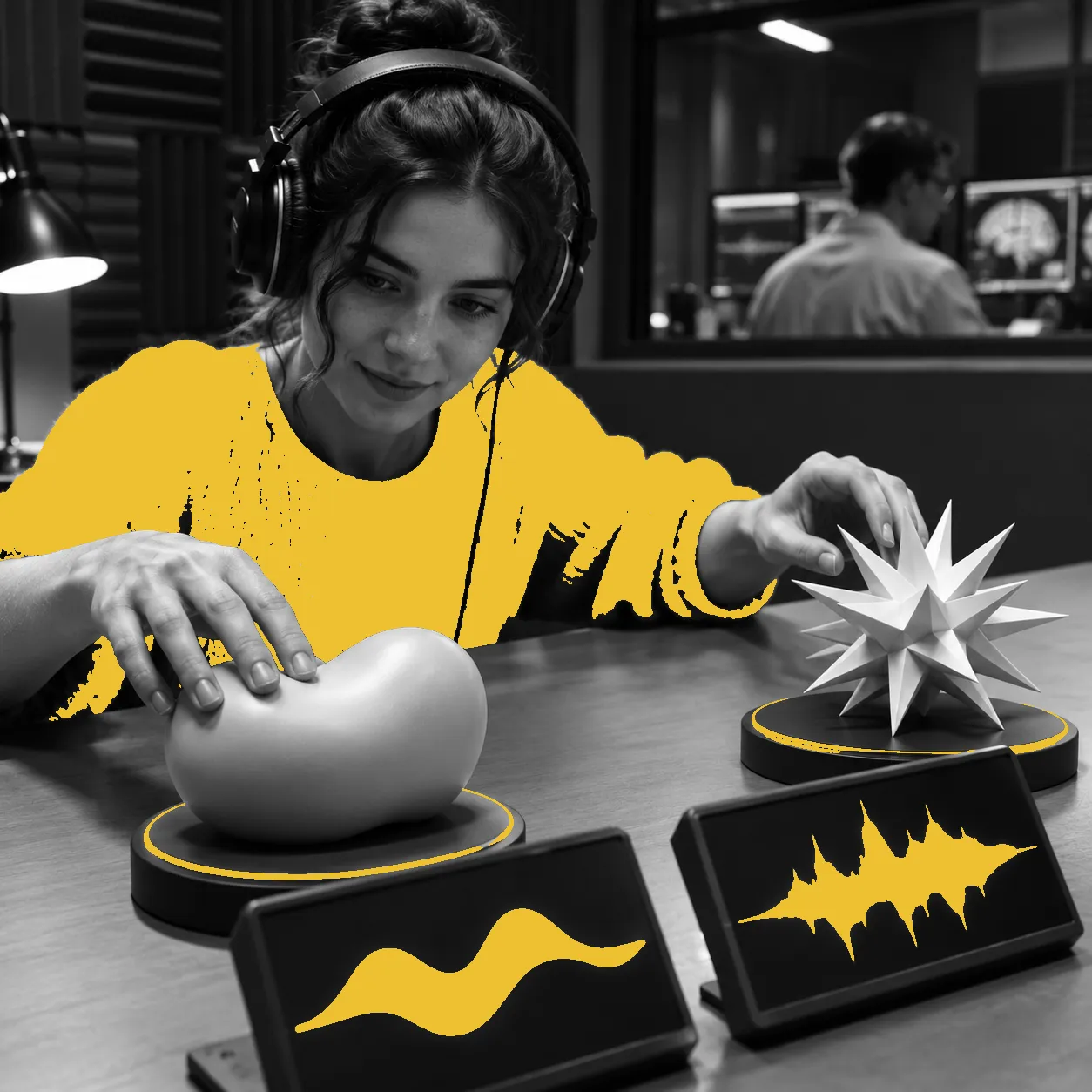
The tendency to match the made-up word bouba with a round shape and kiki with a spiky one.
What it is
Ćwiek and colleagues reported, from an online experiment with speakers of 25 languages from nine language families and ten writing systems, a strong tendency to pair bouba with a round shape and kiki with a spiky one. Speakers who used the Roman alphabet were only marginally more likely to show it, so the pattern did not depend mainly on how the words are written.
In effect
In the article on sound symbolism in brand names, the effect is the clearest picture of a sound suggesting a shape before any meaning is taught.
What it does not say
It does not say every sound carries a fixed meaning in every language; the study found a strong tendency, not a universal rule.
Sources
- Ćwiek, A., Fuchs, S., Draxler, C., Asu, E. L., Dediu, D., Hiovain, K., et al. (2022). The bouba/kiki effect is robust across cultures and writing systems. Philosophical Transactions of the Royal Society B, 377(1841), 20200390.
- Preziosi, M. A., & Coane, J. H. (2017). Remembering that big things sound big: Sound symbolism and associative memory. Cognitive Research: Principles and Implications, 2, 10.