Buying Time
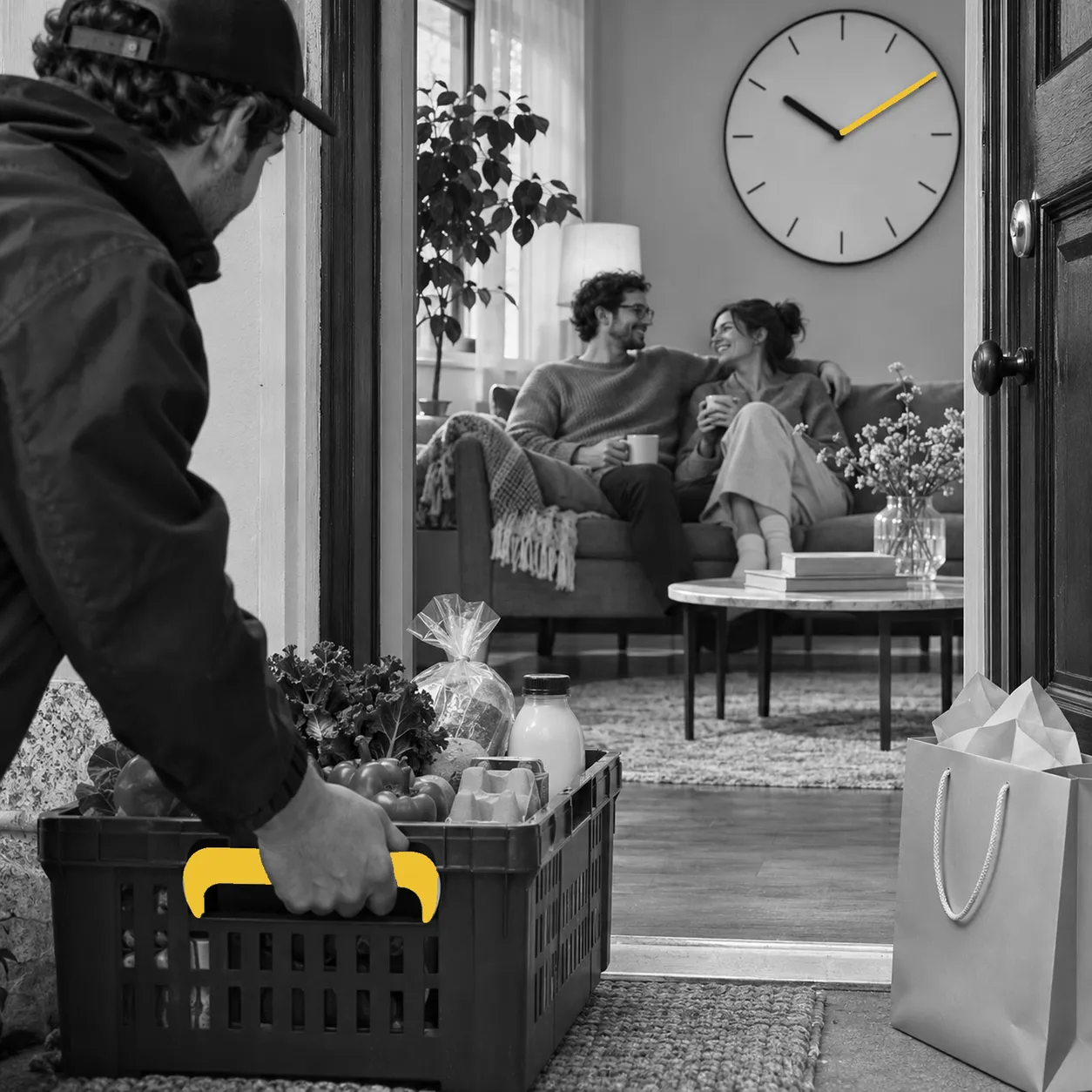
Spending money on services that free up time, such as delivery or help with chores, instead of on material goods.
What it is
In a 2017 paper covering 6,271 adults in four countries, time-saving spending was linked to greater life satisfaction, and a field experiment found working adults happier after a time-saving purchase than a material one. It is drawn from work by Ashley Whillans and colleagues (2017).
In effect
In the article on why we pay for convenience, it serves as the main reason given for the convenience premium.
What it does not say
The link with life satisfaction is an association in surveys, supported by one field experiment. A later survey of about 15,545 Americans found the time-buying link somewhat weaker than the link for prosocial spending, and found that gender and income did not change it. It does not say that every time-saving purchase raises happiness.
Sources
- Whillans, A. V., Dunn, E. W., Smeets, P., Bekkers, R., & Norton, M. I. (2017). Buying time promotes happiness. Proceedings of the National Academy of Sciences, 114(32), 8523-8527.
- Lok, I., & Dunn, E. W. (2022). Are the benefits of prosocial spending and buying time moderated by age, gender, or income? PLOS ONE, 17(6), e0269636.