Choice Deferral
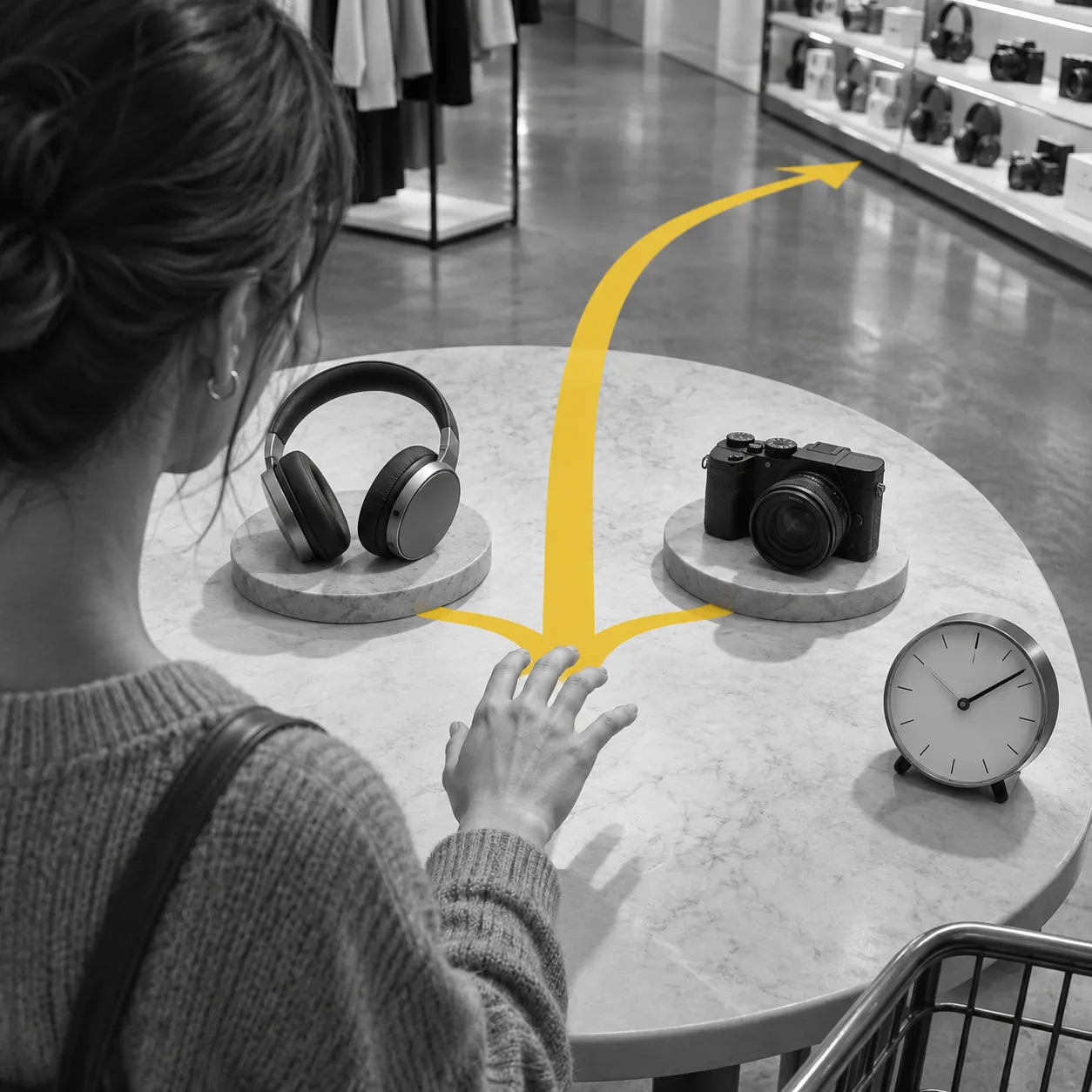
Postponing a choice, or searching for further options, when the options in front of a person conflict. It is a way of not choosing yet, and it is a different source of delay from uncertainty about one's own finances. Amos Tversky and Eldar Shafir reported in 1992 that choice often creates conflict and that people delay choosing or look for new options when the conflict is high, across studies of deferral, search and default options.
What it is
Postponing a choice, or searching for further options, when the options in front of a person conflict. It is a way of not choosing yet, and it is a different source of delay from uncertainty about one's own finances.
It sits close to Loss Aversion, Mental Accounting and Precautionary Saving in the wider body of research, and is best taken as one idea among several rather than a stand-alone rule.
In effect
Amos Tversky and Eldar Shafir reported in 1992 that choice often creates conflict and that people delay choosing or look for new options when the conflict is high, across studies of deferral, search and default options. In a 2026 piece on the cautious buyer it was set beside a European Central Bank analysis of uncertain households, which reached the same outward behaviour, a purchase pushed to later, from a different cause.
What it does not say
The finding comes from the studies named on this page and describes a pattern in those samples. It does not show that the pattern holds for every person, product or market, and it does not tell a brand what to do on its own. It is one input to a decision, to be weighed with other evidence.
Sources
- Tversky and Kahneman, Quarterly Journal of Economics 106(4), 1991. https://doi.org/10.2307/2937956
- Tversky and Shafir, Psychological Science 3(6), 1992. https://doi.org/10.1111/j.1467-9280.1992.tb00047.x