Cognitive Reappraisal
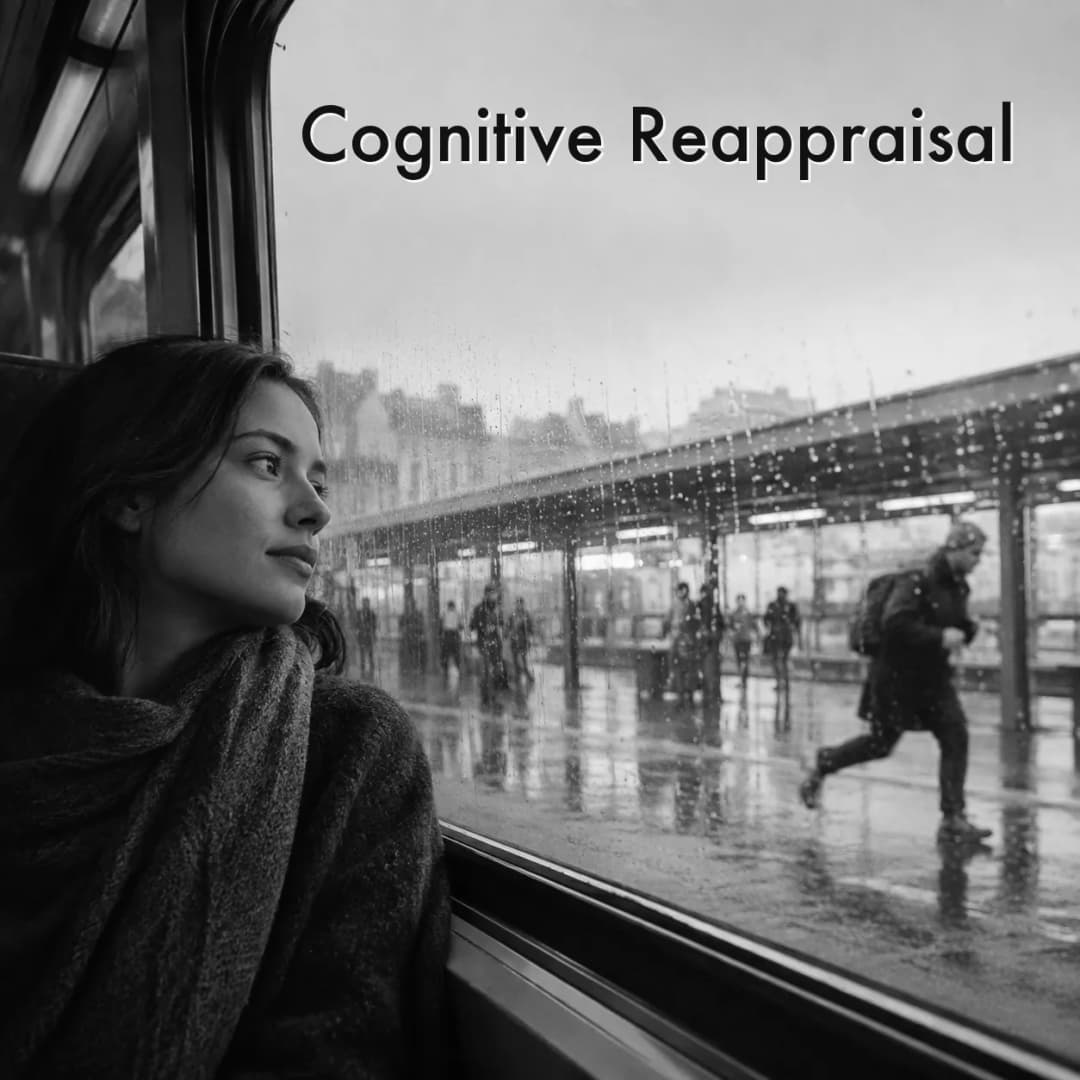
Cognitive reappraisal is changing how you feel about something by changing what you take it to mean. The traffic jam stops being an insult aimed at you and becomes twenty minutes of radio. It is the deliberate, effortful strategy in James Gross's process model of emotion regulation, it is the best-studied strategy in that literature, and it is the mechanism cognitive therapy trades in. It is also the yardstick cheaper strategies get measured against, which is how it ended up at the centre of an awkward finding: people who named their feeling before reframing it felt worse than people who just reframed.
What it is
The laboratory version is simple. Someone is shown an upsetting photograph and asked to reinterpret the scene, perhaps as staged, perhaps as the moment before a rescue. Reported distress falls. It falls because the person did something demanding, on purpose, having been told to.
That last clause is the contrast that matters. Affect labelling, putting a single word on a feeling, produces a broadly comparable pattern of effects without the person intending to regulate anything at all. Reappraisal is the explicit strategy; naming is the implicit one. Comparing them is how the field works out whether effort is the active ingredient.
Effort is also a cost, and the popular advice tends to leave it out. Reappraisal draws on the same limited mental control that everything else demanding draws on. It is harder when a person is tired, depleted or already very worked up, which is precisely when they are being told to try it.