Communitas
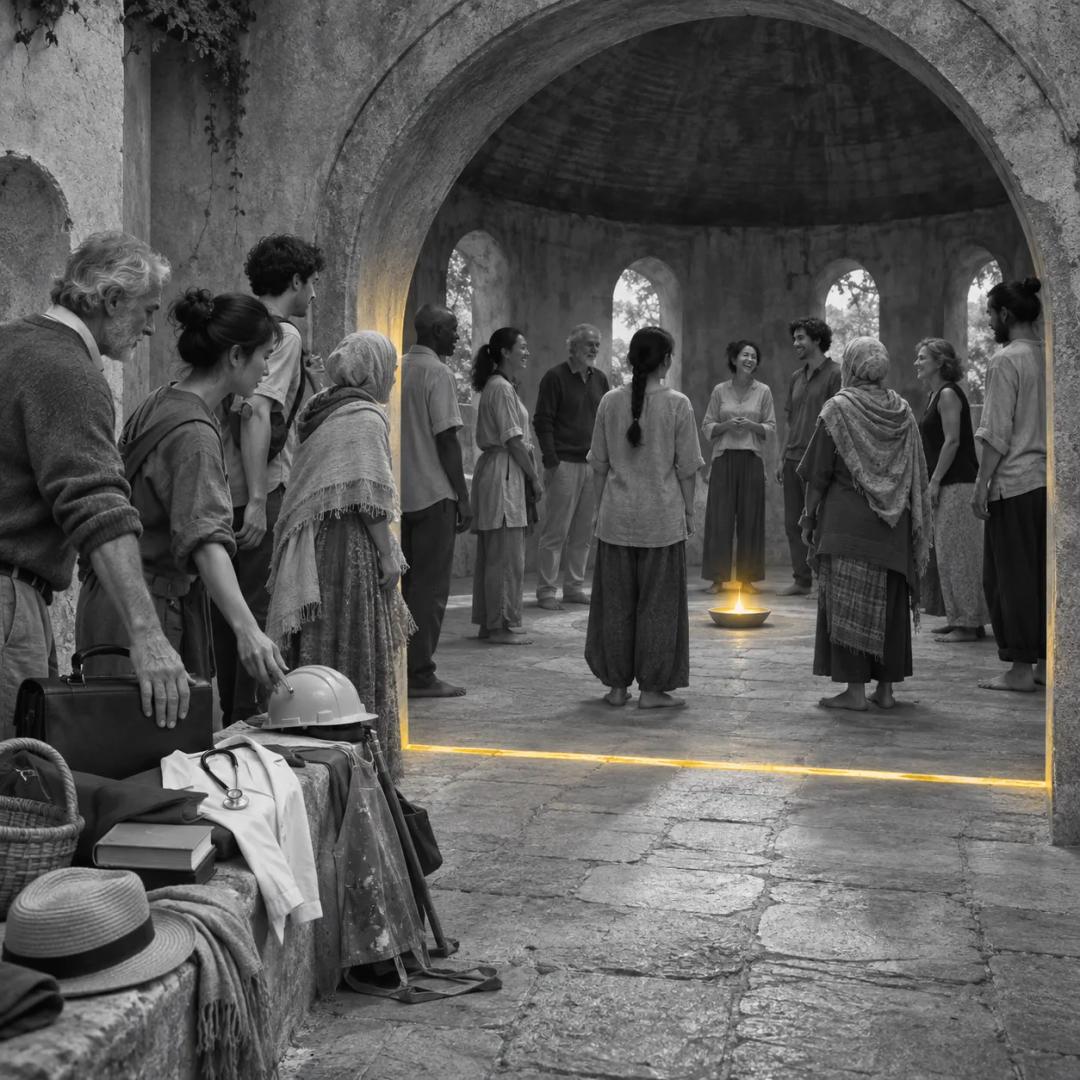
Communitas is Victor Turner's term for a relation among participants that he describes as lying beyond ordinary social structure. He developed it in The Ritual Process, first published in 1969, and linked it to the liminal phase of rites of passage.
What it is
Turner's book examines Ndembu rituals in Zambia. The publisher's description presents communitas as a relation between people that sits outside the forms of everyday structure, and it presents the book as extending Arnold van Gennep's liminal phase into a broader framework for understanding social phenomena. In Turner's account, ritual is not only a conservative practice. It is a place where social change can emerge and be taken up into shared practice.
The term sits beside a second idea in the book's title, anti-structure, which names the interval in which the ordinary arrangements of a society are set aside.
In effect
The idea reaches the productivity use of the word liminal only indirectly. Nir Eyal's liminal moments in Indistractable concern the gaps between tasks in a day and say nothing about communitas. The concept is included in What is a liminal moment? because it is the part of Turner's development of the liminal phase that concerns the relation among people in the interval, and because a reader who looks up the word will meet it.
What it does not say
Communitas is an interpretive concept from ethnography, drawn from one body of fieldwork and developed in a single book. It is not a measured trait and it makes no claim about habits, attention or consumer behaviour.
Sources
- Turner, V. (1969). The Ritual Process: Structure and Anti-Structure.
- van Gennep, A. (1909). Les rites de passage.
In these themes
- Generations and Life Stages
How what we want changes as life moves on.