Comparative Product Testing
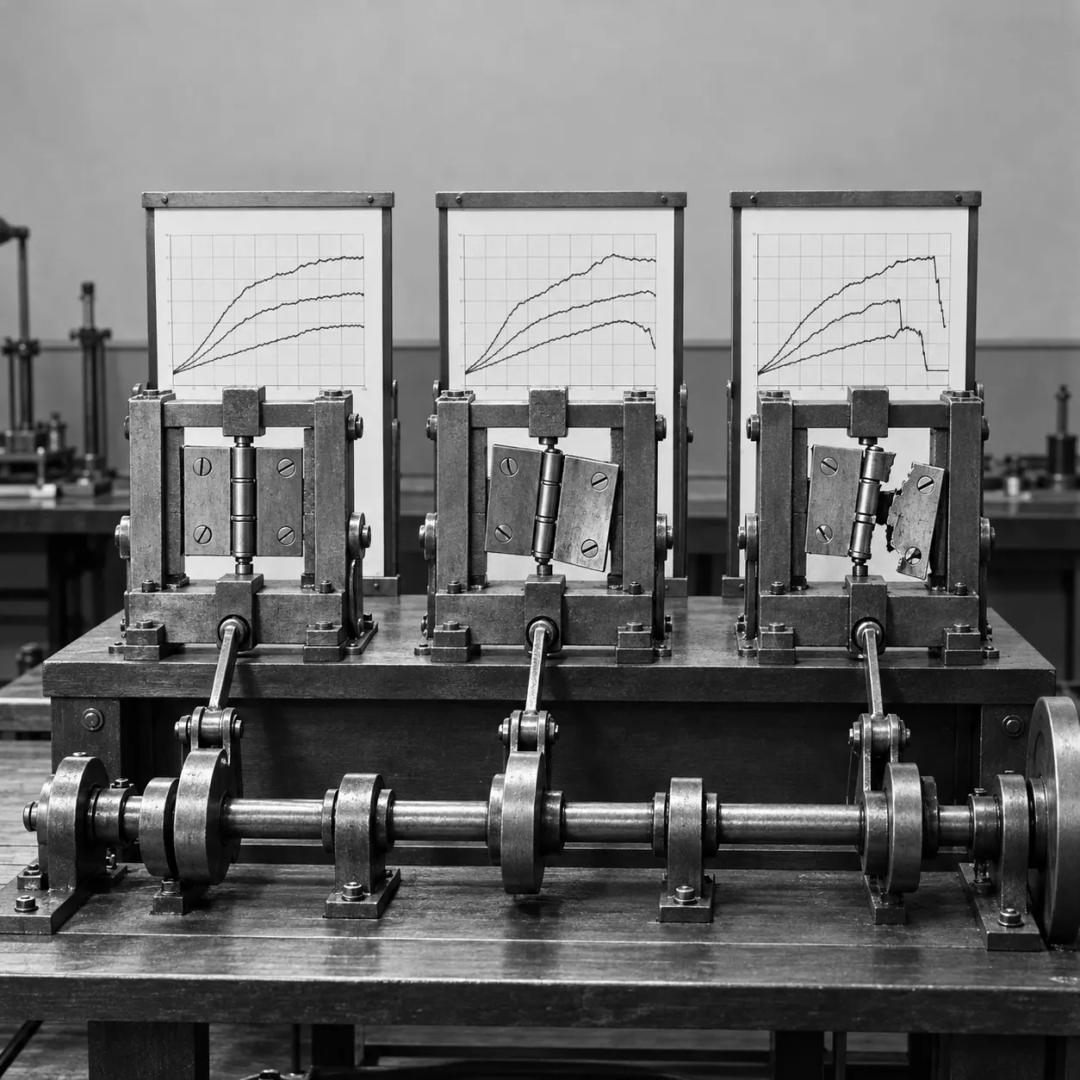
Test the competing brands against one another by a stated method, publish the results by maker's name, and let the buyer read the table. It is not a research claim but a practice, and it was proposed as a public service by Stuart Chase and F. J. Schlink in 1927, in the book that led to the organisation now known as Consumer Reports.
What it is
The proposal appears on the fourth page of Your Money's Worth, fully costed. A million dollars would road-test every current make of car over a standardised ten thousand miles, and the figures would be published in parallel columns, without comment, just the cold figures. That publication, the authors argued, would set standards of performing excellence and force persistently inferior types off the market.
Publication by name is the whole point. A specification alone does not help a household, because with the naked specification only, a buyer must hire a chemist or an engineer to find out which brands meet it. Their sharpest illustration is a hinge test in which one make was found to last fifty times as long as its similarly priced competitors, followed by the line that makes the case: but what those makes are you do not know.
In effect
Governments and corporations had been testing privately for decades, and the obstacles Chase and Schlink named have not changed much. Testing is enclosed as private property, and fee laboratories' reports are paid for and confidential. The engineering professions, unlike medicine, answered to employers rather than to the public. Publications living on advertising could not easily take the buyer's side. And published tests get laundered back into advertising, which produced the authors' own blunt instruction: never believe the findings of a test as advertised.
The practice matters to the modern ratings question because it supplies the benchmark. When researchers ask whether crowd ratings track quality, the quality measure they usually reach for is a trained panel's score, which is comparative product testing in its institutional form.
What it does not say
It is a method, not a finding, and it does not establish that expert panels are right. A panel score is one instrument with its own judgements built in, and the comparison only means anything in categories where an objective ranking is possible at all. It says nothing about restaurants, hotels or anything whose quality is a matter of taste.
It also does not vindicate the book that proposed it. Your Money's Worth argues for testing far better than it performs it: its own apparatus rests mainly on regulatory dockets and medical-association analyses rather than laboratory work, and several of its claims rest on hearsay about private tests. Cite it for the idea and for the obstacles, not as evidence about any product.
And whoever pays the tester owns the answer. The authors made that point about magazine housekeeping institutes trying to represent the consumer while being paid in effect by the advertiser, and it applies as directly to a modern certification scheme as it did in 1927.
Sources
- Chase, S., & Schlink, F. J. (1927). Your Money's Worth: A Study in the Waste of the Consumer's Dollar. Read in full from a public-domain scan. The proposal, the specification problem, the hinge test, the open-data argument, the calorimeter case, and the warnings about advertised test findings and 267. No doi exists for this edition.
- de Langhe, B., Fernbach, P. M., & Lichtenstein, D. R. (2016). "Navigating by the Stars: Investigating the Actual and Perceived Validity of Online User Ratings." Journal of Consumer Research, 42(6), 817-833. doi:10.1093/jcr/ucv047. Abstract read. Recorded here because it uses trained-panel scores as its quality benchmark across 1,272 products in 120 categories, which is comparative product testing being put to work as a measuring instrument.