Competitive Arousal
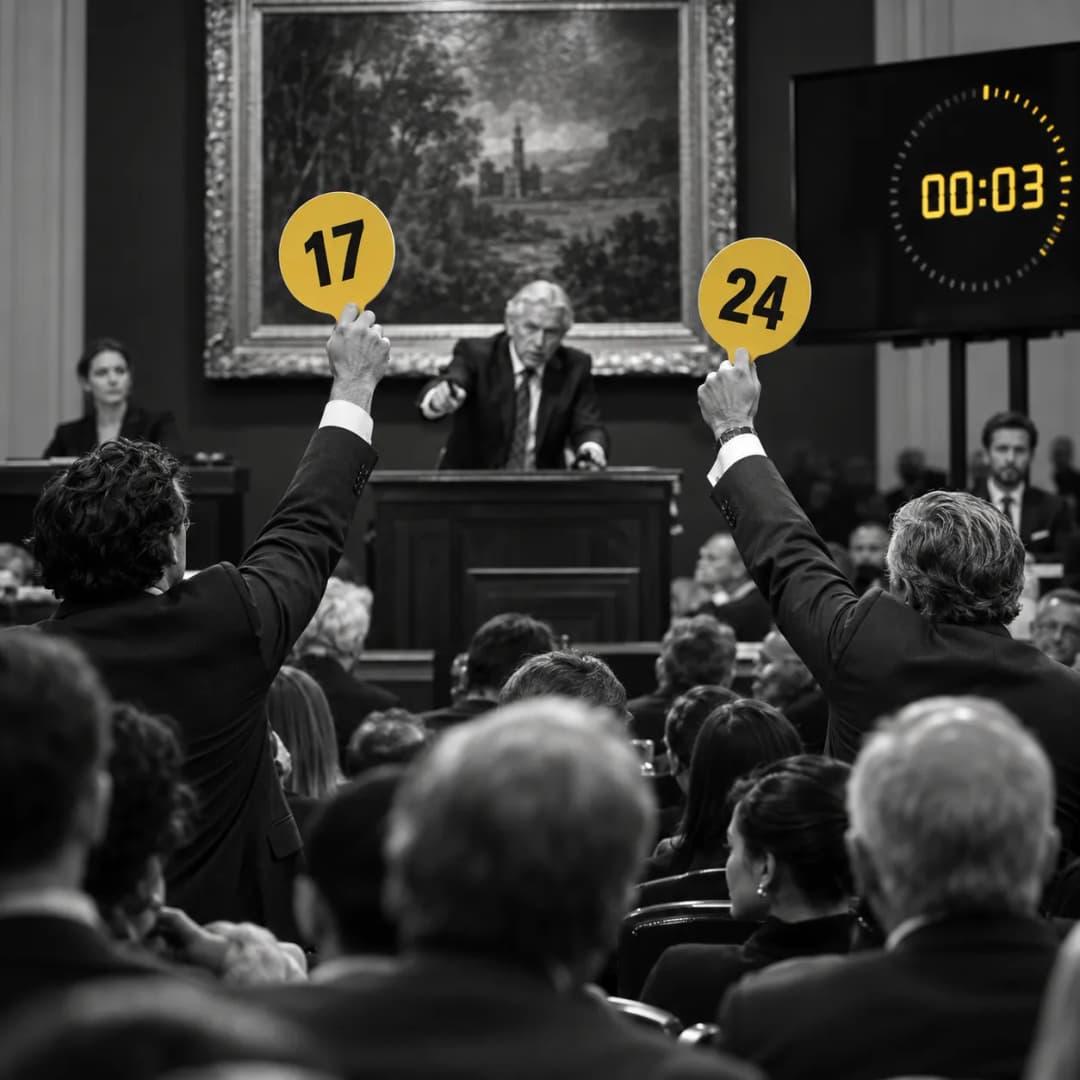
Competitive arousal is arousal produced by features of a contest, such as rivalry, time pressure and an audience. Gillian Ku, Deepak Malhotra and J. Keith Murnighan proposed a competitive arousal model in 2005 to explain auction fever, the tendency of bidders to go past their own limits. In the model, these features raise emotional arousal, and arousal can impair calm, careful decision-making.
What it is
The 2005 paper, Towards a competitive arousal model of decision-making: A study of auction fever in live and Internet auctions, appeared in Organizational Behavior and Human Decision Processes. It builds on earlier work by Malhotra and Murnighan on why bidders exceed preset limits, and compares an emotional explanation, competitive arousal, with a cognitive one based on framing.
The features of an auction that the model points to are rivalry, time pressure and an audience. Rivalry is a competitive drive to win. Time pressure pushes people towards quick, simple decisions. Being watched, or having other bidders present, adds to activation.
In effect
A 2019 paper by Adam, Ku and Lux extended the question to arousal that comes from outside the auction. Across three experiments, two arousal manipulations raised bids in live auctions played for real money, and a third raised bids in an online auction. In the first experiment, heart-based measures confirmed that a competitive task had raised arousal, although the measured arousal did not statistically account for the difference in bids. The second used an essay-writing task of the kind that produces dissonance, and participants who were given a choice about writing it bid more. In the third, bidders asked what had shaped their bids did not mention their emotions or the task that had aroused them.
A Harvard Business School summary of the authors' wider work reports, for sales of painted cow sculptures in Chicago, prices at about seven times the estimates, larger overbids in live bidding than in internet bidding, and no greater proneness to overbid among frequent bidders than among novices. That summary is the source for those figures.
The earlier article Why the Auction Winner Often Overpays covers the auction literature in more detail.
What it does not say
The model is a proposal about what drives auction fever. It does not claim that every high bid is the product of arousal, and the 2019 experiments do not show that the measured heart response explains the extra bidding. The 2005 paper's own results are not summarised on this page, which relies on how later work describes the model.
Sources
- Ku, G., Malhotra, D., & Murnighan, J. K. (2005). Towards a competitive arousal model of decision-making: A study of auction fever in live and Internet auctions. Organizational Behavior and Human Decision Processes, 96(2), 89-103. doi:10.1016/j.obhdp.2004.10.001
- Adam, M. T. P., Ku, G., & Lux, E. (2019). Auction fever: The unrecognized effects of incidental arousal. Journal of Experimental Social Psychology, 80, 52-58. doi:10.1016/j.jesp.2018.07.009