Curiosity and Memory
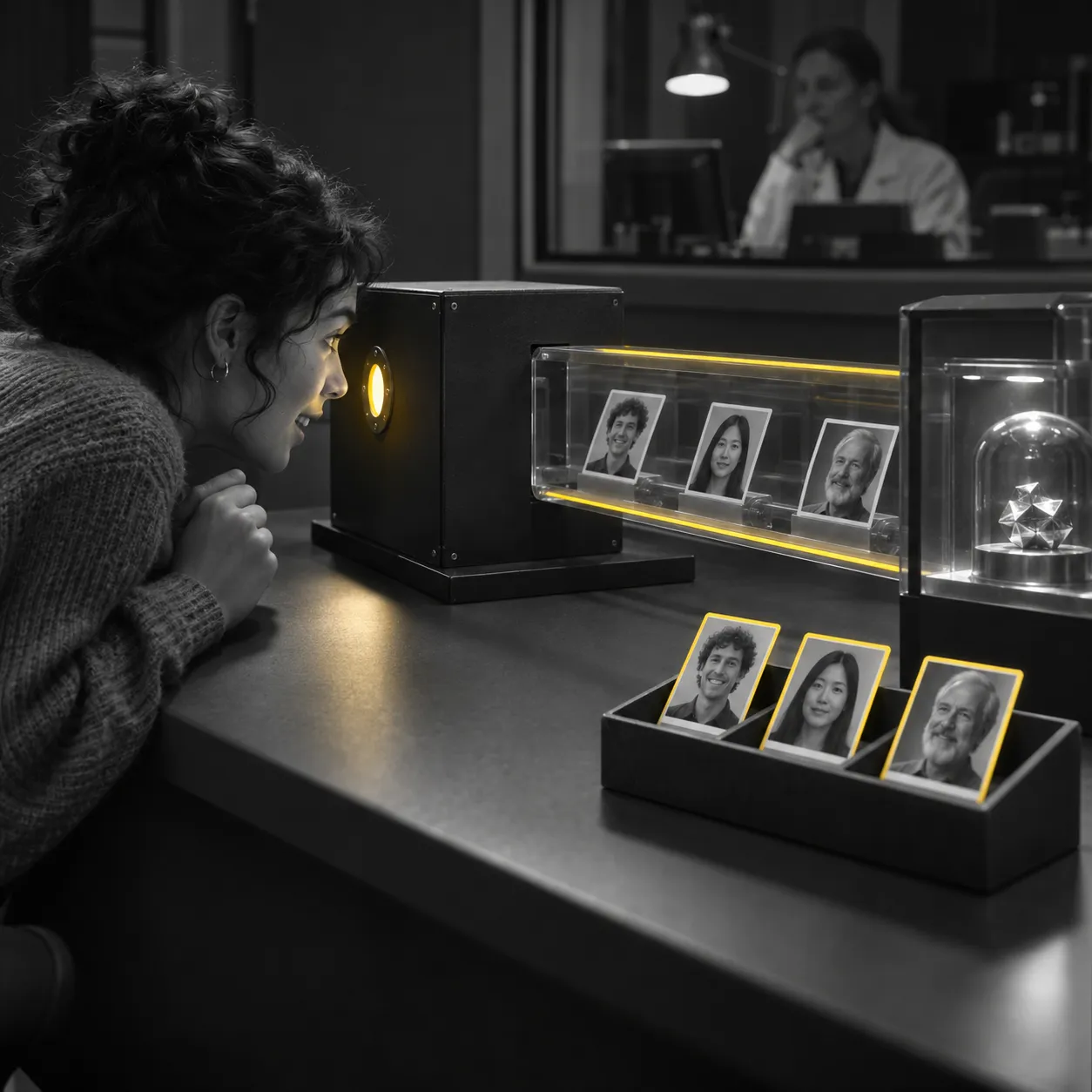
Curiosity and memory describes the finding that being curious about a question helps people remember its answer, and also remember unrelated material seen while waiting for it. Matthias Gruber, Bernard Gelman and Charan Ranganath reported it in a 2014 study that combined memory tests with brain imaging.
What it is
The concept links an everyday experience, wanting to know something, to what is retained afterwards. In the 2014 study the wanting was a rating: adult volunteers judged how curious they were about trivia questions whose answers they did not know. Curiosity was therefore a feeling the volunteers reported about themselves, not a reward the experimenters offered.
The authors set the result in the context of motivation. They conclude that the mechanisms engaged by curiosity overlap with those involved in motivation by extrinsic reward, and they suggest that stimulating curiosity may improve learning.
In effect
Later, while undergoing functional magnetic resonance imaging, the volunteers saw each question and waited for its answer. Unrelated faces were shown during the wait. Memory for the answers and for the faces was tested soon after the scan and again one day later.
Answers to high-curiosity questions were remembered better than answers to low-curiosity questions, and faces seen during high-curiosity states were remembered better than faces seen during low-curiosity states. Activity in the midbrain and the nucleus accumbens was higher in high-curiosity states.
Differences between volunteers were also informative. How much curiosity helped a person's memory for the faces was linked to activity in the midbrain and the hippocampus before the answer appeared, and to the connectivity between those two regions.
A sequence that raises a question and delays the answer is easy to reproduce in teaching or briefing. The study did not test that use, so the step from the laboratory to a classroom is an inference.
What it does not say
The study used trivia questions and faces in a brain scanner. It does not show how curiosity behaves over longer periods of learning, in groups, or in settings where the questions are set by someone else.
It also does not show that curiosity is the only route to better memory, or that every learner benefits to the same degree.
Sources
- Gruber, M. J., Gelman, B. D., & Ranganath, C. (2014), States of curiosity modulate hippocampus-dependent learning via the dopaminergic circuit, Neuron, 84(2), 486-496. https://doi.org/10.1016/j.neuron.2014.08.060