Deceptive Countdown Timers
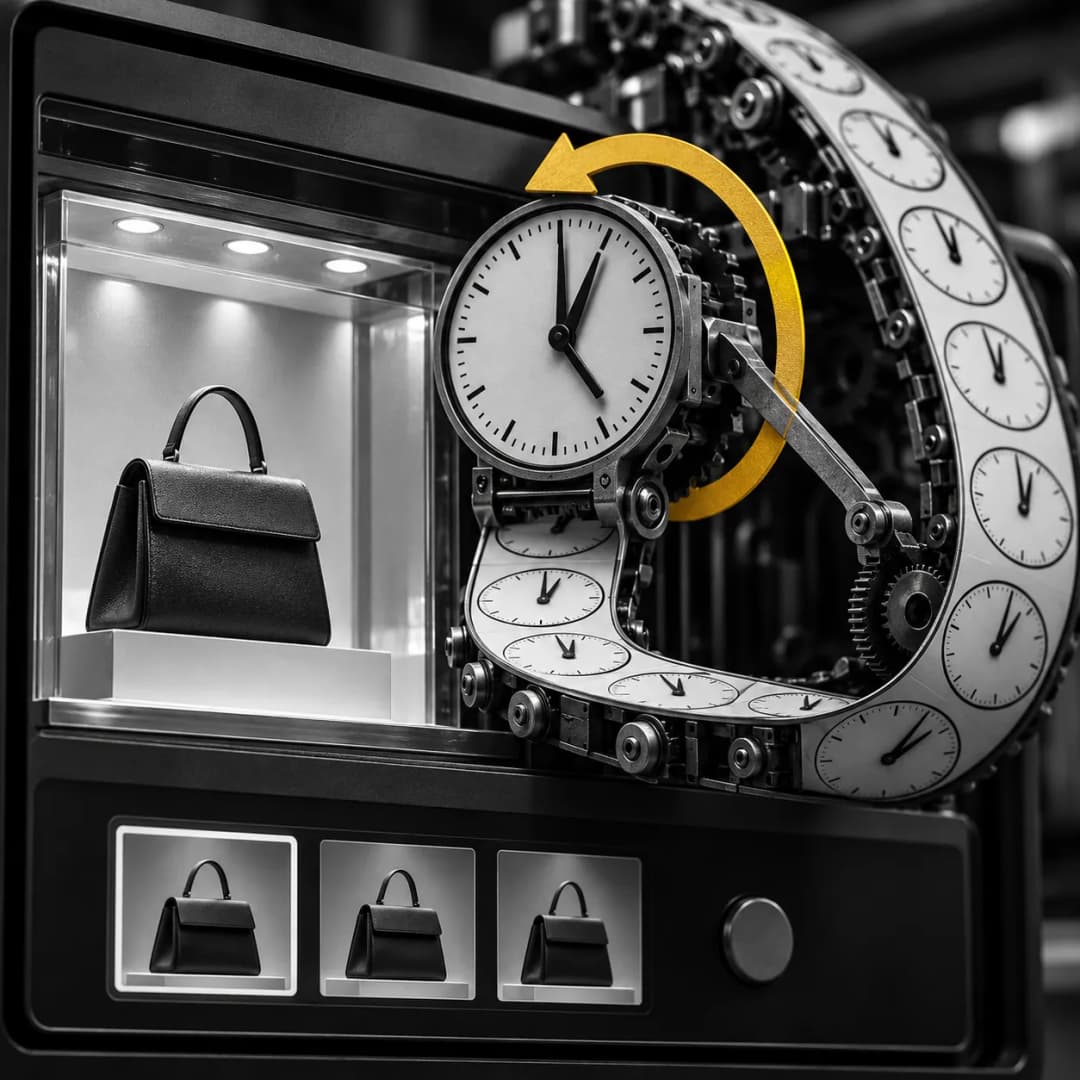
A deceptive countdown timer is a clock that counts down to a deadline that is not real. The 2019 shopping-site crawl counted a timer as deceptive if it reset after reaching zero with the offer still valid, or if the offer stayed valid after the timer expired. In that crawl, 157 of 393 countdown timers met the test. In a 2022 experiment, a timer of this kind added nothing the study could detect to a markdown.
What it is
A countdown timer is a dynamic indicator of a deadline, counting down until an offer expires. Many are honest: the sale ends when the clock reaches zero. A deceptive one borrows the pressure of a deadline without keeping to it. The clock restarts, or the price is still on offer when it runs out.
Researchers file these timers under dark patterns, designs that steer a user toward a choice they might not otherwise make. Arunesh Mathur and colleagues, who crawled about 11,000 shopping sites in 2019, gave the working test used on this site: the timer resets after timeout with the same offer still valid, or the timer expires and the offer it claimed was expiring is still valid. They could not simply read the page. They revisited each site repeatedly, stitched the screenshots into a video and watched how the clock behaved over time.
The logic of the tactic is easy to state, though none of the studies below measured sellers' motives. A true deadline costs the seller any sale that arrives after it. A false one does not. Where a timer does raise sales, the incentive to run it whether or not the deadline is real is plain.
A hand-built corpus in a 2022 Radboud University thesis found the same pattern on a smaller scale. Of 60 timers collected from online shops, 27 were judged deceptive. The thesis adds that the remainder may include false negatives, because a timer driven by the server cannot be checked from outside.
In effect
In research: the office chair experiment
Jelmer Tiemessen's 2022 thesis, published in short form at a 2023 computing conference, tested a deceptive timer directly. In it, 245 people chose an office chair from a fictional webshop. Both chairs cost $260. A markdown, an original price of $320 shown beside the grey chair, raised the share choosing it from 17 per cent with no offer to 56 per cent. Adding a seven-minute timer that restarted on every page refresh left the share at 46 per cent, which the study could not tell from the markdown alone. Nobody in the timer group gave the timer as a reason for their choice.
In everyday life: the shopper who distrusts the clock
The same participants were asked whether countdown timers influence them. Ninety-three said yes, 38 said sometimes and 108 said no. A few of the explanations are the page's best everyday evidence of how a caught or suspected timer lands. One participant who chose the plain chair wrote, "It was the same chair so I chose the less 'sketchy' one." Another said they would leave a site that showed a timer. These are self-reports, which are weak evidence of what people actually do, but they show the cost a seller risks: a clock that is suspected stops being a deadline.
A rough check any shopper can run is to reload the page. A clock that restarts is not counting down to anything. That is this site's suggestion, not a tested method.
In commerce and regulation: the counts and the EU rule
The 2019 crawl counted 393 countdown timers and 157 deceptive ones, on 140 sites. One example it reproduced was a 60-minute timer on a shopping site whose advertised offer stayed available after the clock ran out. In January 2023 the European Commission and consumer authorities from 23 member states, Norway and Iceland published a sweep of 399 online shops. Forty-two used fake countdown timers with deadlines to purchase specific products. The EU's Unfair Commercial Practices Directive of 2005 lists, among practices unfair in all circumstances, falsely stating that a product will be available only for a very limited time in order to elicit an immediate decision. The Commission's release said national authorities would now contact the traders concerned.
What it does not say
It does not say that every countdown timer is deceptive. In the 2019 crawl, 157 of 393 met the test, which leaves the majority as timers the crawl did not find to be false.
It does not say that timers do not work. The only controlled test described here used a false timer in a fictional shop with imaginary money, and it was exploratory. It found no gain over the markdown, but it did not test an honest timer beside a true offer, and nobody has shown here what such a timer adds over a year of trading.
It does not say that the two counts agree. The crawl counted timers by instance on product pages, and the EU sweep counted shops. They use different methods and cannot be laid side by side.
It does not give legal advice. The EU text quoted is a description of one directive, and other jurisdictions differ.
Sources
- Mathur, A., Acar, G., Friedman, M. J., Lucherini, E., Mayer, J., Chetty, M., & Narayanan, A. (2019). "Dark Patterns at Scale: Findings from a Crawl of 11K Shopping Websites." Proceedings of the ACM on Human-Computer Interaction, 3(CSCW), Article 81. doi:10.1145/3359183. Countdown-timer sections read.
- Tiemessen, J., Schraffenberger, H., & Acar, G. (2023). "The Time is Ticking: The Effect of Limited Time Discounts on Consumers' Buying Behavior and Experience." Extended Abstracts of the 2023 CHI Conference on Human Factors in Computing Systems, 1-11. doi:10.1145/3544549.3585735. Abstract read.
- Tiemessen, J. H. (2022). "The Time is Ticking: The Effect of Deceptive Countdown Timers on Consumers' Buying Behavior and Experience." MSc thesis, Radboud University. Results and limitations chapters read, 21 October 2026.
- European Commission (2023). "Consumer protection: manipulative online practices found on 148 out of 399 online shops screened." Press release IP/23/418, 30 January 2023.
- Directive 2005/29/EC (Unfair Commercial Practices Directive), Annex I, point 7.